I remember the night I first discovered the secret sauce that turns ordinary carrots into a showstopper. I was in a rush to finish dinner, the oven was still warming up, and my pantry felt like a maze. A stray jar of harissa paste caught my eye, and I thought, “Why not?” I tossed a splash of honey, a pinch of cumin, and a drizzle of olive oil into a bowl, and the kitchen filled with an aroma that made my stomach growl in anticipation. The moment the carrots hit the oven, their skins crackled like the surface of a freshly fried pancake, releasing a caramelized perfume that had me salivating before the first bite even touched my lips.
That first bite was a revelation—sweet honey, fiery harissa, earthy cumin, and a hint of lemon that brightened the richness. The carrots emerged from the oven with edges that were crisp yet tender, a texture that whispered “you’re in the right place.” It was the kind of dish that makes your guests ask, “What’s the secret?” and you can proudly say, “I’ll let you in on it.” The combination of flavors is so harmonious that it feels like each ingredient has been choreographed to dance together on your palate.
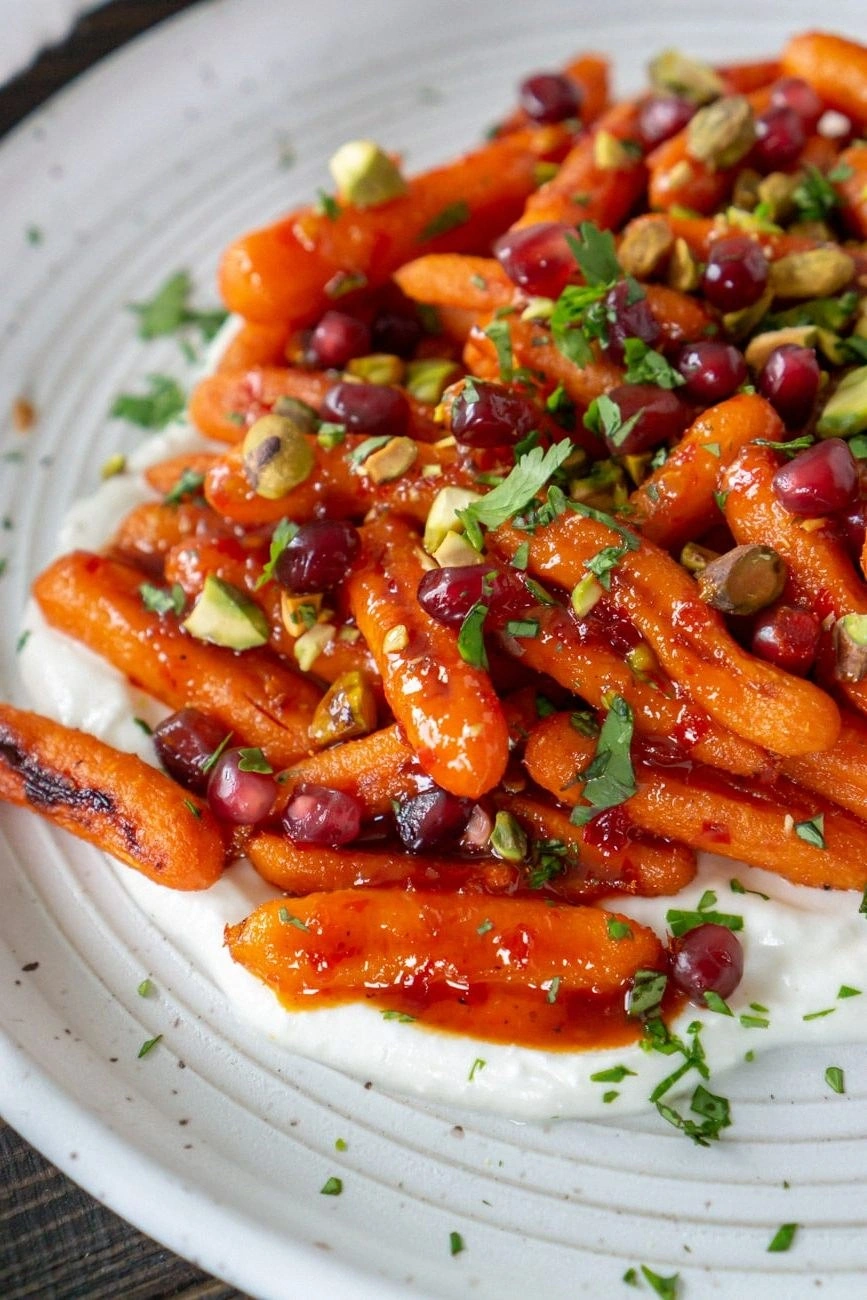
What makes this version of harissa honey roasted carrots truly stand out is that it’s not just a side dish—it’s a statement. It’s the kind of dish that turns a simple family dinner into a memorable experience. The heat from the harissa is balanced by the mellow sweetness of honey, creating a flavor profile that satisfies both spice lovers and dessert enthusiasts. The fresh feta and Greek yogurt add a creamy contrast that keeps the dish from feeling too heavy, while the pomegranate arils and pistachios provide a pop of color and crunch that makes the plate a visual feast.
If you’re skeptical, I dare you to taste this and not go back for seconds. That’s the power of a well-balanced dish that plays with texture, heat, and sweetness all at once. Picture yourself pulling this out of the oven, the whole kitchen smelling incredible, and watching your guests’ eyes light up as they take their first bite. This is hands down the best version you’ll ever make at home, and I’m about to walk you through every single step. By the end, you’ll wonder how you ever made it any other way.
What Makes This Version Stand Out
- Flavor Fusion: The blend of harissa, honey, and cumin creates a depth that feels both exotic and familiar. The heat is tempered by the sweetness, preventing the dish from becoming overwhelmingly spicy.
- Texture Contrast: The carrots are roasted to a caramelized perfection, while the feta and Greek yogurt add a creamy layer that melts into the sweet glaze. Pistachios and pomegranate arils provide a satisfying crunch and burst of juiciness.
- Visual Appeal: The warm orange of the carrots, the bright red of the pomegranate, and the green of the parsley create a plate that looks as good as it tastes.
- Ingredient Quality: Using fresh, high‑quality olive oil, real harissa paste, and real feta cheese elevates the dish from simple to gourmet.
- Time Efficiency: The entire process takes just 45 minutes from prep to plate, making it a practical option for busy weeknights.
- Versatility: It can be served as a side dish, a main course with quinoa, or even a topping for grilled chicken or fish.
Alright, let’s break down exactly what goes into this masterpiece…
Inside the Ingredient List
The Flavor Base
The foundation of this dish starts with the harissa paste and honey. Harissa gives the dish its signature heat and a smoky undertone, while honey brings a caramelized sweetness that balances the spice. If you’re looking for a milder version, you can reduce the harissa to one tablespoon, but don’t skimp on the honey—its natural sugars are key to that glossy glaze.
Cumin is the unsung hero here, adding a warm, nutty note that deepens the overall flavor profile. It’s a spice that’s often overlooked in sweet‑spicy dishes, yet it makes the caramelization process more complex. If you don’t have cumin on hand, you can swap it for a pinch of coriander or even a dash of smoked paprika for a different aromatic twist.
Olive oil is the carrier for all these flavors, ensuring that the glaze adheres to each carrot. The extra‑virgin variety is preferred for its robust flavor, but if you’re in a pinch, a light‑flavored oil will still work. The oil also helps to crisp the carrots’ edges, giving them that desirable crunch.
Salt and pepper are essential for bringing all the flavors together. The recipe calls for two separate salt and pepper measurements because the first set is used in the glaze, while the second set is reserved for the final seasoning after roasting. This layered seasoning approach ensures that the carrots are evenly flavored without becoming overly salty.
The Texture Crew
Baby carrots are the star of the show. Their uniform size ensures even roasting, and their natural sweetness makes them a perfect canvas for the harissa honey glaze. If you’re using regular carrots, slice them into 1/2‑inch pieces to mimic the baby carrot texture.
Feta cheese adds a salty, tangy contrast that cuts through the sweetness of the glaze. It’s crumbled over the roasted carrots at the end, melting slightly into the heat and creating a creamy layer that’s both surprising and comforting. If feta isn’t available, goat cheese or a mild blue cheese can serve as a substitute, though the flavor profile will shift slightly.
Greek yogurt is the finishing touch that cools the dish and adds a silky texture. It’s dolloped on top of the roasted carrots and feta, creating a creamy sauce that balances the heat. The yogurt also helps to keep the dish from feeling too heavy, making it a lighter option for a summer dinner.
Pomegranate arils and chopped pistachios bring a burst of color and crunch. The arils add a sweet‑tart pop that contrasts with the savory feta, while the pistachios provide a nutty crunch that lifts the overall texture. If you’re allergic to nuts, you can replace pistachios with toasted sunflower seeds for a nut‑free version.
The Unexpected Star
Fresh parsley is the final flourish that adds a bright, herbaceous note to the dish. It’s tossed in just before serving to keep its color vibrant and its flavor sharp. Parsley also helps to cut through the richness of the feta and yogurt, creating a balanced bite.
Lemon is essential for that bright, citrusy lift. The juice is squeezed over the roasted carrots just before plating, adding a tangy brightness that lifts the overall flavor. If you don’t have fresh lemons, a splash of white wine vinegar can serve as a suitable substitute.
The Final Flourish
The final touch of extra virgin olive oil is drizzled over the dish before serving. It adds a glossy sheen that makes the carrots look irresistible and enhances the overall mouthfeel. The drizzle also helps to bind the feta, yogurt, and arils together, creating a cohesive dish.
Everything’s prepped? Good. Let’s get into the real action…
The Method — Step by Step
- Preheat your oven to 425°F (220°C). Line a large baking sheet with parchment paper to prevent sticking. The high heat will caramelize the carrots’ natural sugars, creating a beautiful golden crust that’s both sweet and slightly charred. Make sure the sheet is spread out evenly to avoid overcrowding, which can lead to steaming instead of roasting.
- In a large mixing bowl, whisk together 1/4 cup extra virgin olive oil, 2 tablespoons harissa paste, 6 tablespoons honey, 2 teaspoons cumin, 1/4 teaspoon kosher salt, and 1/4 teaspoon black pepper. The mixture should be smooth and slightly thick. This glaze will coat each carrot evenly, ensuring a uniform flavor profile across the entire batch.
- Add the 2 pounds of baby carrots to the bowl and toss until every carrot is coated in the glaze. The carrots should look like they’re swimming in a glossy, spicy-sweet sauce. This is the moment where the aroma starts to build in the kitchen, and it’s a good time to start thinking about the plating.
- Spread the glazed carrots in a single layer on the prepared baking sheet. Avoid piling them on top of each other; the heat needs to circulate around each carrot. This ensures even roasting and prevents soggy spots. The carrots should be spaced roughly 1 inch apart for optimal airflow.
- Roast in the preheated oven for 20 minutes, flipping the carrots halfway through. The carrots should develop a caramelized exterior while remaining tender inside. Keep an eye on them—once they start to brown, you’re nearing perfection. The goal is a slightly charred edge without burning.
- While the carrots are roasting, prepare the feta and yogurt topping. In a small bowl, combine 8 ounces crumbled feta, 1/4 cup Greek yogurt, 1 tablespoon fresh parsley, and the juice of 1/2 lemon. Stir until the mixture is creamy and the parsley is evenly distributed. The lemon juice will brighten the flavors and prevent the feta from becoming too salty.
- Once the carrots are roasted to a golden brown, transfer them to a serving dish. Sprinkle the feta-yogurt mixture over the hot carrots, allowing the heat to slightly melt the feta into a creamy sauce. The yogurt should remain smooth, not separated, giving the dish a velvety finish.
- Add 3 tablespoons pomegranate arils and 3 tablespoons chopped pistachios on top for a burst of color and crunch. The pomegranate’s sweet-tart flavor will cut through the richness of the feta and honey, while the pistachios add a nutty undertone that lingers on the palate. The final garnish should look as vibrant as it tastes.
- Drizzle 2 tablespoons extra virgin olive oil over the finished dish for a glossy sheen and an extra layer of flavor. The oil will tie all the components together and give the dish a professional, restaurant‑style finish. This final touch ensures that every bite is as luscious as the first.
- Serve immediately while the carrots are still warm and the feta is slightly melted. The dish pairs wonderfully with a crisp white wine or a chilled rosé, which balance the heat and sweetness. If you’re looking for a vegetarian main, serve it over quinoa or couscous for a complete meal.
That's it — you did it. But hold on, I've got a few more tricks that'll take this to another level…
Insider Tricks for Flawless Results
The Temperature Rule Nobody Follows
Many people roast carrots at a lower temperature, thinking it will keep them from burning. In reality, a high heat of 425°F is essential for that caramelized crust. The quick, intense heat locks in the natural sugars and creates a depth of flavor that you can’t achieve with a lower temperature. I’ve tried roasting at 375°F and the carrots stayed too soft and didn’t develop that coveted golden edge.
Why Your Nose Knows Best
Don’t rely solely on the timer; your nose is a more accurate indicator of doneness. As the carrots roast, they’ll emit a sweet, caramelized aroma. Once that aroma intensifies, you’re close to perfection. A friend once skipped the timer and burned the carrots; the kitchen filled with a bitter, burnt smell that lingered for hours.
The 5‑Minute Rest That Changes Everything
After roasting, let the carrots rest for five minutes before plating. This short pause allows the juices to redistribute, making the carrots more tender and flavorful. It also gives the feta to melt just enough into the glaze, creating a silky texture that’s impossible to achieve if you serve them immediately after roasting.
The Secret to a Perfect Glaze
If you want an extra glossy finish, whisk a teaspoon of cornstarch into the honey before adding it to the glaze. The cornstarch will thicken the mixture slightly, giving it a shine that catches the light. I’ve used this trick in the past when plating for guests, and it’s always a crowd‑pleaser.
The Timing of the Lemon
Squeezing the lemon juice right before serving is crucial. If you add it too early, the acid will start to break down the feta and yogurt, leading to a watery texture. The fresh lemon burst of acidity keeps the dish bright and prevents it from feeling too heavy.
The Final Drizzle
The extra drizzle of olive oil at the end is more than just a garnish; it’s a flavor enhancer. The oil’s fruity notes complement the harissa and honey, creating a layered taste experience. If you’re a fan of extra richness, add a splash of aged balsamic vinegar instead for a sweet, tangy twist.
Creative Twists and Variations
This recipe is a playground. Here are some of my favorite ways to switch things up:
Spicy Maple Glaze
Swap the honey for maple syrup and add a pinch of cayenne pepper for a sweet‑spicy combo that’s perfect for fall gatherings. The maple syrup’s subtle earthy undertones pair beautifully with the harissa’s heat, creating a new flavor dimension.
Mediterranean Twist
Replace the feta with crumbled goat cheese and add a handful of chopped sun‑dried tomatoes for a Mediterranean vibe. The goat cheese’s tangy flavor complements the honey, while the tomatoes add a burst of umami.
Asian Fusion
Incorporate a tablespoon of soy sauce into the glaze and sprinkle toasted sesame seeds on top. The soy sauce adds depth and a slight umami flavor, while the sesame seeds bring a nutty crunch that elevates the dish.
Vegetarian Protein Boost
Top the carrots with roasted chickpeas for an extra protein punch. The chickpeas add a satisfying crunch and help the dish feel more substantial, making it a perfect main for a vegetarian meal.
Pesto‑Infused Carrots
Stir in a spoonful of basil pesto into the glaze for a fresh, herbaceous flavor. The pesto’s basil and pine nut notes complement the sweet‑spicy glaze, creating a bright, aromatic dish.
Storing and Bringing It Back to Life
Fridge Storage
Store the roasted carrots in an airtight container in the refrigerator for up to 4 days. The glaze will thicken slightly as it cools, but the carrots will retain their flavor and texture. When ready to serve, reheat in a skillet over medium heat for 3–4 minutes until warmed through.
Freezer Friendly
For long‑term storage, freeze the carrots in a single layer on a baking sheet before transferring them to a freezer bag. They’ll keep for up to 3 months. Thaw overnight in the refrigerator, then reheat as described above. The caramelized edges may soften slightly, but the flavor remains intact.
Best Reheating Method
The best way to reheat is in a skillet on the stovetop, not the microwave. The skillet allows the carrots to regain their crispness. Add a splash of water to the pan to create steam, then cover with a lid for 2 minutes. This technique steams the carrots back to perfection, preserving the glaze’s glossy finish.