I still remember the first time I attempted to make seafood soup. It was a rainy Tuesday, my apartment smelled like a fish market had exploded, and I managed to turn what should have been a delicate bisque into something resembling seafood-flavored wallpaper paste. My roommate walked in, took one whiff, and promptly ordered pizza. That disaster haunted me for months. But here's the thing — that spectacular failure led me to create what I'm convinced is the most outrageously delicious stuffed seafood soup you'll ever taste, served in its own edible bowl because we're not animals, we're civilized people who deserve nice things.
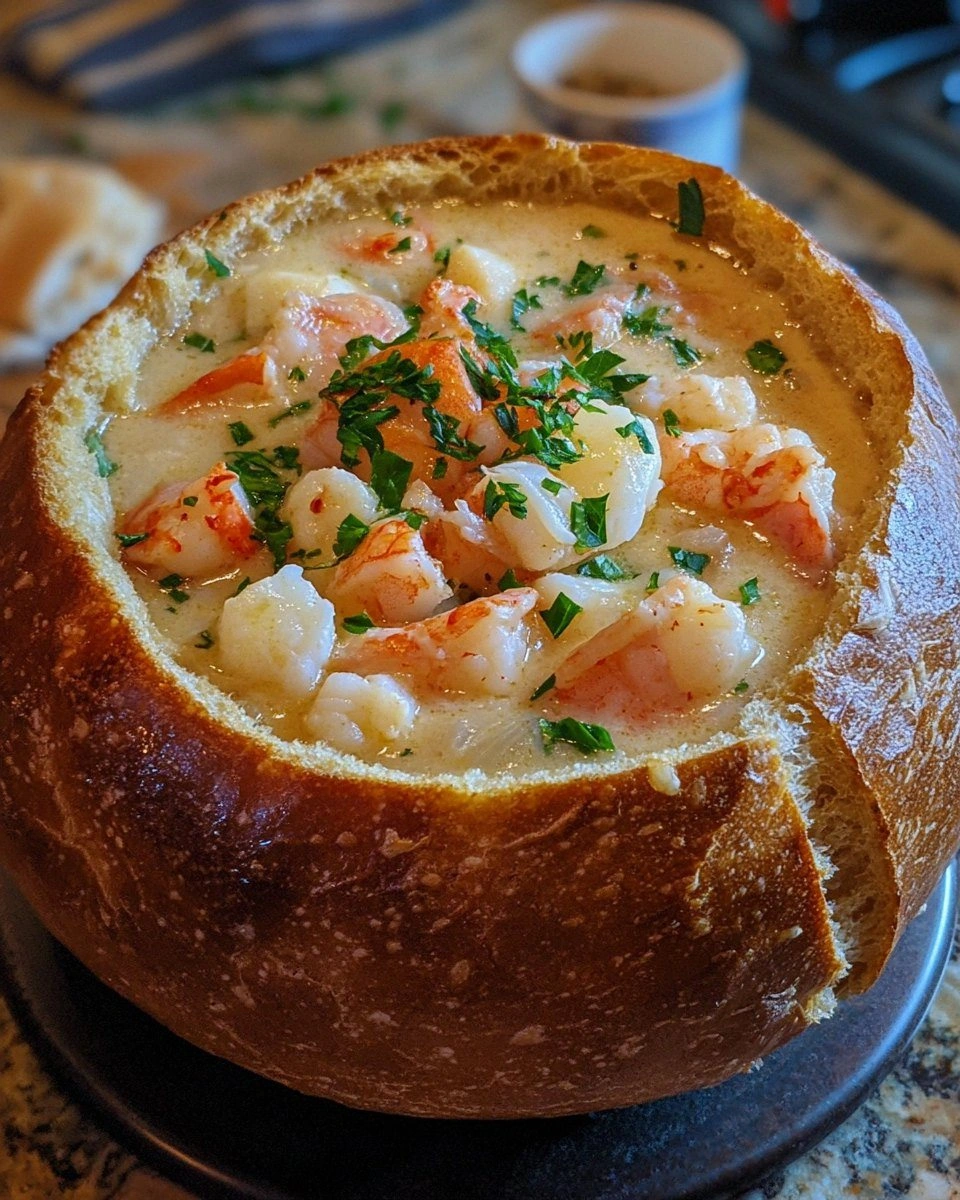
Picture this: a golden, crusty bread bowl that crackles when you cut into it, steam billowing out carrying the scent of sweet lobster, tender shrimp, and luscious crab swimming in a cream that's so velvety it makes velvet feel like sandpaper. The edges of the bread have soaked up just enough of the broth to become this incredible hybrid of crispy exterior and soup-soaked interior that's basically the best part of French onion soup and clam chowder had a beautiful, sophisticated baby. I dare you to taste this and not go back for seconds — actually, I double-dog dare you, because I ate three bowls the first time I nailed this recipe and I'm not even sorry.
What makes this version different? Most recipes get this completely wrong by treating the bread bowl as an afterthought, like some sad vessel that just happens to hold soup. They forget that the bread is half the experience, the co-star, not just the stage. Meanwhile, the soup itself often tastes like someone waved a fish over some cream and called it a day. Not here, my friends. Here we build layers of flavor like we're constructing the Sistine Chapel of seafood soups, each ingredient playing its part in a symphony that would make a French chef weep into his toque.
Stay with me here — this is worth it. We're talking about a method that ensures every bite delivers the perfect ratio of seafood to cream to bread, where the soup stays hot but the bread doesn't dissolve into mush, where the seafood is cooked just enough to be tender but not so much it turns rubbery. Picture yourself pulling this out of the oven, the whole kitchen smelling like a coastal bistro in the best possible way, your friends or family gathering around because they can smell it from three rooms away. Let me walk you through every single step — by the end, you'll wonder how you ever made it any other way.
What Makes This Version Stand Out
Flavor Bomb: This isn't your average seafood soup that tastes like the ocean in a bad way. We build a base so rich and complex that you'll swear there's a secret ingredient (spoiler: it's love, plus some seriously smart cooking techniques). The combination of three premium seafoods creates a depth that single-seafood soups can only dream about.
Texture Paradise: Most seafood soups are either too thin and watery or so thick they coat your tongue like paste. This one hits that magical middle ground where it clings to your spoon but still flows like liquid silk. The contrast between the creamy soup, tender seafood, and crusty bread creates a textural experience that keeps every bite interesting.
Bread Bowl Brilliance: I'll be honest — I ate half the batch before anyone else got to try it because I kept "testing" the bread bowls. The way we prepare these bowls ensures they stay crispy on the outside while developing this incredible soup-soaked interior that's better than any crouton you've ever had.
Restaurant Quality at Home: If you've ever struggled with making restaurant-quality seafood dishes at home, you're not alone — and I've got the fix. This recipe uses techniques that seem fancy but are actually foolproof once you know the secrets. Your dinner guests will think you went to culinary school.
Crowd-Pleasing Magic: This is hands down the best version you'll ever make at home for impressing people. I've served this at dinner parties where people literally scraped their bowls clean and asked if they could eat the bread bowl too (the answer is always yes, that's the whole point).
Make-Ahead Friendly: Okay, ready for the game-changer? You can prep almost everything ahead of time. The soup base actually gets better after a day in the fridge, and you can hollow out your bread bowls the morning of your dinner party. Assembly takes minutes, which means you can actually enjoy your guests instead of being chained to the stove.
Ingredient Flexibility: While I give you the premium version, this recipe is surprisingly forgiving. Can't find lobster? Use more shrimp. Crab looking sad at the market? Scallops work beautifully. The technique stays the same, the results stay spectacular.
Alright, let's break down exactly what goes into this masterpiece...
Inside the Ingredient List
The Foundation Builders
The bread is your first and most crucial decision — don't blow it by grabbing those pre-hollowed "soup bowls" from the grocery store bakery. Those sad, dry things are about as appealing as eating cardboard. You want a real loaf with character, something that when you tap it sounds hollow but feels substantial. Sourdough is my ride-or-choice because it brings this subtle tang that plays beautifully with the sweet seafood, but a good French boule or even a country white works. The key is the structure: you need those gluten strands holding everything together like edible scaffolding.
Butter might seem basic, but it's carrying the entire flavor foundation on its golden shoulders. We're talking about real butter here, not that margarine imposter that's one molecule away from plastic. The butter does double duty: it creates the flavor base when we sauté our aromatics, and it adds that luxurious mouthfeel that makes restaurant soups taste, well, restaurant-y. Skip the cheap stuff and your taste buds will throw a party in your honor.
The Seafood Trinity
Shrimp brings the sweet, lobster brings the rich, crab brings the delicate — together they form like some sort of delicious Voltron. But here's what actually works: use shrimp that's never been frozen if you can find it, because previously frozen shrimp can turn grainy in hot soup. Size matters too — go medium, not those tiny salad shrimp that disappear and not the giant ones that feel like you're chewing on sea-flavored rubber balls. The shrimp cooks in literally minutes, so timing is everything.
Lobster is where most people panic about cost, but here's insider knowledge: you don't need tails. Those little lobster knuckles and claws from the seafood counter? They're half the price and twice the flavor. The meat is sweeter, more tender, and it breaks down into perfect bite-sized pieces. If you're feeling flush, go ahead and get a tail, but I'm telling you, the knuckle meat is where the real lobster lovers hide.
Crab meat is the diva of this operation — handle it gently or it turns into stringy sadness. Fresh crab is obviously better, but here's my confession: I've made this with good quality canned crab when fresh wasn't available, and nobody died. The trick is to fold it in at the very end, just enough to warm it through. Over-stir and you'll have crab-flavored soup with no actual crab pieces, which defeats the whole purpose of spending money on crab.
The Flavor Amplifiers
Onion and garlic aren't just aromatics here — they're the backbone that carries all the seafood flavors. Dice your onion small enough that it melts into the soup but not so tiny it disappears entirely. You want little bursts of sweetness throughout. And please, for the love of Jacques Pépin, use fresh garlic. That jarred stuff tastes like garlic's depressed cousin who's given up on life.
The broth choice will make or break your soup. Homemade seafood stock is liquid gold, but who has prawn shells lying around on a Tuesday? Vegetable broth works surprisingly well because it lets the seafood flavors shine without competing. Chicken broth is too aggressive, and store-bought seafood broth often tastes like someone dissolved a fish stick in hot water. If you must use store-bought, go vegetable and doctor it up with a splash of white wine and some thyme.
The Final Touches
Heavy cream is non-negotiable, and I don't want to hear about your diet. This is comfort food, not spa cuisine, and trying to lighten it up results in something that tastes like disappointment with a side of thin, watery regret. The cream should be added off the heat to prevent curdling — another mistake I made so you don't have to. And fresh parsley isn't just for color; it adds this bright, clean note that cuts through all that richness like a culinary palette cleanser.
Everything's prepped? Good. Let's get into the real action...
The Method — Step by Step
- Start by preparing your bread bowls, and don't rush this part because it's literally the bowl that holds everything together. Take your round loaf and slice off the top third using a serrated knife — not straight across but at a slight angle so you have a little lid that sits nicely. Now here's where most people mess up: they start hollowing from the center and end up with walls like paper that leak soup everywhere. Instead, use your fingers to gently pull out most of the interior bread, leaving about an inch-thick wall all around. Save those bread chunks because they're about to become the best croutons you've ever had. Brush the inside of your bowl and lid with melted butter, then pop them in a 350°F oven for about 8 minutes until they're lightly toasted and fragrant — that sizzle when the butter hits the hot bread? Absolute perfection.
- While your bowls are toasting, it's time to build what chefs call the mirepoix but what I call the flavor foundation that'll make your kitchen smell like you know what you're doing. Melt your butter in a heavy-bottomed pot over medium heat — and don't crank it up to high because burnt butter makes everything taste like disappointment. When it starts to foam, add your diced onion and a pinch of salt. The salt helps draw out moisture and seasons from the inside out. Stir occasionally, letting the onions turn translucent and sweet, about 5 minutes. They should smell amazing but not brown — we're building flavors, not burning them.
- Now watch this part closely because garlic goes from fragrant to bitter faster than my mood swings when I'm hungry. Add your minced garlic and stir constantly for just 30 seconds. You want to smell that pungent garlic aroma but not see any color change. If your garlic turns brown, you've gone too far and there's no coming back — start over because bitter garlic will ruin everything. This is the moment of truth where your kitchen starts smelling like a proper restaurant instead of just heated-up ingredients.
- Time for the liquid magic — pour in your broth slowly, scraping up all those beautiful browned bits from the bottom of the pot. Those little flavor bombs are called fond, and they're like concentrated umami nuggets that'll make your soup taste like it's been simmering for hours instead of minutes. Bring it to a gentle simmer, not a rolling boil because we're not trying to recreate the ocean in a storm. Add your herbs now — a bay leaf, some thyme, maybe a whisper of smoked paprika if you're feeling adventurous. Let this bubble away gently for about 10 minutes while the flavors meld and your house starts smelling like you should charge admission.
- And now the fun part — adding the seafood in the right order so nothing turns into rubber. Here's what actually works: start with your lobster because it's the most forgiving. Add it to the simmering broth and let it cook for about 2 minutes. The edges should start turning opaque but the centers should still look slightly translucent — they'll finish cooking from residual heat. Don't walk away from the stove here because seafood timing is everything.
- Shrimp comes next, and this is where precision matters. Add your shrimp and stir gently — we're folding, not beating. They'll turn pink and curl into little C-shapes in about 2-3 minutes. If they curl into tight O-shapes, you've overcooked them and they'll have the texture of pencil erasers. Perfect shrimp look like question marks, not the number six. This next part? Pure magic.
- Remove your pot from heat entirely — and I mean off the burner, not just turned to low. Pour in your heavy cream in a slow stream, stirring constantly with a wooden spoon. The soup should turn this gorgeous pale coral color, like sunset over the ocean. If it looks like Pepto-Bismol, you've added too much cream and not enough respect for the seafood. Return to very low heat just to warm through, then fold in your crab meat so gently it's like you're tucking it into bed. Season with salt and white pepper — black pepper looks like dirt floating in your beautiful soup.
- Assembly time! Place your toasted bread bowls on plates (trust me, you'll want something to catch any overflow). Ladle the soup carefully into each bowl, filling them almost to the top. The soup should steam gently and the aroma should make you momentarily forget all your problems. Top with your toasted bread lid, positioned slightly askew so people can see the treasure inside. A sprinkle of fresh parsley isn't just for color — it adds that fresh note that makes all the rich flavors sing in harmony.
That's it — you did it. But hold on, I've got a few more tricks that'll take this to another level...
Insider Tricks for Flawless Results
The Temperature Rule Nobody Follows
Here's something that'll change your soup game forever: serve this at exactly 165°F. Too hot and you can't taste the delicate seafood flavors because your taste buds go into thermal shock. Too cool and the cream starts to congeal into an unappetizing skin on top. I use an instant-read thermometer like the food nerd I am, but you can test by letting a spoonful cool for about 30 seconds — it should feel hot but not scalping. A friend tried skipping this step once — let's just say it didn't end well and involved a lot of polite coughing while pretending to enjoy lukewarm seafood cream.
Why Your Nose Knows Best
Your sense of smell is your best kitchen timer with this recipe. When the garlic hits the butter, you should smell it within 15 seconds — if you don't, your heat's too low. When the onions are ready, they'll smell sweet and almost nutty. The broth should smell like you're walking through a coastal market at dawn. If at any point things smell sharp or acrid, you've gone too far and need to adjust. This isn't mystical kitchen wisdom; it's chemistry that anyone can master once they stop relying solely on timers and start trusting their senses.
The 5-Minute Rest That Changes Everything
After you finish cooking, let the soup rest off heat for exactly 5 minutes before serving. This isn't just chef nonsense — it allows the flavors to meld and the temperature to even out. During this time, the lobster finishes cooking gently, the cream stabilizes, and everything becomes more cohesive. Cover the pot but don't seal it completely — you want some steam to escape but not all the heat. Use this time to set your table, pour some wine, or just bask in the glory of what you've created.
The Bread Bowl Integrity Secret
The difference between a soggy mess and a perfectly structured bread bowl is all in the toasting. After you brush with butter, sprinkle the inside with just a pinch of coarse salt — this draws out moisture and creates a barrier. Some people swear by rubbing with garlic, but I find it overpowers the delicate seafood. The goal is a bowl that holds its structure for at least 20 minutes, giving everyone time to enjoy their meal without worrying about structural collapse. When done right, the bottom will be slightly softened but not mushy, while the sides stay satisfyingly crispy.
Creative Twists and Variations
This recipe is a playground. Here are some of my favorite ways to switch things up:
The Mediterranean Escape
Swap the heavy cream for coconut milk and add a pinch of saffron for a Spanish-inspired version that'll transport you to Barcelona. Replace the parsley with fresh cilantro and add a squeeze of lemon at the end. The coconut plays beautifully with seafood, and the saffron gives everything this gorgeous golden hue. Use monkfish instead of lobster — it's cheaper but has a similar lobster-like texture when cooked properly.
The Spicy Coastal Version
Add a diced jalapeño with your onions and a teaspoon of smoked paprika for a version that'll warm you up from the inside. Use andouille sausage instead of crab meat — slice it thin and add it with the lobster so the spicy oils infuse the broth. Top with green onions instead of parsley, and serve with a cold beer. This version is perfect for game day or when you need to impress people who think seafood soup is too delicate for real appetites.
The Luxurious Truffle Edition
For special occasions, add a tablespoon of white truffle oil right at the end (never cook with it — heat kills the flavor). Use all lobster instead of the seafood mix, and replace the parsley with fresh chives. Serve in smaller bread bowls as an elegant starter for a dinner party. A friend served this at her engagement party and people are still talking about it three years later.
The Health-Conscious Adaptation
Replace half the cream with whole milk and use olive oil instead of butter. Add diced fennel with the onions for extra flavor without calories. Use all shrimp (it's leanest) and load up on extra vegetables like corn and diced potatoes to make it more filling. It won't be quite as decadent, but it's still miles better than most restaurant versions, and you can feel good about eating it on a Tuesday.
The Surf and Turf Remix
Add some diced smoked bacon at the beginning — cook it until crispy, remove it, then cook your onions in the bacon fat. Sprinkle the crispy bacon on top just before serving. Use clam juice diluted with water instead of broth for an extra ocean punch. This version bridges the gap between chowder and bisque and has converted even the most seafood-skeptical eaters.
The Vegetarian (But Still Amazing) Version
Replace seafood with roasted mushrooms — oyster mushrooms for their seafood-like texture, shiitakes for umami, and creminis for earthiness. Use vegetable broth and add a splash of soy sauce for depth. The technique stays the same, and while it's not seafood soup anymore, it's still incredibly satisfying and makes a great option for mixed groups.
Storing and Bringing It Back to Life
Fridge Storage
Here's the thing about cream-based seafood soups: they're best fresh, but life happens and sometimes you need leftovers. Store the soup separately from the bread bowls in an airtight container — it'll keep for up to 3 days, though I wouldn't push it past 2 if you want optimal flavor. The key is cooling it quickly: divide hot soup into shallow containers so it drops to fridge temperature within 2 hours. If you notice any sour smell or the cream looks separated and grainy, it's time to say goodbye. A friend once tried to stretch it to day 5 and wondered why her kitchen smelled like a fishing boat — don't be that friend.
Freezer Friendly
Freezing is tricky but doable if you follow the rules. Cool the soup completely, then freeze in portion-sized containers for up to 2 months. The cream might separate slightly, but a good whisk while reheating usually brings it back together. Freeze the soup without the seafood, then add fresh shrimp and crab when you reheat — it's not quite the same as fresh, but it's better than wasting expensive seafood. Never freeze the bread bowls — they'll turn into rocks that could double as weapons. Instead, freeze extra soup and serve with fresh bread or crackers when the craving hits.
Best Reheating Method
Gentle is the name of the game here. Microwave is out — it'll turn your seafood rubbery and your cream will break into an oily mess. Instead, heat slowly in a pot over low heat, stirring frequently. Add a splash of water or broth to thin it out because it'll thicken in the fridge. Warm it to just steaming, never boiling. If you're paranoid about overcooking (and you should be), heat the soup base first, then add the seafood for just the last 2-3 minutes. Add a tiny splash of water before reheating — it steams back to perfection and helps prevent the bottom from scorching. And always, always taste and reseason — flavors mute in the fridge and need a little wake-up call.