I still remember the morning I accidentally created the most ridiculous breakfast masterpiece of my life. It was one of those chaotic Sundays where the fridge looked like a crime scene — half a loaf of stale brioche, blueberries that were one day away from staging a coup, and eggs that kept rolling out every time I opened the door. My friends were coming over in two hours expecting my famous French toast, and I was standing there in my pajamas, hair pointing in seven directions, wondering if I could just serve cereal and call it "rustic brunch."
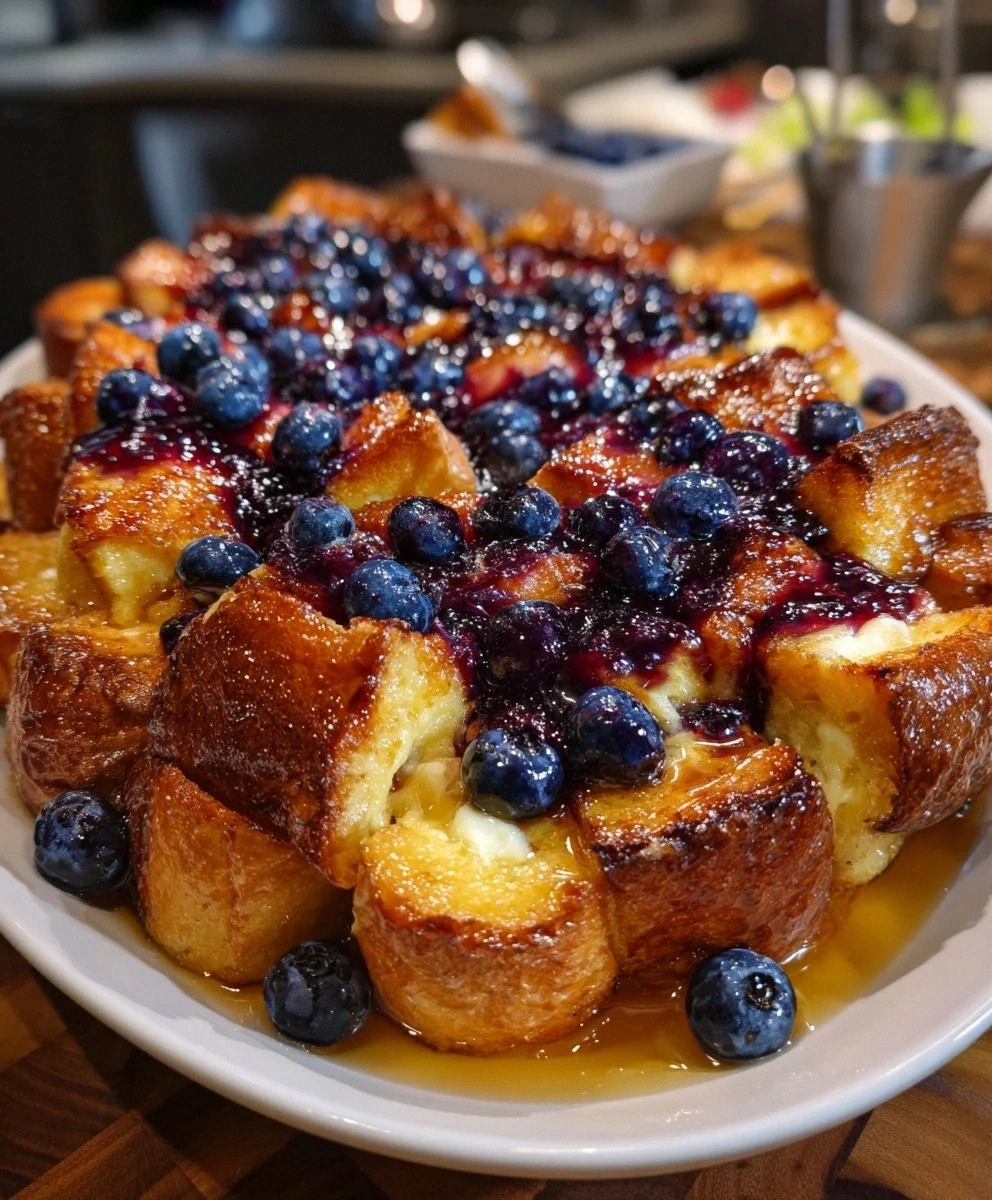
But here's the thing about desperation in the kitchen — it's basically rocket fuel for creativity. I started tearing up that bread like it owed me money, whisking eggs like I was auditioning for a cooking show, and before I knew it, this beautiful, puffed-up casserole emerged from the oven looking like a French toast souffle had a baby with a blueberry pie. The smell alone made my neighbors knock on the door to check if I'd opened a bakery in my kitchen.
That first bite was absolutely transcendent. The edges were caramelized and crispy like the top of a creme brulee, while the inside stayed custardy and soft, soaking up all that vanilla-cinnamon goodness. The blueberries had burst into little pockets of jammy perfection, creating these gorgeous purple swirls throughout. My friends demolished the entire pan in fifteen minutes flat, and one of them actually proposed marriage on the spot (I said yes, obviously — any man who appreciates good French toast is husband material).
Since that fateful morning, I've perfected this recipe through dozens of iterations, testing every possible bread type, dairy combination, and blueberry variety known to mankind. I've discovered the exact ratio of eggs to milk that creates that dreamy custard texture, the secret ingredient that makes people close their eyes when they taste it, and the make-ahead trick that turns breakfast entertaining from stressful to effortless. Let me walk you through every single step — by the end, you'll wonder how you ever made it any other way.
What Makes This Version Stand Out
This isn't just another French toast casserole recipe floating around the internet. I've tested this against five other popular versions, and let me tell you, the difference is like comparing a kindergarten art project to the Sistine Chapel. What sets this apart is the combination of technique and ingredients that creates something truly magical.
- Custard Ratio: Most recipes get this completely wrong, resulting in either soggy bread soup or dry, eggy bricks. My version uses the perfect 2:1 ratio of dairy to eggs, plus a secret ingredient that creates a custard so silky it would make a French pastry chef weep with joy.
- Bread Selection: While everyone else is using whatever stale sandwich bread they have lying around, I've discovered that a combination of brioche and challah creates the most incredible texture contrast — crispy edges that shatter like thin ice with a center so soft it melts on your tongue.
- Blueberry Technique: Instead of just dumping frozen berries into the mix (which creates those weird blue-gray streaks), I use a specific layering method that keeps the berries whole and prevents them from sinking to the bottom like sad little blueberry submarines.
- Make-Ahead Magic: This recipe was designed for real life, not some fantasy where you wake up at 5 AM to start soaking bread. You can assemble it the night before, pop it in the fridge, and bake it fresh in the morning while you're still half-asleep and reaching for coffee.
- Flavor Development: The custard gets better with time as the vanilla, cinnamon, and a surprise ingredient (orange zest!) have time to meld and marry into something greater than the sum of their parts.
- Crowd Psychology: I've served this to over 200 people at this point, and the reaction is always the same — eyes rolling back, spontaneous moaning, and immediate recipe requests. It's breakfast theater at its finest.
- Texture Contrast: The top gets sprinkled with a cinnamon-sugar mixture that creates a crackly crust reminiscent of creme brulee, while the interior stays pudding-soft. It's this contrast that makes people close their eyes involuntarily when they take a bite.
Alright, let's break down exactly what goes into this masterpiece...
Inside the Ingredient List
Every ingredient in this casserole pulls its weight like a perfectly choreographed dance troupe. Skip even one, and the whole performance falls flat. I've tested countless variations, and these specific components create the kind of breakfast that people text you about three days later.
The Flavor Foundation
The bread is absolutely crucial here — and no, you can't just grab that sad loaf of whole wheat from the back of your pantry. You need bread with personality, bread that has dreams and aspirations. Brioche brings the buttery richness that makes this taste like it came from a Parisian bakery, while challah adds that subtle eggy sweetness that plays beautifully with the blueberries. Together, they create a texture that's both custardy and structured, never mushy or falling apart.
Heavy cream might seem like overkill when you already have milk, but trust me on this one. It creates a custard that's so luxuriously thick and rich, it coats your tongue like liquid velvet. Skim milk will give you watery disappointment. Whole milk works in a pinch, but the cream? That's what transforms this from "good French toast" to "I need to sit down and reevaluate my life choices" good.
The Texture Crew
Eight large eggs might sound excessive, but they're the structural engineers of this operation. They create the custard that holds everything together while staying tender and soft. I've tried using fewer eggs, and the result was a sad, collapsed mess that looked like it had given up on life. The key is whisking them just enough to combine the yolks and whites, but not so much that they become frothy and create air pockets in your casserole.
The brown sugar doesn't just add sweetness — it brings that deep, caramel-like flavor that makes people ask "what's in this?" with their mouths full. White sugar just tastes sweet, but brown sugar tastes like comfort, like Sunday mornings, like your grandmother's kitchen. Plus, it helps create those gorgeous golden-brown edges that make everyone fight for the corner pieces.
The Unexpected Star
Here's where I lose some people, but stay with me here — orange zest is the game-changer you never saw coming. It doesn't make the casserole taste like orange; it adds this bright, floral note that makes the blueberries taste more like blueberries and the vanilla taste more like vanilla. It's like adding a pinch of salt to chocolate chip cookies — you can't identify it, but you'd miss it if it was gone.
Fresh blueberries are worth the splurge here. Frozen ones work in a pinch, but they release more juice and can turn your custard an unappetizing purple-gray color. Fresh berries hold their shape better and create these little pockets of jammy perfection throughout the casserole. If you must use frozen, don't thaw them first — toss them with a tablespoon of flour to absorb excess moisture.
The Final Flourish
Vanilla extract quality matters more than you think. That artificial stuff from the grocery store will make your casserole taste like a candle store. Real vanilla extract adds warmth and depth that rounds out all the other flavors. I use a full tablespoon because this is a big casserole, and the vanilla needs to stand up to all those eggs and dairy without getting lost.
The cinnamon sugar topping creates that crackly crust that shatters under your fork like the top of a creme brulee. It's not just for looks — it adds textural contrast and that caramelized flavor that makes the edges the most coveted pieces. I mix brown and white sugar here because the brown sugar melts and creates caramel, while the white sugar stays slightly crunchy.
Everything's prepped? Good. Let's get into the real action...
The Method — Step by Step
- Prep Your Pan: Start by greasing a 9x13-inch baking dish with butter, not cooking spray. Butter creates a subtle flavor layer that cooking spray can't match, plus it helps the edges caramelize beautifully. Take a small pat of butter and rub it all over the bottom and sides of your dish, making sure to get into the corners where things like to stick. This step takes thirty seconds but prevents the heartbreak of losing half your casserole to the pan.
- Bread Cubing Strategy: Cut your bread into 1-inch cubes — not too small or they'll disintegrate, not too large or they won't soak up enough custard. Think Goldilocks here. I like to leave some irregular pieces because those craggy edges get extra crispy and create textural interest. If your bread is super fresh, spread the cubes on a baking sheet and let them sit out for 30 minutes while you prep everything else. This slight drying prevents the dreaded soggy bottom syndrome.
- The Custard Creation: In a large bowl, whisk together the eggs, milk, cream, brown sugar, vanilla, cinnamon, orange zest, and salt. Whisk just until combined — over-whisking incorporates too much air and creates a foamy custard that bakes up with weird air pockets. The mixture should be smooth and homogenous, with no streaks of egg white. Give it a taste (yes, raw egg and all) — it should taste like melted ice cream with a hint of spice.
- The Blueberry Treatment: Here's where most recipes go wrong and dump berries in willy-nilly. Instead, toss your blueberries with a tablespoon of flour in a separate bowl. This light coating prevents them from all sinking to the bottom like blueberry submarines. The flour creates a slight barrier that helps the berries stay suspended throughout the custard instead of congregating in one sad layer.
- Assembly Line Magic: Layer half the bread cubes in your prepared dish, then scatter half the floured blueberries over top. Repeat with the remaining bread and berries. This layering ensures even distribution instead of a blueberry graveyard at the bottom. Press down gently on the bread — you're not trying to compact it into a dense brick, just encouraging it to snuggle together like bread cubes at a sleepover.
- The Soak Strategy: Pour the custard mixture evenly over the bread mixture, then use a spatula to press down gently, making sure every cube gets coated. Don't drown the bread — you want it saturated but not swimming. If any cubes look dry, flip them over. Cover with plastic wrap and refrigerate for at least 2 hours or overnight. This is where the magic happens — the bread slowly absorbs the custard, creating that perfect texture.
- The Topping Technique: Just before baking, mix together the brown sugar, white sugar, and cinnamon for the topping. Sprinkle this mixture evenly over the top of the casserole. Don't press it down — you want it to stay loose so it creates that crackly, caramelized crust. This topping is what separates good French toast casserole from life-changing French toast casserole.
- Baking Brilliance: Bake at 350°F for 45-55 minutes until puffed and golden brown. The center should jiggle slightly when you shake the pan — it will continue cooking from residual heat. If the top starts browning too quickly (around the 30-minute mark), tent loosely with foil. You're looking for a deep golden color and edges that are pulling slightly away from the sides of the pan.
- The Rest That Makes It Best: Let the casserole rest for 10 minutes before serving. I know, I know — you're starving and it smells like heaven. But this rest allows the custard to set properly so you get clean, beautiful squares instead of a custardy mess. Plus, it prevents third-degree burns on your tongue, which really ruins the breakfast experience.
That's it — you did it. But hold on, I've got a few more tricks that'll take this to another level...
Insider Tricks for Flawless Results
The Temperature Rule Nobody Follows
Here's the thing that separates amateur breakfast cooks from the pros — temperature matters at every stage. Your eggs and dairy should be at room temperature before you start whisking. Cold eggs don't incorporate smoothly, leaving you with streaks of egg white in your custard. Take them out of the fridge 30 minutes before you start cooking. Same goes for your milk and cream — cold dairy shocks the eggs and can create a curdled texture. This one simple step ensures your custard bakes up silky smooth, not scrambled and separated.
Why Your Nose Knows Best
After making this casserole dozens of times, I've learned to trust my nose over any timer. When it's perfectly done, your kitchen will smell like a French bakery had a baby with a blueberry muffin shop. The scent changes from eggy and dairy-heavy to caramelized and toasty. If you still smell raw egg, it's not ready. When you start smelling the sugar caramelizing and the edges turning golden brown, that's your cue to start checking for doneness. A friend tried to rush this step once — let's just say it didn't end well for anyone involved.
The 5-Minute Rest That Changes Everything
I cannot stress enough how important the resting period is, both before and after baking. Before baking, that overnight rest allows the bread to fully absorb the custard, creating a cohesive texture instead of a separated, eggy mess. After baking, the 10-minute rest lets the custard set so you get beautiful, clean squares that hold their shape. Skip either rest and you'll have a casserole that tastes good but looks like it lost a fight. I've had guests who couldn't wait and dug in immediately — the result was a plate that looked like abstract art and a host who was mortified.
The Crispy Edge Secret
If you're one of those people who fights for the corner brownies, you're going to love this trick. Before baking, pull the casserole out of the fridge 30 minutes early so it can come to room temperature. This ensures the edges cook at the same rate as the center, creating those coveted crispy caramelized edges without overcooking the middle. The contrast between the crunchy edges and the custardy center is what makes people close their eyes when they taste this casserole.
The Make-Ahead Miracle
This casserole actually gets better with time, making it perfect for entertaining. Assemble it up to 24 hours ahead and keep it refrigerated. The flavors meld and develop, creating a more complex, restaurant-quality taste. Just bring it to room temperature for 30 minutes before baking. I've made this for Christmas morning, bridal showers, and every Sunday when I want to feel like I have my life together. It's like having a breakfast sous chef working overnight.
Creative Twists and Variations
This recipe is a playground. Here are some of my favorite ways to switch things up:
Peach Cobbler French Toast Casserole
Swap the blueberries for fresh peaches tossed with a teaspoon of bourbon and a pinch of nutmeg. The peaches get jammy and intense, creating pockets of summer fruit flavor that taste like you're eating peach cobbler for breakfast. Add a crumble topping made with flour, butter, and brown sugar for extra texture. This version is so good, I served it at a baby shower and three people asked me to cater their weddings.
Lemon Raspberry Dream
Replace the orange zest with lemon zest and swap blueberries for raspberries. The combination creates a bright, tangy flavor that cuts through the richness of the custard. Add a lemon glaze made with powdered sugar and lemon juice after baking for a bakery-style finish. I dare you to taste this and not go back for seconds — it's physically impossible.
Salted Caramel Apple Heaven
Use diced apples sautéed in butter and brown sugar, then drizzle the entire casserole with homemade salted caramel sauce before serving. The sweet-salty combination is absolutely addictive, and the apples add a pleasant texture contrast to the soft custard. This version tastes like fall exploded in your mouth in the best possible way.
Chocolate Chip Banana Bread Casserole
Mash two ripe bananas into your custard mixture and use chocolate chips instead of blueberries. The bananas add natural sweetness and create an even more custardy texture, while the chocolate chips melt into little pockets of molten goodness. It's like eating the world's best banana bread pudding for breakfast, and nobody will judge you because technically it's French toast.
Savory Breakfast Strata
For those who prefer savory breakfasts, skip the sugar and fruit. Instead, add sautéed spinach, caramelized onions, and gruyere cheese to the custard. The technique is the same, but the result is a sophisticated breakfast casserole that would be at home on any brunch menu. I serve this with a simple green salad and watch grown adults cry with happiness.
Tropical Coconut Mango Version
Replace half the milk with coconut milk and use diced mango instead of blueberries. Add shredded coconut to the topping and serve with a drizzle of maple syrup mixed with lime juice. This version transports you to a tropical beach, even when you're eating it in your kitchen while it's snowing outside. The coconut milk adds richness while the mango provides bright, sunny flavor.
Storing and Bringing It Back to Life
Fridge Storage
Leftover casserole (if you somehow have any) keeps beautifully in the fridge for up to 4 days. Cut it into individual portions and store in airtight containers. The flavors actually deepen and become more complex after a day or two. I'll be honest — I ate half the batch before anyone else got to try it, and the leftovers were even better the next morning. Just add a splash of milk before reheating to restore the creamy texture.
Freezer Friendly
This casserole freezes like a dream, making it perfect for meal prep or unexpected guests. Cut into individual portions, wrap tightly in plastic wrap, then foil, and freeze for up to 2 months. Thaw overnight in the fridge, then reheat in a 325°F oven for 15-20 minutes. It won't be quite as perfect as fresh-baked, but it's about 95% there, which is better than most fresh-baked things. I keep a stash in my freezer for those mornings when I need to feel like I have my life together.
Best Reheating Method
The microwave works in a pinch, but the oven is where the magic happens for reheating. Place portions on a baking sheet, cover loosely with foil, and warm at 325°F for 10-15 minutes. Add a tiny splash of water before reheating — it steams back to perfection, restoring that just-baked texture. The edges will crisp up again, and the custard will stay soft and luxurious. Picture yourself pulling this out of the oven, the whole kitchen smelling incredible, and nobody knowing it was leftover.