Picture this: it's 9:47 PM on a random Tuesday, I'm standing in my kitchen in mismatched socks, hair resembling a bird's nest, and I've just managed to ruin what was supposed to be a romantic dinner for two. The salmon is overcooked, the sauce has separated into an oily mess, and my date is politely picking at their plate while I contemplate whether I can fake a kitchen emergency. Fast forward three weeks later – same kitchen, same socks (don't judge), but this time I'm pulling out a pan of salmon so perfectly cooked, so ridiculously creamy and flavorful, that my dinner guest literally paused mid-bite, looked me dead in the eye, and said, "If you propose right now with this salmon, I'd say yes." That's how this Creamy Tuscan Marry Me Salmon was born, my friends.
But here's the thing – this isn't just another recipe floating around the internet claiming to be life-changing. This is the result of twelve failed attempts, three different grocery store runs, and one very patient roommate who taste-tested every single version. I've cracked the code on getting that restaurant-quality sear on the salmon while keeping the inside buttery and tender. The sauce? It's what dreams are made of – silky, rich, packed with sun-dried tomatoes that burst with concentrated flavor, kale that wilts into velvety perfection, and just enough lemon to make your taste buds sing. I dare you to taste this and not go back for seconds. Actually, I dare you to taste this and not consider making it every single night for the rest of your life.
What makes this version different from every other "Tuscan salmon" recipe out there? Most recipes get it completely wrong. They dump everything in one pan and hope for the best, ending up with overcooked fish swimming in a thin, watery sauce that tastes like disappointment. Here's what actually works: we build layers of flavor like we're constructing a flavor skyscraper, starting with properly seasoned fish and ending with a sauce so luxurious it should come with a warning label. The secret lies in the technique – searing the salmon separately to get those crispy edges that shatter like thin ice, then creating a sauce that coats each piece like velvet.
Stay with me here – this is worth it. By the end of this post, you'll know exactly how to create a dish that looks like it came straight from a Tuscan villa's kitchen, smells like heaven, and tastes like you're sitting in a little Italian trattoria while someone plays accordion softly in the background. Picture yourself pulling this out of the oven, the whole kitchen smelling incredible, and watching someone's face light up when they take the first bite. Let me walk you through every single step – by the end, you'll wonder how you ever made it any other way.
What Makes This Version Stand Out
Okay, ready for the game-changer? I've tested this recipe on the pickiest eaters I know – my Italian grandmother who thinks everything should be done her way, my friend who claims to hate salmon, and my neighbor who won't eat anything green. They all cleaned their plates. Here's why this version will ruin all other salmon recipes for you:
- Flavor Bomb: We're not just throwing garlic into hot oil and calling it a day. We're creating a base so aromatic that your neighbors will be knocking on your door asking what smells so incredible. The combination of sun-dried tomatoes, fresh garlic, and Tuscan herbs creates a depth that makes restaurant versions taste bland in comparison.
- Texture Heaven: Most people overcook salmon until it resembles cardboard. Not here. We get crispy skin and edges while maintaining a center so tender it practically melts on your tongue. The contrast between the flaky fish and the creamy sauce is what food dreams are made of.
- One-Pan Wonder (Sort Of): While we do use separate techniques for the salmon and sauce, everything comes together in one final pan where the flavors marry into pure magic. Less dishes, more flavor – that's what I call winning at life.
- Date Night Certified: This dish has a 100% success rate for romantic dinners. I'm not saying it'll guarantee a marriage proposal, but I'm also not saying it won't. The combination of looking impressive while tasting incredible is basically a love potion in food form.
- Restaurant Quality, Home Cook Friendly: Sounds fancy, right? But here's the truth – if you can season meat and stir a pot, you can make this dish. I've broken down every step so specifically that even my brother who once burned water could pull this off.
- Leftovers That Taste Better: I'll be honest – I ate half the batch before anyone else got to try it. But the next day? The flavors had melded into something even more spectacular. This is the gift that keeps on giving, people.
Alright, let's break down exactly what goes into this masterpiece...
Inside the Ingredient List
The Flavor Base
Let's start with the foundation – the salmon itself. Opt for wild-caught if possible. They're tastier and healthier, with a more robust flavor that stands up to our bold sauce. Farm-raised works in a pinch, but wild salmon has this incredible depth that makes you understand why bears risk everything for that upstream journey. When selecting your fillets, look for bright, firm flesh that springs back when pressed. If it smells fishy, walk away – fresh salmon should smell like the ocean, not like last week's tuna sandwich.
Olive oil is our cooking fat of choice, but here's where most recipes mess up. You need enough to create a proper sear, but not so much that you're basically poaching the fish. This golden oil adds richness and helps conduct heat evenly. You can substitute it with butter for a more decadent flavor, but olive oil lets the other ingredients shine. Pro tip: save your expensive extra-virgin for finishing and use regular olive oil for cooking.
The Tuscan spice blend is where the magic begins. A delightful mix of herbs that brings a taste of Italy to your dish. If you're feeling adventurous, try creating your own blend at home! I mix equal parts dried oregano, basil, thyme, and rosemary with a pinch of crushed red pepper. The key is balance – you want each herb to contribute without overwhelming the others. Store it in an airtight jar and you'll find yourself sprinkling it on everything from roasted vegetables to popcorn.
The Texture Crew
Sea salt enhances the flavors of the salmon and sauce. You can adjust this to your taste, but don't be shy – under-seasoned salmon is the culinary equivalent of a joke without a punchline. I use coarse sea salt because it dissolves more slowly, giving you better control over the final seasoning. The rule of thumb: season the fish until you can see a light dusting of salt, but not so much that it looks like it just came back from a ski trip.
Garlic cloves (or shallot) deliver an aromatic punch. It's a must in any flavorful dish! Fresh garlic is non-negotiable here – the pre-minced stuff in jars tastes like disappointment and regret. I use a microplane to grate my garlic directly into the pan, creating a paste that melts into the sauce without any harsh chunks. That sizzle when it hits the pan? Absolute perfection.
Tomato paste adds depth and a slight sweetness to the sauce. Don't skip this – it's the difference between a sauce that tastes Italian and one that tastes like creamy tomatoes with identity issues. Cook it until it turns a deep brick red and starts to caramelize on the bottom of the pan. Your kitchen will smell like you've been transported to a small Italian village.
The Unexpected Star
Sun-dried tomatoes are the secret weapon here. These little gems add a chewy texture and rich flavor that's concentrated like ten regular tomatoes decided to have a flavor party. You could also use fresh roasted tomatoes if preferred, but sun-dried brings an intensity that's hard to match. I like to buy them packed in oil – they're softer and easier to work with. Chop them into small pieces so they distribute evenly throughout the sauce.
Heavy cream is the star of the sauce! It creates that dreamy, luscious consistency we all adore. This is not the place to go light – use the real deal or don't bother. The cream should coat the back of a spoon when it's reduced properly. If you're watching calories, make a different recipe. This is about indulgence, not restraint.
Vegetable or seafood stock keeps the sauce flavorful and light, adding a comforting essence. Use seafood stock if you have it – it amplifies the ocean flavor and makes the whole dish taste more cohesive. Vegetable stock works too, but avoid chicken stock. It competes with the delicate salmon flavor and throws off the whole balance.
The Final Flourish
White cooking wine provides acidity and brightness, enhancing the overall flavor profile. Don't use anything you wouldn't drink – if it tastes like vinegar in the glass, it'll taste like vinegar in your sauce. I keep a bottle of dry white wine specifically for cooking. The alcohol cooks off, leaving behind complex flavors that make everything taste more sophisticated.
Lemon juice adds brightness and cuts through the richness beautifully. A splash of fresh lemon is the difference between a sauce that's heavy and cloying and one that makes you want to lick the plate. Use real lemons, not that bottled stuff. Your taste buds will thank you.
Kale softens in the sauce and adds color and nutrition. Feel free to swap it for spinach or any greens you enjoy, but kale holds up better to the heat and doesn't turn into mush. Remove the tough stems and chop it roughly – it will wilt down to almost nothing, so don't be alarmed by the mountain of greens you start with.
Parmesan cheese brings a nuttiness to the sauce, and more can also be used for garnishing! Freshly grated is mandatory – the pre-grated stuff in containers has cellulose that prevents proper melting. Grate it yourself and taste the difference. The cheese should melt into the sauce, creating a silky texture that makes you want to bathe in it.
Everything's prepped? Good. Let's get into the real action...
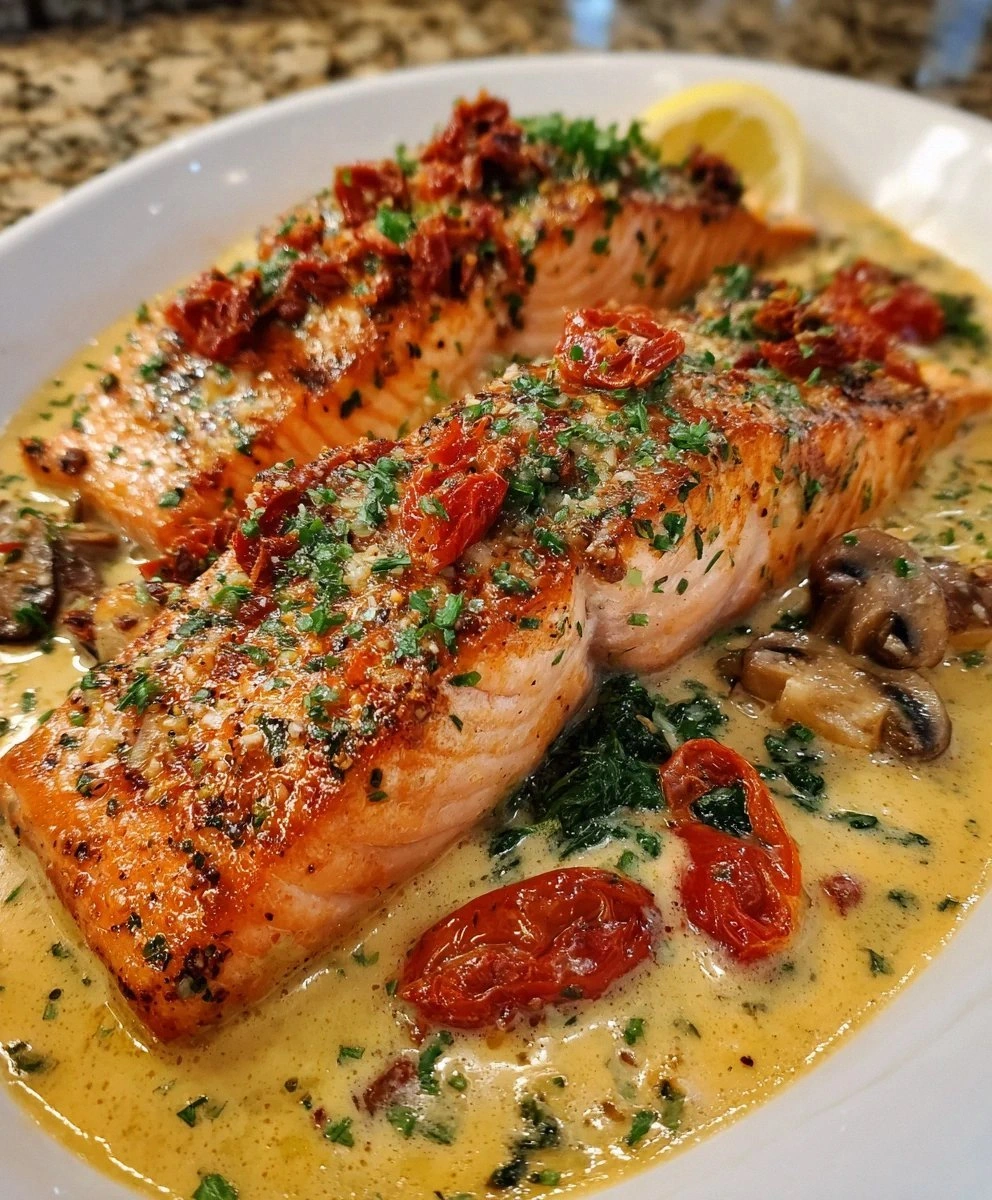
The Method — Step by Step
- Prep Your Fish Like a Pro: Pat those salmon fillets dry with paper towels until they're completely moisture-free. This is crucial – water is the enemy of a good sear. Season both sides generously with sea salt and your Tuscan spice blend, pressing the seasoning into the flesh so it adheres properly. Let it sit at room temperature while you prep everything else. Room temperature fish cooks more evenly, preventing that dreaded overcooked outside and raw inside situation that ruins dinner parties.
- Heat Your Pan to the Sweet Spot: Place a large skillet over medium-high heat and add olive oil. You want the oil to shimmer but not smoke – if it's smoking, it's too hot and your kitchen will smell like a fire pit. Test the heat by flicking a drop of water into the pan – it should sizzle and dance across the surface. This temperature ensures you get that gorgeous golden crust without burning the outside while the inside stays raw.
- Sear That Salmon to Perfection: Carefully place the salmon skin-side down in the hot pan. Now, here's where patience pays off – don't touch it for 4-5 minutes. Let it develop that crispy skin that crackles like a potato chip. The edges should start turning opaque, and you'll see the color change moving up the sides. Flip it once, cook for another 2-3 minutes, then transfer to a plate. It will finish cooking later in the sauce.
- Build Your Flavor Foundation: In the same pan (don't wipe it out – those browned bits are liquid gold), reduce heat to medium and add more oil if needed. Add minced garlic and stir constantly for 30 seconds. It should smell like you've died and gone to Italian heaven, but don't let it brown or it turns bitter. Add the tomato paste and cook for another minute, stirring until it turns a deep, rich red color.
- Deglaze Like You Mean It: Pour in the white wine and watch it bubble dramatically. Use a wooden spoon to scrape up all those beautiful browned bits from the bottom of the pan – they're packed with flavor. Let the wine reduce by half, which concentrates the flavor and cooks off the harsh alcohol taste. Your kitchen should smell like a fancy Italian restaurant at this point.
- Create the Creamy Magic: Lower the heat to medium-low and stir in the heavy cream and stock. This is the moment of truth – the sauce should start to thicken and turn a beautiful blush pink color. Add the sun-dried tomatoes and let everything simmer together for 3-4 minutes. The sauce should coat the back of a spoon when you dip it in.
- Add the Greens and Cheese: Stir in the chopped kale and let it wilt down – don't worry about the mountain of greens, they'll reduce significantly. Add the lemon juice and half the Parmesan cheese, stirring until the cheese melts into the sauce. Taste and adjust seasoning with salt and pepper. The sauce should be thick enough to coat the salmon but still pourable.
- Bring It All Together: Nestle the seared salmon fillets back into the sauce, spooning some over the top. Cover and let everything simmer together for 3-4 minutes. This finishes cooking the salmon and allows the flavors to meld. The fish should flake easily with a fork but still be slightly translucent in the center – that's perfect salmon, not undercooked.
- Final Flourish and Serve: Remove from heat and sprinkle with the remaining Parmesan cheese. Let it rest for 2 minutes – this allows the sauce to thicken slightly and the cheese to melt into little pockets of joy. Serve immediately, spooning extra sauce over each portion. Garnish with fresh herbs if you're feeling fancy, but honestly, it doesn't need it.
That's it – you did it. But hold on, I've got a few more tricks that'll take this to another level...
Insider Tricks for Flawless Results
The Temperature Rule Nobody Follows
Most people cook salmon at too high a temperature, resulting in dry, chalky fish that makes you understand why some folks claim to hate salmon. Here's what actually works: start with a screaming hot pan for the sear, then finish at medium-low heat. The initial high heat creates that gorgeous crust through the Maillard reaction (science, baby!), while the lower finishing temperature ensures the inside stays buttery and moist. A friend tried skipping this step once – let's just say it didn't end well. She served salmon that could've doubled as shoe leather, and her date suggested they order pizza instead.
The sauce temperature is equally crucial. Too hot and the cream separates into an unappetizing mess that looks like something went horribly wrong. Too cool and it never thickens properly, leaving you with pink soup instead of luxurious sauce. Medium-low is your sweet spot – you should see gentle bubbling around the edges but no vigorous boiling in the center. Think of it like a relaxing jacuzzi for your sauce, not a turbulent whirlpool.
Why Your Nose Knows Best
Trust your senses – they're more reliable than any timer. When the garlic is perfectly cooked, your kitchen will smell like you've been transported to an Italian grandmother's kitchen. If it starts to smell sharp or bitter, you've gone too far and need to start over. That moment when the wine hits the pan and creates that dramatic whoosh of steam? That's when you know you're on the right track.
The same goes for the salmon – properly seared fish smells slightly sweet and nutty, not fishy at all. If your kitchen starts to smell like low tide, you've either got old fish or the heat's too low. Fresh, properly cooked salmon should smell like the ocean breeze, not like something washed up on shore. Your nose is your most underutilized kitchen tool – use it!
The 5-Minute Rest That Changes Everything
Here's where patience becomes your secret weapon. After you nestle the salmon back into the sauce, resist the urge to poke, prod, or flip it constantly. Let it rest undisturbed for those crucial few minutes. This allows the flavors to penetrate the fish and the sauce to reach the perfect consistency. Think of it like letting a good wine breathe – those few minutes of rest make the difference between good and restaurant-quality.
And here's the kicker – after cooking, let the whole dish rest for another 2-3 minutes off heat before serving. This final rest allows the sauce to thicken naturally as it cools slightly, and the salmon finishes cooking gently in the residual heat. It's like a spa treatment for your dinner – everything relaxes and comes together in perfect harmony. Skip this step and you're left with sauce that's too thin and salmon that's still cooking on the plate, getting progressively more done with each passing moment.
Creative Twists and Variations
This recipe is a playground. Here are some of my favorite ways to switch things up:
The Mediterranean Escape
Swap the kale for fresh spinach and add a handful of Kalamata olives along with the sun-dried tomatoes. The briny olives add another dimension that makes the whole dish taste like you're dining on a Greek island. Use oregano instead of the Tuscan blend, and finish with crumbled feta instead of Parmesan. The saltiness of the feta against the creamy sauce creates this incredible contrast that'll make you want to book a flight to Santorini immediately.
The Luxurious Lobster Version
For special occasions, replace half the salmon with chunks of lobster tail. Add the lobster during the final 2 minutes of cooking – it cooks quickly and becomes tough if overdone. The combination of salmon and lobster in that creamy sauce is pure decadence. I make this for anniversaries and birthdays, and it's never failed to impress. Yes, it's expensive, but can you really put a price on watching someone's eyes roll back in pleasure?
The Dairy-Free Dream
Replace the heavy cream with full-fat coconut milk and use nutritional yeast instead of Parmesan. The coconut milk adds a subtle sweetness that pairs beautifully with the sun-dried tomatoes, and the nutritional yeast provides that umami depth you miss from cheese. A friend with dairy allergies swears this version is even better than the original – the coconut adds this tropical note that makes the whole dish feel like vacation on a plate.
The Spice Route Adventure
Add a pinch of saffron to the cream sauce and swap the white wine for dry sherry. The saffron turns the sauce a gorgeous golden color and adds this luxurious floral note. Add some toasted slivered almonds at the end for crunch. This version tastes like something you'd find in a Moorish palace, all exotic spices and rich flavors that transport you to another place entirely.
The Coastal Catch
Mix it up with different fish – halibut, sea bass, or even scallops work beautifully. Just adjust cooking times accordingly. Scallops need only 2 minutes per side, while thicker halibut steaks might need an extra minute or two. The sauce is so versatile it's like the little black dress of seafood – everything looks good in it.
The Veggie-Forward Version
Add artichoke hearts, capers, and switch the kale to baby arugula. The artichoke hearts add a meaty texture, capers bring bright pops of briny flavor, and the arugula wilts into peppery perfection. This version is so loaded with vegetables it's practically a salad, but don't tell anyone – they won't notice with all that creamy sauce.
Storing and Bringing It Back to Life
Fridge Storage
Store leftovers in an airtight container for up to 3 days, though I doubt they'll last that long. Keep the salmon separate from extra sauce if possible – it reheats better this way. The sauce will thicken considerably in the fridge, so don't panic when you see it transformed into salmon-flavored Jell-O. That's just the cream and cheese doing their thing in the cold.
Always let it cool completely before refrigerating – putting hot food directly in the fridge creates condensation that waters down the sauce and promotes bacterial growth. Plus, it raises the temperature of your whole fridge, putting everything at risk. Patience, young grasshopper. Your future self will thank you when you're eating perfectly preserved leftovers instead of questioning your life choices over questionable seafood.
Freezer Friendly
While you can freeze this dish, I don't recommend it. The cream sauce tends to separate when thawed, and the texture of the salmon becomes grainy and unpleasant. If you absolutely must freeze it, do so without the cream and add fresh cream when reheating. Freeze in portion-sized containers for up to 2 months, and accept that it won't be quite the same glorious experience as fresh.
That said, the sauce base (before adding cream) freezes beautifully. Make a big batch of the tomato-garlic-wine mixture and freeze it in ice cube trays. Pop out a few cubes, add cream, and you've got instant Tuscan sauce for any occasion. It's like having a flavor shortcut in your freezer for busy weeknights when you need dinner to taste like you tried harder than you did.
Best Reheating Method
Here's the key to bringing leftovers back to life: low and slow. Reheat gently in a covered pan over low heat, adding a splash of stock or cream to loosen the sauce. The microwave is your enemy here – it turns the salmon into rubber and the sauce into an oily mess. If you're desperate, microwave at 50% power in 30-second intervals, stirring between each burst.
Add a tiny splash of water before reheating – it steams back to perfection. Cover the pan and let it warm slowly, spooning the sauce over the fish occasionally. Don't overheat – you're just warming it through, not cooking it again. The salmon should reach just barely warm, or you'll end up with that dreaded overcooked texture that makes people claim they don't like salmon.