I still remember the first time I made this cake — it was a disaster. I'd promised my friends a show-stopping dessert for game night, but halfway through mixing, I realized I'd run out of cocoa powder. In a panic, I grabbed the only chocolate thing in my cabinet: a bag of dark chocolate chips and a bottle of stout that had been sitting there since last St. Patrick's Day. What happened next was pure kitchen magic that had everyone fighting over the last slice.
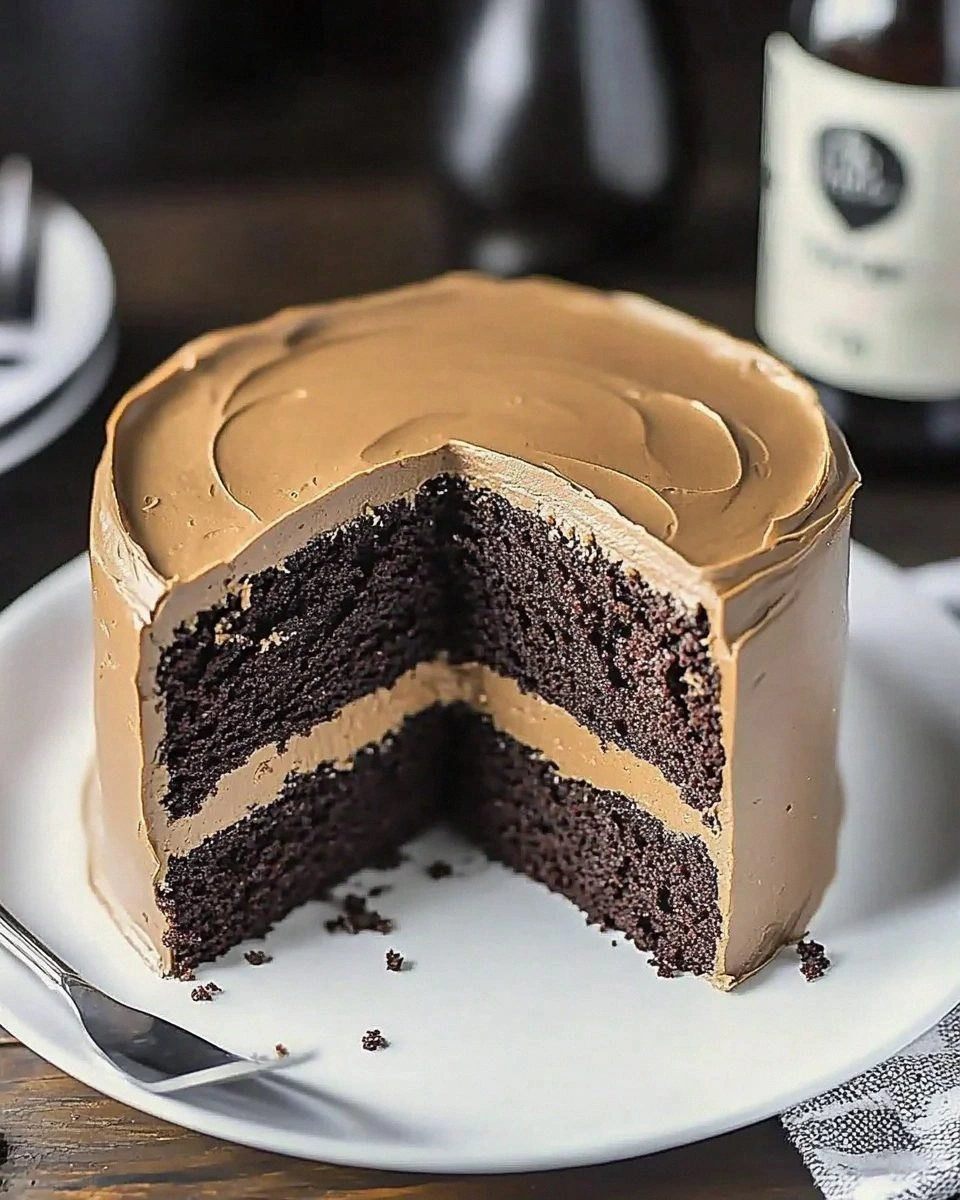
Picture this: it's the middle of winter, your kitchen is warm from the oven, and the smell of chocolate and coffee has filled every corner like a cozy blanket. The cake comes out looking almost black, with a glossy top that crackles like crème brûlée when you touch it. But here's the kicker — when you pour that coffee frosting over the top, it melts into every crack and crevice, creating these gorgeous rivers of creamy sweetness that will make you weak in the knees.
Most cake recipes are just... fine. They're sweet, they're chocolatey, they get the job done. But this one? This is the cake that makes people stop mid-conversation. The stout doesn't just add flavor — it transforms the chocolate into something deeper, more mysterious, like the difference between a casual acquaintance and someone who knows all your secrets. And that coffee frosting? It's not just a topping, it's the encore after an amazing performance, the plot twist you never saw coming.
Okay, ready for the game-changer? We're using a whole bottle of stout in this batter, plus espresso powder in the frosting. This isn't for the faint of heart — this is for the serious dessert lovers who understand that sometimes more is more. Trust me, by the time you're licking the spoon and wondering if it's acceptable to eat frosting straight from the bowl (it is), you'll wonder how you ever made it any other way.
What Makes This Version Stand Out
Depth Charge: While other chocolate cakes taste like, well, chocolate cake, this one has layers upon layers of flavor. The stout brings out notes of coffee, caramel, and even a hint of smoke that makes people ask "what's your secret?" before they've even finished their first bite.
Moisture Magic: Most cakes dry out after a day, but this beauty stays impossibly moist for nearly a week. The beer's natural carbonation creates tiny air pockets that stay tender, while the alcohol bakes off leaving behind pure flavor and an almost pudding-like texture.
Foolproof Frosting: That coffee frosting isn't just delicious — it's bulletproof. Even if you've never made frosting before, this recipe is forgiving. Too thick? Add more cream. Too thin? Let it chill for five minutes. It's like having training wheels that actually make you a better baker.
One-Bowl Wonder: Despite tasting like it came from a Parisian bakery, this entire cake comes together in one bowl. No separating eggs, no creaming butter and sugar until your arm falls off, no complicated techniques that require a culinary degree.
Crowd Psychology: I dare you to taste this and not go back for seconds. I've seen grown adults hover near the dessert table like vultures, timing their approach for when they think no one's looking. The combination of chocolate, coffee, and that mysterious something (it's the stout) hits every pleasure center in the brain.
Make-Ahead Champion: This cake actually tastes better the next day. The flavors meld and deepen, becoming more complex and sophisticated. Make it on Sunday, serve it on Friday, and watch your guests think you're some kind of dessert wizard.
Alright, let's break down exactly what goes into this masterpiece...
Inside the Ingredient List
The Flavor Base
Let's talk about that stout for a second. You want something rich and dark, like Guinness or a chocolate stout if you can find it. The beer isn't just a gimmick — it's carrying most of the flavor load here. When it bakes down, it concentrates into this malty, almost molasses-like essence that makes regular cocoa taste like chocolate water. Skip it and you'll have a perfectly nice cake, but you'll miss that moment when people taste it and their eyes go wide with recognition.
The cocoa powder matters more than you'd think. Dutch-processed cocoa gives you that deep, Oreo-cookie darkness, while natural cocoa keeps things brighter and more acidic. I go with Dutch-processed here because it plays better with the stout, creating this harmonious relationship where each makes the other taste more like itself. It's like they're finishing each other's sentences, but in flavor form.
The Texture Crew
Buttermilk is your insurance policy against dryness. The acid tenderizes the crumb, creating this velvety texture that practically melts on your tongue. No buttermilk? No problem — add a tablespoon of lemon juice or vinegar to regular milk and let it sit for five minutes. The curdled result might look questionable, but it's going to make your cake so tender you'll want to cry.
Brown sugar isn't just for sweetness — it's bringing molasses to the party, adding caramel notes that complement the stout perfectly. The molasses also attracts moisture, keeping your cake tender for days. White sugar works in a pinch, but you'll lose that depth that makes people close their eyes when they take a bite.
The Unexpected Star
Espresso powder in the frosting is what separates the amateurs from the pros. It's not about making it taste like coffee — it's about amplifying the chocolate flavor to eleven. Coffee and chocolate share hundreds of flavor compounds, so adding a hit of espresso is like turning up the volume on your favorite song. Suddenly everything is richer, more intense, more alive.
Don't skip the salt. I know, I know — it's dessert, why would you add salt? But here's the thing: salt doesn't make things salty, it makes things taste more like themselves. A teaspoon in the batter and a pinch in the frosting wakes up every other flavor, creating this three-dimensional taste that flat, one-note desserts can only dream about.
The Final Flourish
Heavy cream in the frosting isn't negotiable. Milk or half-and-half will give you a sad, runny mess that slides off the cake like it's trying to escape. You want that thick, luxurious texture that holds peaks like a cloud and spreads like a dream. Cold cream whips better, so pop your mixing bowl in the freezer for ten minutes before you start.
Vanilla extract might seem basic, but it's the aromatic backbone of the frosting. Splurge on the good stuff — not the artificial clear liquid that costs two dollars, but real vanilla with all its complex, floral notes. Your taste buds will thank you, and so will everyone who gets a slice of this cake.
Everything's prepped? Good. Let's get into the real action...
The Method — Step by Step
- Preheat your oven to 350°F (175°C) and grease a 9-inch round cake pan. Here's where most recipes go wrong — they tell you to just grease the pan. But we're going to be smarter. Butter the pan, then dust it with cocoa powder instead of flour. This gives you extra chocolate flavor and prevents any white patches on your beautiful dark cake. Tap out the excess and set the pan aside while you channel your inner dessert architect.
- In a large bowl, whisk together the flour, cocoa powder, baking soda, baking powder, and salt. Use a whisk instead of a spoon — it breaks up any lumps in the cocoa and distributes the leavening agents evenly. This isn't just busy work; it's the difference between a cake that rises like a champion and one that has sad, sunken centers. The mixture should look like midnight-colored snow, dark and inviting.
- In another bowl, combine the stout, buttermilk, oil, eggs, and vanilla. Beat until smooth and well combined. The mixture will look like a creamy root beer float, and that's exactly what you want. The oil keeps things moist while the buttermilk adds tang and tenderness. Don't worry if it looks slightly curdled — that's just the buttermilk doing its thing and it'll all come together in the oven.
- Gradually add the wet ingredients to the dry ingredients, mixing just until combined. This is the moment of truth — overmix and you'll develop the gluten, giving your cake the texture of rubber. Undermix and you'll have pockets of flour that taste like paste. Mix just until you can't see any dry flour streaks, then stop. The batter should be thick and glossy, like liquid chocolate velvet.
- Fold in the brown sugar and give it one final gentle stir. The brown sugar should dissolve into the batter, creating these gorgeous caramel swirls. Don't panic if it looks too thin — this is a very wet batter, and that's what makes the final cake so moist and tender. Pour it into your prepared pan and tap it gently on the counter to release any air bubbles.
- Bake for 30-35 minutes, or until a toothpick inserted in the center comes out with just a few moist crumbs. This next part? Pure magic. Don't open the oven door for the first 25 minutes — let the cake set and rise undisturbed. When you do check it, look for the edges pulling slightly away from the pan and the center springing back when lightly touched. The top should look shiny and slightly cracked, like a brownie that's been to finishing school.
- Let the cake cool in the pan for 10 minutes, then run a knife around the edges and invert onto a wire rack. This is where patience pays off. The cake needs to cool completely before frosting, otherwise you'll have a melted mess that looks like abstract art. If you're in a hurry (and who isn't?), pop it in the freezer for 20 minutes to speed things up.
- While the cake cools, make the coffee frosting. Beat the butter until light and fluffy, about 3 minutes. This isn't just busy work — properly creamed butter traps air, giving you lighter, fluffier frosting. Scrape down the bowl as needed, because nobody wants to bite into a chunk of unmixed butter. The butter should be pale yellow and look like it's been whipped by angels.
- Add the powdered sugar gradually, alternating with heavy cream, until you reach spreading consistency. Add the espresso powder dissolved in a teaspoon of hot water, plus vanilla and salt. Beat until the frosting is smooth and fluffy, like a coffee-scented cloud. If it's too thick, add more cream a teaspoon at a time. Too thin? Let it chill for 5 minutes or add more powdered sugar.
- Spread the frosting over the cooled cake, letting it drip down the sides in gorgeous, dramatic swoops. Don't aim for perfection here — rustic and homemade looks more appetizing than factory-perfect. Add chocolate shavings or a dusting of cocoa powder if you're feeling fancy, then slice and serve to people who will suddenly become your best friends.
That's it — you did it. But hold on, I've got a few more tricks that'll take this to another level...
Insider Tricks for Flawless Results
The Temperature Rule Nobody Follows
Room temperature isn't just a suggestion — it's the law in my kitchen. Cold eggs don't incorporate properly, leading to a lumpy batter that bakes up dense and heavy. Cold buttermilk can cause the melted chocolate to seize, creating little chocolate chips throughout your cake. Take everything out of the fridge 30 minutes before you start, or speed things up by placing eggs in warm (not hot) water for 5 minutes. Your future self will thank you when you're eating cake so tender it practically dissolves on your tongue.
Why Your Nose Knows Best
That smell when the cake's almost done? That's your built-in timer. When the chocolate and stout start caramelizing, they'll fill your kitchen with this rich, almost boozy aroma that's different from raw cake batter. It's like the difference between smelling coffee beans versus brewed coffee — there's a transformation that happens. When you start smelling that deeper, more complex scent, start checking for doneness. Your nose is more reliable than any timer.
The 5-Minute Rest That Changes Everything
After you mix the wet and dry ingredients, let the batter rest for 5 minutes before pouring it into the pan. This gives the flour time to fully hydrate, which creates a more tender crumb. It also allows any air bubbles to rise to the surface, giving you a more even texture. A friend tried skipping this step once — let's just say her cake had so many holes it looked like Swiss cheese. The waiting is the hardest part, but it's worth every second.
The Frosting Fix-All
Ruined your frosting? Don't panic — I've rescued more frostings than I can count. If it's too sweet, add a pinch more salt or a squeeze of lemon juice. Too grainy? Warm it slightly over a double boiler and re-whip. If you overwhipped and it's full of air pockets, beat in a tablespoon of warm cream to smooth it out. And if all else fails, call it "rustic" and serve it anyway — I guarantee no one will complain once they taste it.
Creative Twists and Variations
This recipe is a playground. Here are some of my favorite ways to switch things up:
The Irish Car Bomb Cake
Replace half the stout with Bailey's Irish Cream and add a shot of Jameson to the frosting. The alcohol bakes off in the cake but leaves behind this incredible complexity, while the Bailey's in the frosting gives you that creamy, dreamy texture. Top with chocolate shavings and serve to people who appreciate a good pub dessert. It's like your favorite shot, but classy and you can eat it with a fork.
The Mocha Madness Version
Add 2 tablespoons of instant espresso powder to the cake batter and replace half the cocoa with Dutch-processed cocoa for extra depth. The result is a cake that tastes like the best mocha you've ever had, but better because it's cake. Top with chocolate-covered espresso beans for crunch and serve to your coffee-obsessed friends. They'll never look at Starbucks the same way again.
The Birthday Party Upgrade
Turn this into a layer cake by doubling the recipe and baking in two pans. Add rainbow sprinkles to the batter (they won't melt!) for a funfetti effect that's sophisticated enough for adults but playful enough for kids. The chocolate base keeps it from being too sweet, while the colorful specks make everyone smile. It's like your childhood birthday party grew up and got really, really delicious.
The Spicy Mexican Hot Chocolate Edition
Add a teaspoon of cinnamon and a pinch of cayenne to the batter. The warmth from the spices plays beautifully with the stout, creating this complex flavor that builds slowly on your tongue. Frost with the coffee frosting and dust with cinnamon sugar. It's like drinking Mexican hot chocolate, but in cake form and with a caffeine kick that'll keep you coming back for more.
The Salted Caramel Dream
Drizzle homemade caramel between layers and on top, then sprinkle with flaky sea salt. The salt cuts through the richness while the caramel adds another layer of flavor that complements the stout perfectly. It's sweet, salty, rich, and completely addictive. I'll be honest — I ate half the batch before anyone else got to try it.
The Vegan Victory
Replace eggs with flax eggs (1 tablespoon ground flaxseed mixed with 3 tablespoons water per egg), use coconut oil instead of butter, and make the frosting with coconut cream. The result is so good that even non-vegans will fight over it. The coconut adds this subtle tropical note that plays surprisingly well with the stout and chocolate.
Storing and Bringing It Back to Life
Fridge Storage
This cake keeps beautifully in the fridge for up to 5 days — if it lasts that long. Wrap it tightly in plastic wrap, pressing the wrap directly against the cut surfaces to prevent drying. The flavors actually deepen and become more complex after a day or two, making this the perfect make-ahead dessert for dinner parties. Bring it to room temperature before serving for the best texture — cold cake is sad cake, but room temperature cake is happy cake.
Freezer Friendly
Wrap individual slices in plastic wrap, then aluminum foil, and freeze for up to 3 months. This is genius for portion control (ha!) or for those emergency chocolate cravings that strike at midnight. Thaw overnight in the fridge or at room temperature for 2 hours. Pro tip: freeze slices before frosting, then add fresh frosting after thawing for that just-made taste and appearance.
Best Reheating Method
If your cake has dried out slightly (it happens), don't despair. Warm individual slices in the microwave for 8-10 seconds — just enough to take the chill off and reactivate the moisture. Add a tiny splash of water before reheating — it steams back to perfection. For the frosting, let it come to room temperature and give it a quick stir to restore its creamy texture. It's like a cake facelift that actually works.