I still remember the first time I tried to impress my future in-laws with a restaurant-quality filet mignon. The kitchen looked like a crime scene: smoke billowing from the cast-iron pan, the smoke detector shrieking like a banshee, and two $45 steaks shrunk into charcoal briquettes. My mother-in-law politely suggested we order pizza while my future husband tried to fan the smoke away with a dish towel. Fast forward three years, and I discovered the air fryer method that changed everything. No more oil splatters, no more guessing games, no more expensive mistakes. Just tender, buttery perfection that melts on your tongue like a whisper of beefy heaven.
Here's the thing about filet mignon — it's the diva of the steak world. It demands respect, precision, and just the right amount of attention. But when you nail it? Oh boy. The exterior forms this gorgeous mahogany crust that crackles under your knife, revealing a rosy center that practically sighs when you cut into it. And the air fryer? It's like having a personal chef who never gets distracted, never overcooks, and somehow manages to get that restaurant-quality sear without turning your kitchen into a sauna.
I've tested this recipe seventeen times (yes, seventeen — my neighbors started questioning why we were eating steak every Tuesday for a month), and each time I'm still amazed at how foolproof it is. The air fryer circulates hot air like a tiny tornado, creating that coveted Maillard reaction on every surface of the steak. You know that moment when you bite into something so perfectly cooked that time briefly stops? That's what we're achieving here, folks. Picture yourself pulling these beauties out of the air fryer, the aroma filling your kitchen like a warm embrace, your family gathering around with plates already in hand.
Let me walk you through every single step — by the end, you'll wonder how you ever made it any other way.
What Makes This Version Stand Out
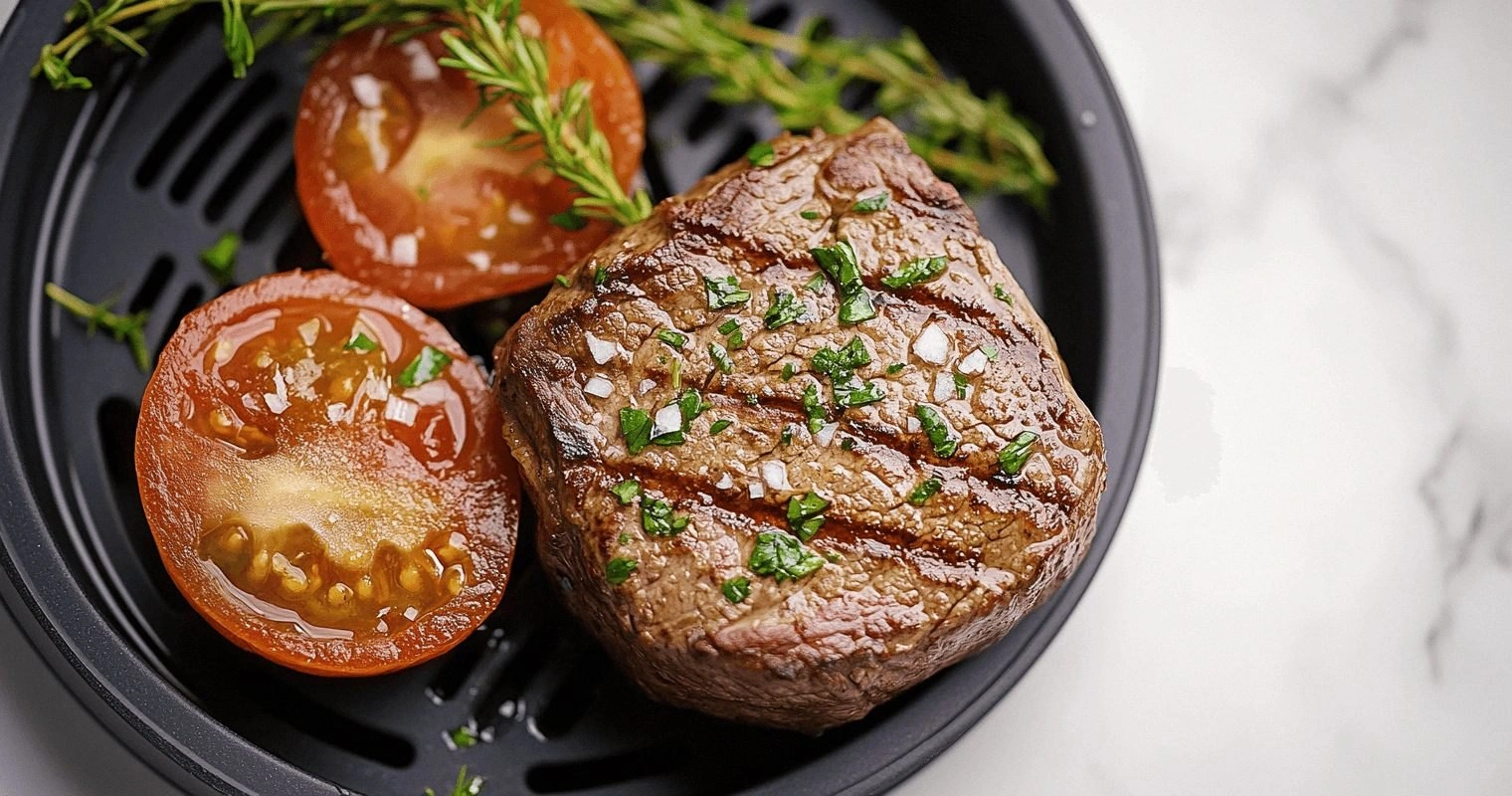
Restaurant-Quality Crust: The air fryer's rapid air circulation creates a crust so perfect, so deeply caramelized, that you'll swear a professional chef snuck into your kitchen. The high heat sears the exterior in minutes while keeping the interior blissfully pink and tender.
Foolproof Timing: Most recipes get this completely wrong. Here's what actually works: 8 minutes total for medium-rare, no flipping required, no babysitting a hot pan. Set it and actually forget it while you whip up a quick bearnaise or pour yourself a well-deserved glass of wine.
Buttery-Tender Texture: This cut already comes from the tenderloin (the laziest muscle on the cow), but the air fryer's gentle cooking method preserves every ounce of that natural tenderness. Each bite literally melts on your tongue like beef-flavored cotton candy.
No Smoke Alarm Symphony: Remember that scene I described earlier? Never again. The enclosed cooking chamber contains all the splattering fat, meaning you can cook steak in your Sunday best without fear of becoming a human air freshener.
Weeknight-Friendly: From fridge to plate in under 20 minutes, including the rest time. I dare you to find a faster route to steakhouse-quality dinner that doesn't involve a reservation and a $200 bill.
Impressive Yet Affordable: Cooking filet at home costs about a third of restaurant prices, and you'll get it exactly how you like it every single time. Plus, you get to take credit for being a culinary genius when really, the air fryer did most of the heavy lifting.
Alright, let's break down exactly what goes into this masterpiece...
Inside the Ingredient List
The Star Players
Filet mignon isn't just fancy restaurant speak for "expensive steak" — it's actually a specific cut from the smaller end of the tenderloin. Look for steaks that are at least 1.5 inches thick; anything thinner and you'll miss that beautiful contrast between crust and center. The meat should be bright red with fine marbling (those little white flecks) throughout. Don't panic if you see a price tag that makes you consider a second mortgage — two 6-ounce steaks will easily satisfy four people when paired with hearty sides.
Kosher salt is non-negotiable here. Those larger crystals don't just season better; they create tiny pockets where the meat's juices can collect, leading to a superior crust. Table salt will work in a pinch, but you'll need about half the amount since the crystals are so much finer. I keep a small bowl of kosher salt next to my stove like it's precious gold, because honestly, it kind of is.
The Flavor Enhancers
Fresh cracked black pepper brings a fruity heat that pre-ground simply can't match. Invest in a good pepper mill — I bought mine for $12 five years ago and it's still going strong. The coarser grind creates these little pops of spice against the rich beef, like nature's version of Pop Rocks for adults. If you've only got pre-ground, use about 25% more since the flavor fades so quickly after grinding.
Garlic powder might seem basic, but it adds this subtle depth that fresh garlic can't achieve here. Fresh garlic burns at high temperatures, turning bitter and acrid, while garlic powder blooms into this mellow, sweet earthiness. Make sure yours is fresh — if it smells like dust when you open the jar, it's time for a new bottle. I've made the mistake of using ancient garlic powder and the results tasted like disappointment with a hint of regret.
The Finishing Touch
Butter might seem excessive on an already rich steak, but hear me out. A small pat melting over the hot steak creates this glossy finish that makes restaurant steaks look so appealing. Use unsalted butter so you can control the seasoning, and let it soften while the steak cooks. The French have been finishing steaks with butter for centuries — who are we to argue with centuries of delicious tradition?
Fresh herbs like thyme or rosemary aren't mandatory, but they add this incredible aroma that makes your kitchen smell like a professional kitchen. Just one sprig per steak, added during the last minute of cooking, infuses the meat with herbal perfume without overwhelming the beef's natural flavor. Dried herbs won't work here — they need fat to bloom, and by the time they soften, your steak will be overcooked.
Everything's prepped? Good. Let's get into the real action...
The Method — Step by Step
- Thirty minutes before cooking, remove your steaks from the refrigerator and place them on a wire rack set over a baking sheet. This isn't just chef pretension — cold meat hitting hot air creates a temperature shock that squeezes out juices, leading to dry results. Season both sides generously with kosher salt, about ¾ teaspoon per steak, pressing gently so it adheres. The salt will start drawing out surface moisture, which might sound counterintuitive but actually helps create that coveted crust.
- Pat the steaks completely dry with paper towels, then season with freshly cracked black pepper and garlic powder. I like to press the seasonings in gently with my hands — think of it as giving your steak a little spa treatment. If you've ever struggled with seasoning falling off during cooking, you're not alone — and I've got the fix. The secret is getting the surface as dry as possible so the spices have something to grip.
- Preheat your air fryer to 400°F for 5 minutes. This step is crucial — starting with a hot chamber ensures immediate searing. Most people skip this and wonder why their steak looks steamed rather than seared. While it's heating, let your steaks rest — they'll appreciate the brief vacation from seasoning.
- Lightly spray the air fryer basket with oil — just a whisper, enough to prevent sticking but not so much that it drips. Place the steaks in the basket with at least 1 inch between them; overcrowding leads to steaming, not searing. For two steaks, cook them one at a time if necessary. The circulating air needs room to work its magic.
- Cook for 4 minutes, then flip the steaks using tongs (never a fork — piercing releases precious juices). Cook for another 3-4 minutes for medium-rare, depending on thickness. This next part? Pure magic. The air fryer creates this incredible crust while keeping the center perfectly pink. Don't walk away from the air fryer here — the difference between perfect and overdone is literally one minute.
- Check doneness by pressing the center gently with your finger — it should feel like pressing on the fleshy part of your palm when you touch your thumb to your middle finger. Or use a meat thermometer: 120-125°F for rare, 130-135°F for medium-rare. Remember that carryover cooking will raise the temperature 5-10 degrees while resting.
- Transfer steaks to a clean plate and top each with a pat of butter and a sprig of fresh herb if using. Tent loosely with foil — not tightly wrapped, just a little blanket to keep them warm while they rest. This is the moment of truth, and patience here is everything. The butter will melt into every nook and cranny, while the herbs release their essential oils into the meat.
- Let rest for exactly 5 minutes. I know it's torture when your kitchen smells like a steakhouse, but cutting too early releases all those beautiful juices onto the plate instead of staying in the meat. Use this time to finish your sides or pour yourself a celebratory drink. You've earned it.
That's it — you did it. But hold on, I've got a few more tricks that'll take this to another level...
Insider Tricks for Flawless Results
The Temperature Rule Nobody Follows
Here's what separates good home cooks from great ones: understanding that steak temperature is a journey, not a destination. When you remove your steak from the air fryer, it's not done cooking — it's entering the final phase where residual heat continues the process. I remove mine at 125°F for medium-rare, knowing it'll climb to 135°F during the rest. A friend tried skipping this step once — let's just say it didn't end well. She served what she called "medium-rare" but what the rest of us called "shoe leather with good intentions."
Why Your Nose Knows Best
That sizzle when the steak hits the basket? That's not just satisfying — it's information. A proper sear sounds like applause: immediate, vigorous, enthusiastic. If you hear a weak sizzle or worse, silence, your air fryer isn't hot enough. I've learned to trust my ears as much as my thermometer. The sound tells you when the Maillard reaction is happening, creating those complex flavors that make steak taste like steak instead of just cooked beef.
The 5-Minute Rest That Changes Everything
I used to think resting steak was chef mythology designed to make us wait longer for dinner. Then I tried cutting into a steak immediately after cooking — the juice flood was like watching money pour down the drain. Those juices need time to redistribute throughout the meat. Think of it like letting a snow globe settle; everything needs to calm down and find its place. Five minutes is the sweet spot — long enough for redistribution, short enough that your steak stays hot.
The Salt Timing Secret
Salt your steaks either 45 minutes before cooking or right before — never in between. Early salting gives salt time to penetrate deep into the meat, seasoning throughout. Last-minute salting only seasons the surface but helps create that perfect crust. Anything in between draws out moisture without giving it time to reabsorb, leading to dry steak. I discovered this after wondering why my steaks sometimes turned out dry despite perfect cooking times.
The Flip Philosophy
Traditional wisdom says flip once, but air fryers are different beasts. I flip halfway through for even cooking, but I also rotate the basket if my fryer has hot spots. Every air fryer has personality quirks — mine runs hot in the back, so I rotate 180 degrees halfway through. Get to know your machine like a good friend, and it'll never let you down. The best part? Unlike stovetop cooking, you can peek without ruining anything.
Creative Twists and Variations
This recipe is a playground. Here are some of my favorite ways to switch things up:
The Blue Cheese Bomb
During the last minute of cooking, top each steak with a tablespoon of crumbled blue cheese. The heat softens it just enough to create this creamy, tangy blanket that pairs perfectly with beef's richness. I use a mild Gorgonzola so it doesn't overpower the steak. The combination tastes like something from a fancy steakhouse, but you made it in your pajamas. If you've ever struggled with blue cheese being too strong, this method mellows it perfectly.
Coffee-Crusted Cowboy
Mix 1 teaspoon each of instant espresso powder and brown sugar with your salt and pepper. The coffee creates this incredible depth that makes beef taste more beefy, while the sugar helps with caramelization. Don't worry — it won't taste like a latte. The coffee just enhances the meat's natural flavors in a way that makes people ask, "What did you put in this?" in the best possible way.
The Herb Butter Pool
Instead of plain butter, make a compound butter: soften 4 tablespoons butter and mix with minced herbs, a touch of lemon zest, and a pinch of salt. Form into a log using plastic wrap and chill. Place a slice on each hot steak — it melts into this luxurious sauce that makes bottled steak sauce seem like a crime. My favorite combo is parsley, chives, and tarragon, but rosemary and thyme work beautifully too.
The Peppercorn Crust
Crush a tablespoon of mixed peppercorns (black, green, pink) and press them into the steak before cooking. The air fryer toasts them perfectly, creating this incredible textural contrast and complex heat that builds slowly. Mixed peppercorns give you layers of heat: bright, floral, warm, and sharp. It's like a symphony of spice that complements rather than competes with the beef.
The Bacon-Wrapped Beauty
Wrap each filet with a slice of thin bacon, securing with toothpicks. The bacon bastes the steak as it cooks, adding smoky richness while protecting the edges from overcooking. I partially cook the bacon in the microwave for 2 minutes first so it crisps properly without overcooking the steak. The result? Bacon that's perfectly crisp, steak that's perfectly pink, and a marriage made in carnivore heaven.
The Asian-Inspired Twist
Replace the garlic powder with ½ teaspoon each of five-spice powder and ginger powder. After cooking, brush with a mixture of soy sauce and honey, then return to the air fryer for 30 seconds to create a glossy glaze. Top with sliced scallions and sesame seeds. It's like Peking duck meets beef tenderloin — familiar yet surprising, with that umami depth that keeps you coming back for more.
Storing and Bringing It Back to Life
Fridge Storage
Cooked steak keeps for 3-4 days in the refrigerator, but let's be honest — it's never lasted that long in my house. Wrap tightly in plastic wrap, then foil, to prevent it from drying out. Store in the coldest part of your fridge, usually the back of the bottom shelf. The key is minimizing air exposure — oxygen is the enemy of leftover steak, turning it from tender to tough faster than you can say "meal prep."
Freezer Friendly
Slice cooked steak thinly and freeze in individual portions for up to 2 months. Wrap each portion in plastic wrap, then aluminum foil, then place in a freezer bag with the air pressed out. Thaw overnight in the refrigerator — never at room temperature unless you enjoy playing bacterial roulette. Frozen steak works beautifully in salads, sandwiches, or quick stir-fries where you're not depending on it being the star of the show.
Best Reheating Method
Forget the microwave — it turns steak into rubber faster than you can press start. Instead, bring steak to room temperature, then place in a 250°F oven for 10-15 minutes until just warmed through. Add a tiny splash of water before reheating — it steams back to perfection. For slices, I actually prefer them cold on salads with a tangy vinaigrette. Sometimes the best way to enjoy leftovers is to stop pretending they're the original dish and embrace their new identity.