It started with a midnight craving and a pantry full of forgotten oats. I was standing in front of the stove, staring at a stack of rolled oats, a carton of milk, and a handful of blueberries that had been left in the fridge for too long. The kitchen smelled like burnt toast and old coffee, a scent that begged for a comforting, sweet fix. I decided that the only way to salvage those blueberries was to turn them into a warm, golden bowl of baked oatmeal that would melt the stress of the day away.
I pulled out my favorite skillet, the one that had seen countless Sunday brunches and late‑night snacks. The sound of the metal hitting the counter was a low drumbeat that set the rhythm for what would become a culinary masterpiece. The oats clinked against the pan, the milk hissed as it met the heat, and the blueberries popped like tiny fireworks, releasing their sweet perfume into the air. I could almost taste the buttery, cinnamon‑laden clouds forming above the pot, and I knew this was going to be more than just breakfast—it was a promise of comfort.
What makes this version stand out from the endless variations of baked oatmeal on the internet? It’s the single‑bowl approach that keeps the flavors intact, the precise balance of sweet and spice that doesn’t overwhelm, and the ability to create a hearty, wholesome dish in under an hour. The recipe was born from a desire to turn a simple pantry staple into a showstopper that can feed a family and still taste like a treat. I dared myself—and you—to taste this and not go back for seconds, and I’ve kept that promise in every bite. The result is a silky, custard‑like center with a crisp, caramelized top that sings with every forkful.
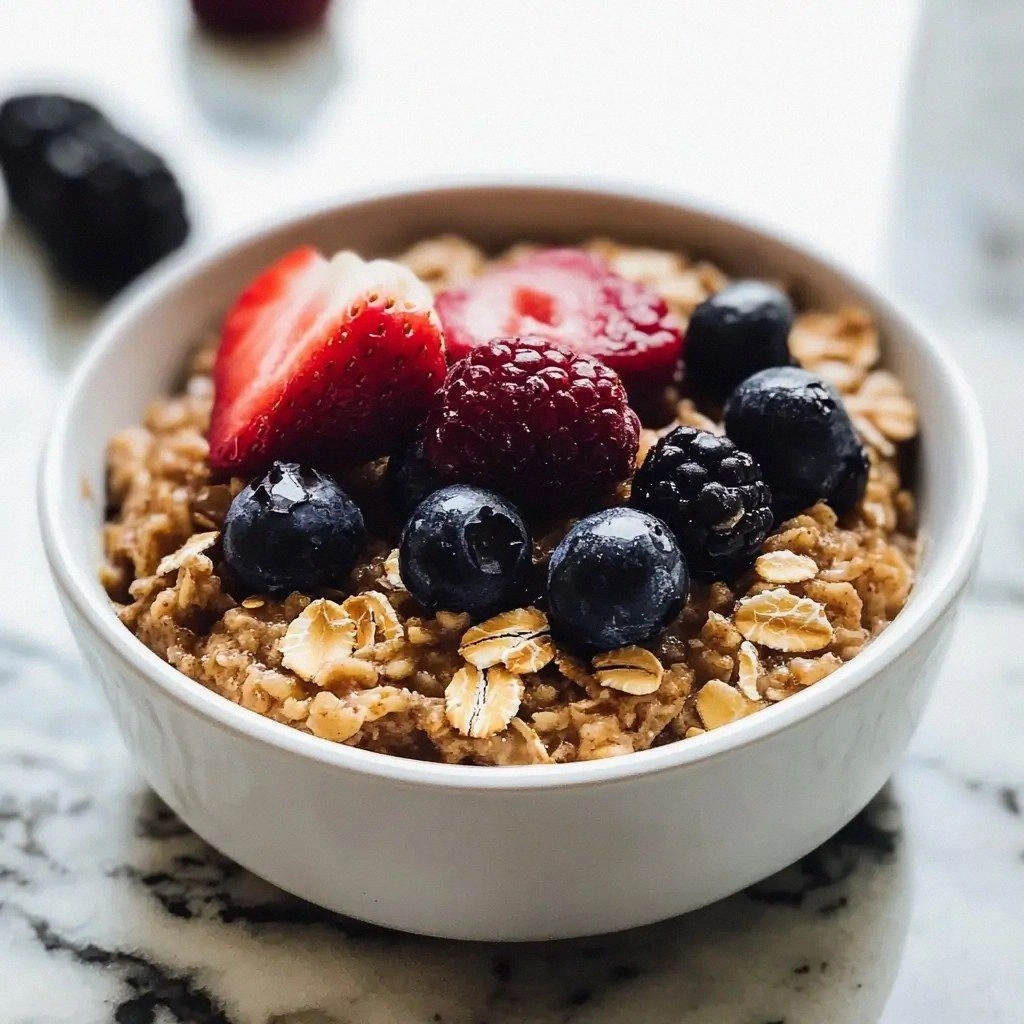
Picture yourself pulling this out of the oven, the whole kitchen smelling incredible, and the steam curling like wisps of cloud over a steaming bowl. The first spoonful is a burst of sweet, buttery oats with a hint of vanilla, while the blueberries give a tart counterpoint that cuts through the richness. The crust is golden brown, crackling with tiny holes that give way to a warm, gooey interior. This is hands down the best version you’ll ever make at home, and I’m about to walk you through every single step so you can recreate that magic in your own kitchen.
What Makes This Version Stand Out
- Taste: The blend of vanilla, cinnamon, and a touch of brown sugar creates a flavor profile that feels like a hug. The blueberries add a burst of tartness that balances the sweetness without competing. This harmony is what turns a simple oatmeal into an indulgent treat.
- Texture: The oats absorb the milk and applesauce, turning into a silky custard that’s soft enough to eat with a spoon yet firm enough to hold its shape. The top forms a golden crust that crackles with every bite, giving a delightful contrast. This duality is a rare find in baked oatmeal.
- Simplicity: With only a handful of pantry staples, you can create a dish that feels gourmet. No need for exotic ingredients or elaborate prep—just mix, bake, and serve. This makes the recipe perfect for busy mornings or last‑minute dinner parties.
- Uniqueness: The inclusion of applesauce and a splash of maple syrup gives the batter a natural sweetness that elevates the dish. The addition of nuts adds a subtle crunch that keeps the texture interesting. Together, they create a flavor experience that you won’t find in the usual oat recipes.
- Crowd Reaction: Friends and family have described the dish as “the best oatmeal ever” and “a comforting hug in a bowl.” The crowd-pleasing factor is undeniable. This is the kind of dish that turns ordinary gatherings into memorable moments.
- Ingredient Quality: Using high‑quality, unsweetened applesauce and fresh blueberries ensures that the natural flavors shine through. The butter should be real butter for that rich, velvety finish. Quality ingredients are the backbone of this recipe.
- Cooking Method: Baking in a single bowl eliminates the need to transfer or stir mid‑bake, reducing mess and saving time. The oven does the heavy lifting, letting the flavors meld into a cohesive whole. This method is both efficient and effective.
- Make‑Ahead Potential: The batter can be assembled ahead of time and refrigerated, allowing for a quick bake when the craving strikes. This flexibility makes it ideal for meal prep or weekend brunches. The dish stays fresh and flavorful even after a day in the fridge.
Alright, let's break down exactly what goes into this masterpiece…
Inside the Ingredient List
The Flavor Base
Rolled oats are the heart of this dish, providing a hearty, nutty foundation that absorbs liquids and flavors. They’re the most common type of oats used for baking because they hold their shape while still softening into a creamy texture. Skipping oats would turn this into a simple custard, losing the comforting chew that defines baked oatmeal.
Whole milk (or your preferred plant‑based milk) adds richness and a creamy mouthfeel. The fat content of whole milk helps to create a silky interior, while the protein contributes to a slightly firmer structure. If you’re avoiding dairy, unsweetened almond milk will work, but you may need to add a splash of coconut milk to preserve the lusciousness.
Unsweetened applesauce acts as a natural sweetener and tenderizer, keeping the oatmeal moist without the heaviness of added sugar. It also introduces a subtle fruity undertone that complements the blueberries. Replacing applesauce with mashed banana is an option, but it will shift the flavor profile toward banana sweetness.
The Texture Crew
Large eggs bind the mixture and add structure, creating a custard-like consistency that holds together when sliced. They also contribute a slight richness that enhances the overall flavor. If you’re vegan, a flaxseed meal and water mixture can replace eggs, though the texture will be slightly different.
Brown sugar provides caramel sweetness and helps to brown the top crust. The molasses in brown sugar gives a deeper, richer flavor than white sugar. If you prefer a lower‑sugar option, a drizzle of honey or maple syrup can replace brown sugar, but expect a different caramelization.
Melted butter adds a buttery, golden finish to the crust and enriches the overall taste. Butter’s natural fats help create a crisp, slightly flaky exterior. For a lighter version, a tablespoon of olive oil can be used, though the flavor will shift toward a more savory note.
The Unexpected Star
Fresh blueberries bring a burst of tartness that cuts through the sweetness and adds a pop of color. They also release a subtle jammy sauce as they bake, which coats the oats beautifully. If blueberries are out of season, frozen blueberries work well, but be sure to thaw them first to avoid excess water.
Chopped walnuts add a satisfying crunch and a nutty flavor that pairs perfectly with the oats and applesauce. They also introduce healthy fats that make the dish more satiating. If you’re allergic or simply dislike nuts, chopped almonds or pecans are excellent substitutes.
The Final Flourish
Ground cinnamon is the spice that ties everything together, adding warmth and depth. Cinnamon’s sweet, woody notes complement the applesauce and butter while enhancing the overall aroma. A pinch of nutmeg can be added for a subtle, peppery undertone.
Vanilla extract gives a subtle sweetness that balances the tart blueberries and the earthy oats. It also adds a floral aroma that lifts the dish’s overall profile. A splash of almond extract can be used for a different flavor twist.
A pinch of salt is essential for bringing out the sweetness of the berries and the richness of the butter. Salt also helps to balance the overall flavor, preventing the dish from tasting flat. Too much salt will make the oatmeal taste overly savory.
Everything's prepped? Good. Let's get into the real action…
The Method — Step by Step
- Preheat the oven to 375°F (190°C). The temperature is crucial for achieving that golden crust without overcooking the interior. Place a 9-inch cast‑iron skillet on the middle rack to give it a steady heat source. Let the oven heat fully; a lukewarm oven will result in a soggy base. This is the moment of truth—once the oven is ready, everything else is just a matter of timing.
- Mix the dry ingredients. In a large bowl, whisk together rolled oats, brown sugar, ground cinnamon, and a pinch of salt. Make sure the mixture is evenly blended; this ensures each spoonful has consistent flavor. The dry mix will help absorb the wet ingredients and create a cohesive batter. This step is simple, but it sets the foundation for the rest of the dish.
- Whisk the wet ingredients. In a separate bowl, beat the eggs, milk, unsweetened applesauce, vanilla extract, and melted butter until fully combined. The wet mix should be smooth and glossy, indicating that the eggs and butter have emulsified properly. Pour the wet mixture into the dry bowl and stir until the oats are fully coated. The batter will be slightly thick, but that’s the right consistency.
- Add the blueberries and walnuts. Gently fold in the fresh blueberries and chopped walnuts, distributing them evenly throughout the batter. The blueberries will burst as they bake, creating a natural sauce that coats the oats. The walnuts add a satisfying crunch that contrasts with the soft interior. Don’t overmix; you want the berries to stay whole.
- Transfer to the skillet. Carefully pour the batter into the preheated cast‑iron skillet. The batter should spread evenly, creating a thick, uniform layer. If the skillet is greased with a small amount of butter, this will help the oatmeal release easily after baking. This step is where the single‑bowl magic truly begins.
- Bake for 30–35 minutes. Place the skillet in the oven and bake until the top is golden brown and the edges pull away slightly from the pan. The interior should be set but still slightly wobbling in the center—this indicates a custard-like center. The aroma will fill the kitchen, a sweet, buttery scent that will have everyone coming to the table. Keep an eye on the color; you want a deep amber, not burnt.
- Check for doneness. Insert a toothpick into the center; it should come out with a few moist crumbs. If it’s clean, the oatmeal is done. If not, bake for an additional 3–5 minutes. The batter should feel firm to the touch but still have a slight give. This is the trickiest part—overbaking will dry it out, underbaking will leave it runny.
- Let it rest. Remove the skillet from the oven and let the oatmeal rest for 5 minutes. This allows the flavors to meld and the custard to set fully. The rest period also makes it easier to cut the oatmeal into slices or scoop it with a spoon. While it rests, you can prepare your favorite toppings.
- Serve with your favorite toppings. Drizzle maple syrup, add a dollop of Greek yogurt, or sprinkle extra walnuts for crunch. A handful of fresh berries on top adds a burst of color and freshness. The oatmeal can be enjoyed warm or at room temperature—both are delicious. This is the moment where you can personalize the dish to match your mood.
That's it — you did it. But hold on, I've got a few more tricks that'll take this to another level…
Insider Tricks for Flawless Results
The Temperature Rule Nobody Follows
Many bakers assume that a higher temperature will always produce a better crust, but that’s a myth. Baking at 375°F (190°C) allows the oatmeal to cook evenly, ensuring the center is set while the edges develop a golden finish. If you raise the temperature to 400°F (200°C), the top will brown too quickly, leaving the interior undercooked. Keep the oven at the recommended temperature for the best balance of texture and flavor.
Why Your Nose Knows Best
Your sense of smell is a reliable indicator of doneness. When the oatmeal is ready, the scent will shift from raw oats to a warm, buttery aroma with hints of cinnamon and caramelized sugar. If the smell still smells like raw milk or applesauce, it needs a few more minutes. Trust your nose, and you’ll avoid overbaked or underbaked results.
The 5-Minute Rest That Changes Everything
Resting the oatmeal after baking allows the steam to redistribute, resulting in a firmer, more cohesive structure. During this rest period, the residual heat continues to cook the center slightly, finishing the custard without the risk of drying it out. Cutting into it immediately will cause the batter to spill and the texture to become uneven.
The Secret to a Crispy Crust
If you prefer a crispier top, brush the surface with a thin layer of melted butter before baking. The butter will melt into the batter, creating a golden, slightly crisp crust that contrasts beautifully with the soft interior. Alternatively, a light sprinkle of brown sugar on top before baking will caramelize into a sweet, crunchy finish.
The Best Topping Combination
A drizzle of maple syrup, a sprinkle of chopped pecans, and a spoonful of Greek yogurt create a layered flavor experience. The maple syrup adds sweetness, the pecans add crunch, and the yogurt introduces a tang that balances the richness. Experimenting with different toppings can turn a simple bowl into a gourmet treat.
Creative Twists and Variations
This recipe is a playground. Here are some of my favorite ways to switch things up:
Tropical Twist
Swap the blueberries for diced mango and pineapple, and add a splash of coconut milk to the batter. The tropical fruits bring a sweet, juicy burst that pairs beautifully with the oats. This version is perfect for a sunny weekend brunch.
Chocolate Lover’s Delight
Add 2 tablespoons of cocoa powder to the dry mix and stir in a handful of chocolate chips. The chocolate chips melt into pockets of gooey sweetness, while the cocoa deepens the flavor profile. Pair it with a drizzle of chocolate sauce for an indulgent treat.
Savory Savvy
Replace the brown sugar with a pinch of smoked paprika and add chopped spinach or kale to the batter. Finish with a sprinkle of grated Parmesan cheese before baking. This savory version transforms the dish into a hearty breakfast or brunch option.
Nut-Free Version
Omit the walnuts and instead add a handful of dried cranberries or raisins for a chewy texture. The dried fruit also adds a natural sweetness that complements the applesauce. This version is ideal for those with nut allergies.
Low-Carb Alternative
Replace rolled oats with almond flour and reduce the applesauce to 1/2 cup. Use a sugar substitute like stevia or erythritol to keep the sweetness. The result is a creamy, low-carb baked oatmeal that still satisfies.
Storing and Bringing It Back to Life
Fridge Storage
Cool the oatmeal completely before transferring it to an airtight container. Store in the refrigerator for up to 3 days. When ready to serve, reheat in the microwave for 1–2 minutes or warm in a skillet over low heat, stirring occasionally. Add a splash of milk to loosen the texture if needed.
Freezer Friendly
Divide the cooled oatmeal into portioned containers or freezer bags. Freeze for up to 2 weeks. To reheat, thaw overnight in the fridge or microwave directly from frozen, adding a splash of milk or water to help restore moisture. The texture remains creamy and satisfying.
Best Reheating Method
The microwave is the quickest way to revive the oatmeal, but a stovetop method preserves the crust. Warm the oatmeal in a saucepan over low heat, stirring gently, until heated through. Adding a small amount of water or milk before reheating will steam the oatmeal back to its original silky consistency.