
The Forged Will That Couldn't Break a Little Girl's Truth
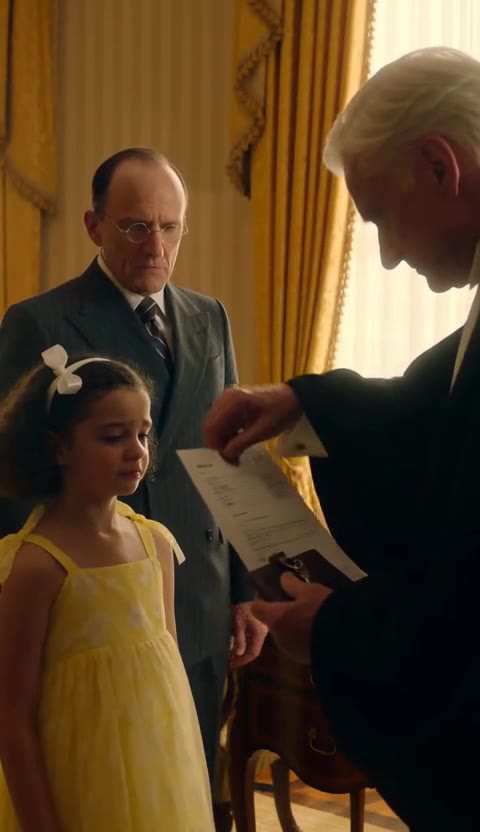
Previously: A corrupt cousin slams down a forged will to steal a child's inheritance, but six-year-old Maya holds the one thing he never expected: the real seal. Judge Aldrich is about to expose everything.
The Poison That Was Never a Secret
The judge read the letter three times, his jaw tightening with each pass. Then he looked at Maya, and his voice was barely a whisper.
"Child, do you know what this means?"
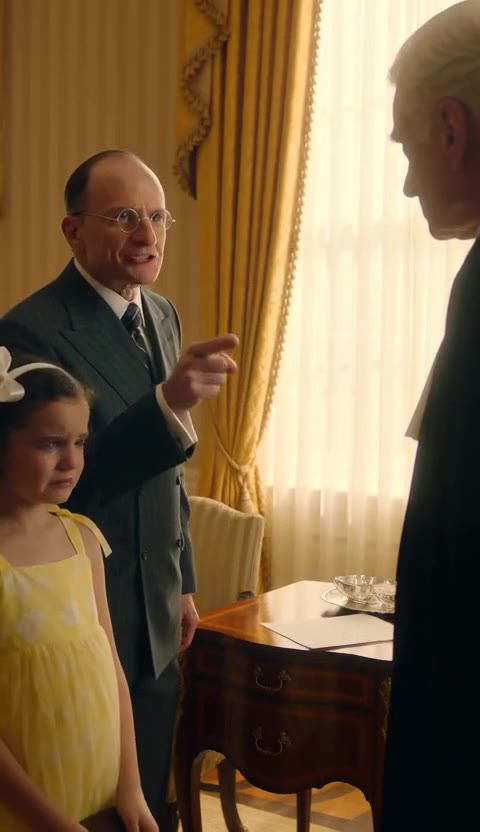
Maya nodded, her face pale but determined. "My daddy was killed. And Malcolm did it."
I gasped, pressing my hand to my mouth. I had always suspected—the sudden decline, the strange symptoms that came and went—but I never had proof. And now, here it was, written in my husband's own hand.
Judge Aldrich set the letter down gently. "This changes everything. The bribery, the forged will—those are crimes. But this is murder."
He turned to the court clerk, who had just returned. "Get me the district attorney. And put a hold on Malcolm's release—he's not leaving the building."
The next hour was a blur. Police officers swarmed the courthouse, and Malcolm was pulled from his holding cell, his face a mask of disbelief. He was read his rights as he was handcuffed again, this time for a charge he couldn't talk his way out of.
"You're making a mistake!" he shouted as they dragged him past the judge's chambers. "That letter is fake! She's a child—she doesn't even know what she's saying!"
Judge Aldrich stepped into the hallway, his robe still billowing. "The letter has been verified. The handwriting matches your cousin's medical records. And the toxicology report we just pulled from the hospital confirms it—traces of thallium in his system."
Malcolm went silent. His face drained of all color.
"You poisoned him," the judge said, his voice like stone. "For years. And then you tried to take his daughter's inheritance."
"I didn't—" Malcolm started.
"Save it for the trial," the judge cut him off. "You're going to have a lot of time to think about your choices."
As Malcolm was led away, I felt a hand slip into mine. I looked down—Maya was standing beside me, her small fingers wrapped around my own.
"Mommy," she said softly, "is it over?"
I knelt down and pulled her into my arms. "It's over, baby. It's finally over."
But Maya shook her head. "Daddy said there was one more thing. He said I should give this to the judge after everything was settled."
She reached into the pouch one last time and pulled out a small, velvet box. The judge took it, his hands steady now, and opened it.
Inside was a ring—a simple gold band with a single diamond. And beneath it, a note.
"For the woman who taught me how to love," the judge read aloud. "I was going to propose. But then I got sick. If you're reading this, I hope you can forgive me for not being braver."
I looked up at the judge, confused. But he wasn't looking at me. He was looking at the ring with a strange, distant expression.
"He gave this to me," the judge said quietly, "a week before he died. He asked me to give it to you when the time was right."
He held out the box to me. "He said you'd know what it meant."
I took it, my hands shaking. The note was in my husband's handwriting, but it wasn't addressed to me. It was addressed to my sister—the woman he had loved before we ever met. The woman who had died three years before I came into his life.
"He never stopped loving her," I whispered. "But he loved me too. In his own way."
Judge Aldrich put a hand on my shoulder. "He was a good man. And he raised a good daughter."
I looked down at Maya, who was watching me with those big, dark eyes. "What do you want to do with it?" I asked her.
She thought for a moment. "I want to keep it," she said. "So I can remember that even when people are cruel, there's always someone who loves you."
I pulled her close, tears streaming down my face. "That's exactly right, sweetheart."
Later that day, as we walked out of the courthouse hand in hand, the sun was shining. The world felt different—lighter, somehow. The weight of the last few months had lifted.
Maya stopped on the steps and looked up at the sky. "Daddy," she said softly, "we did it."
A gentle breeze rustled her curly hair, and for a moment, I could have sworn I felt him there with us.
We went home that night to our house—the one Malcolm had tried to take from us. Maya ran through the front door and threw herself onto the couch, laughing for the first time in weeks.
"I'm home," she said, her voice full of wonder.
I smiled and sat down beside her. "Yes, sweetheart. You're home."
And in the quiet of that evening, with the golden light streaming through the curtains, I knew that no matter what happened next, we would face it together.
Some battles are fought with lawyers and documents. Others are fought with love and a child's unshakeable faith. In the end, it was the love that won.
As I tucked Maya into bed that night, she looked up at me with sleepy eyes. "Mommy," she said, "do you think Daddy is proud of us?"
I kissed her forehead. "I know he is, baby. I know he is."
And as she drifted off to sleep, I sat by her bedside, holding the velvet box in my hands. It wasn't mine to keep, but it was a reminder of a love that had been real, even if it hadn't been perfect.
In the morning, I would call my sister's daughter and give her the ring. It belonged with her, after all.
But tonight, I let myself grieve—for the man I had loved, for the life we could have had, and for the future that was still unwritten.
Maya's father had left us a gift far greater than any inheritance: the truth. And that was something Malcolm could never take away.
As I closed my eyes, I whispered to the empty room, "Thank you, Marcus. For everything."
And somewhere, in the quiet of the night, I heard my husband's voice, soft and warm: "Take care of our girl."
I smiled. "Always."
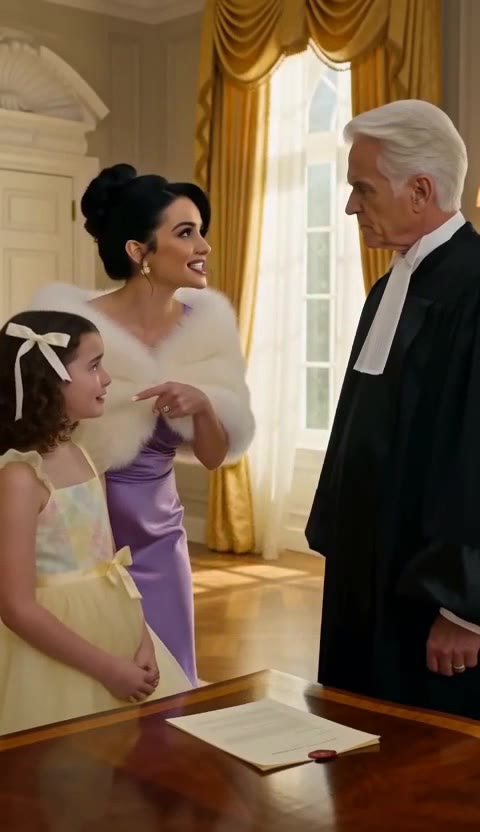
The Sealed Envelope That Silenced the Greedy Mistress and Saved the Heiress
A cruel mistress fakes a custody waiver to strip a 7-year-old of her inheritance. But when the judge opens the sealed envelope from the late mother's lawyer, the entire courtroom gasps. What the child carries changes everything.
📖 Read Full Story — Continue Here →More stories you'll love
 Part 1 of 38 min read
The Sealed Envelope That Silenced My Greedy Uncle Forever
My greedy uncle tried to steal my inheritance with a forged DNA report. But the judge opened my sealed envelope — and my uncle's world collapsed in seconds.
 Part 1 of 38 min read
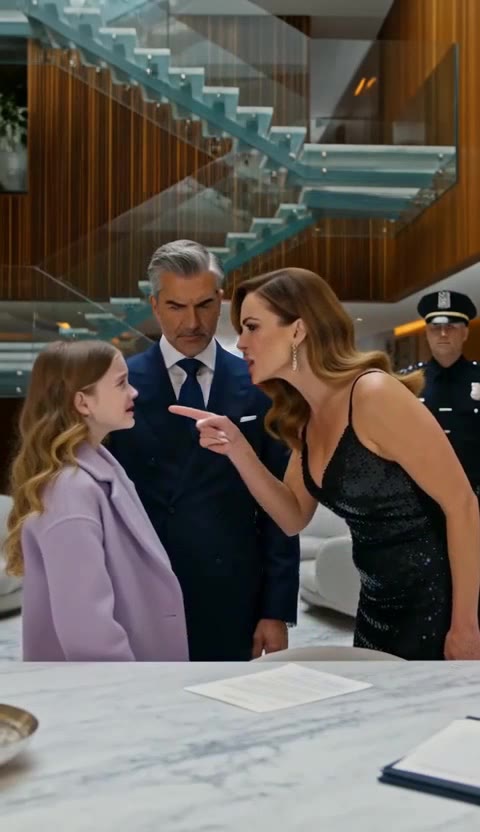
The DNA Test Proved My Daughter Was Mine, So I Disinherited My Wife
When my wife demanded a paternity test and it came back 99.99% in my favor, I didn't celebrate. I filed for divorce and wrote her out of my will — but the reason why will shock you.
 Part 1 of 312 min read
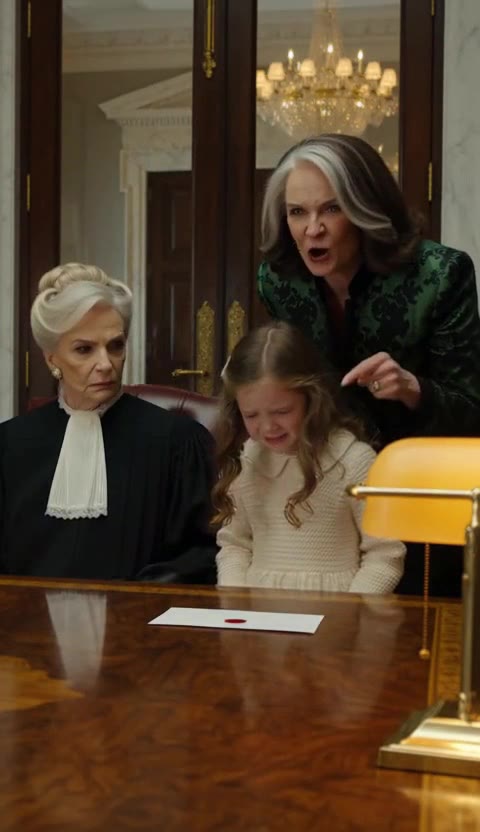
The Music Box Secret That Exposed My Step-Mother's Fraud in Front of Everyone
When Irene slammed down a fake DNA test claiming Aria wasn't Julian's daughter, the little girl opened her grandmother's music box—and revealed a secret that changed everything.
 Part 1 of 310 min read
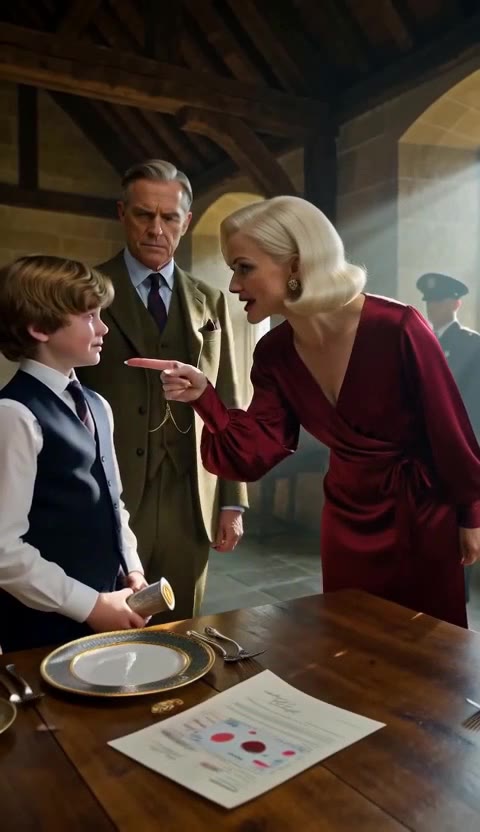
The DNA Report That Shattered My Step-Aunt's Lies in Court
My step-aunt forged a will to steal my inheritance, but the sealed genetic dossier I carried revealed a truth that left the judge thunderstruck and my aunt dragged away in handcuffs.
 Part 1 of 313 min read
The Hospital Cylinder That Shattered My Stepmother's Lies at the Will Reading
At the will reading, my stepmother Camille slammed down a forged blood chart, screaming I wasn't his son. But I had the one thing she never expected: my mother's hidden proof.
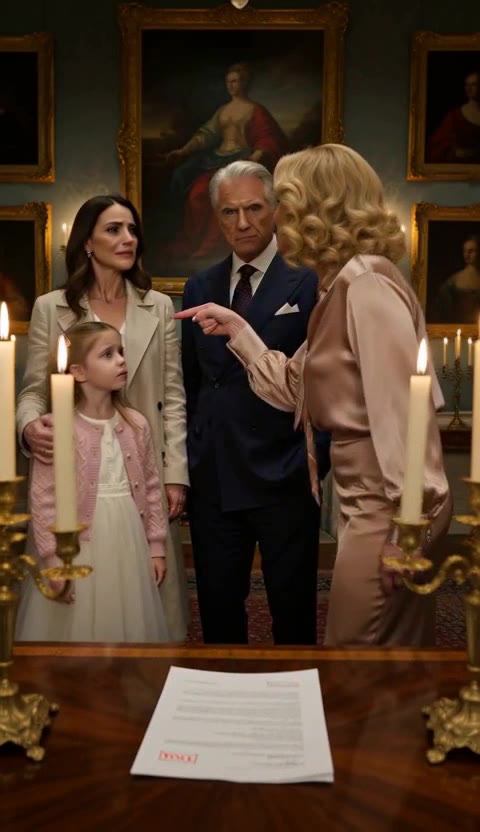 Part 1 of 312 min read
The Hidden Heir: How a Hollow Chess King Exposed My Stepmother's Deadly Lie
When my stepmother slammed down a forged DNA test, I knew the truth was hidden in my father's chess set. But no one expected the secret that would destroy her.