
The Lawyer Slammed a Fake DNA Test on My Son — Until the Judge Opened the Music Box
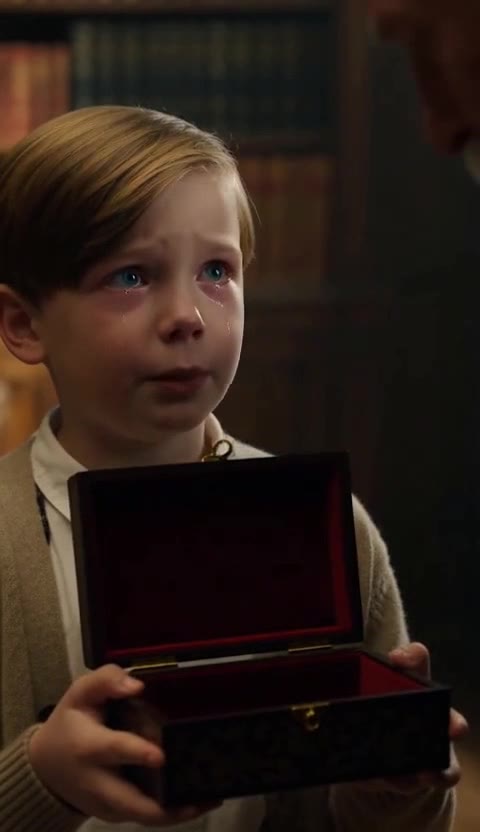
Previously: A corrupt lawyer tries to strip a seven-year-old of his inheritance with a forged DNA test. But the boy holds a secret that will shatter everything — and expose a conspiracy.
The Second Envelope
The study had grown quiet after Preston's arrest, but the air was thick with unspoken questions. Judge Bell set the music box on the desk, the velvet lining still glowing in the firelight. Lucas's eyes were fixed on the second envelope, the one with his name in his mother's flowing script.
"Do you want me to open it, or would you prefer to do it yourself?" the judge asked, his voice gentle for the first time since the hearing began.
Lucas wiped his tears with the sleeve of his beige cardigan. "You can do it, Your Honor."
The judge broke the seal carefully, sliding out a single sheet of paper. He read it in silence, his expression shifting from curiosity to shock to something darker. Finally, he set the paper down and looked at Lucas with a new gravity.
"Lucas," he said slowly, "your mother wrote this letter before she passed. It seems she suspected Preston was not acting alone."
Lucas frowned. "What do you mean?"
"She wrote that there were others involved in your father's death," the judge said. "Not just the lawyer. She said the truth was hidden in the music box, but that we would need to find a key to unlock it."
The judge turned the music box over, examining its base. There, hidden in the carved filigree, was a tiny brass keyhole that Lucas had never noticed before. His heart began to race.
"Where's the key?" the judge asked.
Lucas shook his head. "I don't know. My mother never gave me a key."
Just then, the door to the study burst open. A woman in a sharp grey suit stormed in, her eyes blazing. It was Eleanor Vance, Edward's younger sister and Lucas's aunt—a woman who had always treated him with cold distance.
"What is the meaning of this?" she demanded, her gaze sweeping over the scene. "I heard about Preston. You can't seriously believe this child has any claim to my brother's estate."
Judge Bell straightened, his hand still protectively on Lucas's shoulder. "Mrs. Vance, the DNA evidence is conclusive. Lucas is Edward's son. And I've just discovered there may be more to this case than a simple forgery."
Eleanor's face paled. "What are you talking about?"
"Your brother's death," the judge said, holding up the letter. "His wife believed it was not an accident. She believed it was murder."
Eleanor staggered back, her hand flying to her chest. "That's absurd. Edward died of a heart attack. The doctors said so."
"The doctors were paid," Lucas said, his voice small but certain. "My mother told me before she died. She said the truth was in the music box."
Eleanor's eyes darted to the music box, then to the judge. A flicker of something—fear? guilt?—crossed her face before she masked it.
"This is ridiculous," she snapped. "I'm leaving. And I'll be taking this up with the bar association."
She turned to go, but the judge's voice stopped her. "Eleanor, sit down. We're not finished."
She froze, her back rigid. Slowly, she turned around, her lips pressed into a thin line.
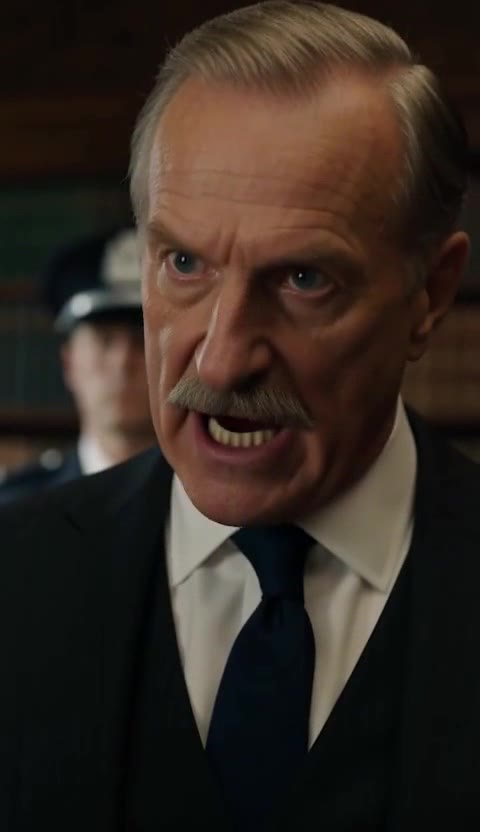
"You knew about the forged DNA report," the judge said, his eyes narrowing. "Didn't you?"
"I don't know what you're talking about."
"The report was submitted with your signature as a witness," the judge said, pulling the document from his robe. "I noticed it earlier but didn't want to jump to conclusions. Now I'm not so sure."
Eleanor's face went white. "That's... that's a mistake. I never signed that."
"The signature is yours," the judge said flatly. "I've seen it on court documents. The question is, why would you witness a forged DNA test?"
Lucas watched his aunt, his small hands clenched into fists. He remembered the way she had avoided him at his father's funeral, the coldness in her eyes. He had always thought she just didn't like children. Now he wondered if it was something more.
"I think," the judge said slowly, "that we need to find that key. And I think Eleanor might know where it is."
Eleanor's composure cracked. "I don't know anything about a key," she said, her voice shaking.
"Then why is your hand trembling?" the judge asked.
Eleanor looked down at her hand, which was indeed trembling. She quickly hid it behind her back.
"I'm cold," she said weakly.
The judge shook his head. "You're lying. And I have a feeling you're not the only one."
He turned to Lucas. "Son, do you know where your mother kept her things? Her private possessions?"
Lucas nodded. "She had a drawer in her bedroom. Locked. She said I could open it when I was older."
"Let's go there now," the judge said.
Eleanor stepped forward, her voice sharp. "This is my brother's house. You can't just go through his things."
"I'm the chief probate magistrate," the judge said, his voice steel. "I can do whatever is necessary to ensure justice is served. And right now, that means finding that key."
He took Lucas's hand, and they walked out of the study, leaving Eleanor standing in the middle of the room, her face a mask of panic.
As they climbed the stairs, Lucas whispered, "Do you think she's the one who did it?"
The judge didn't answer for a moment. Then he said, "I think we're about to find out."
”Then he said, "I think we're about to find out."