
The Maid Who Fell Asleep Beside the Mafia King — Then He Discovered Her Secret
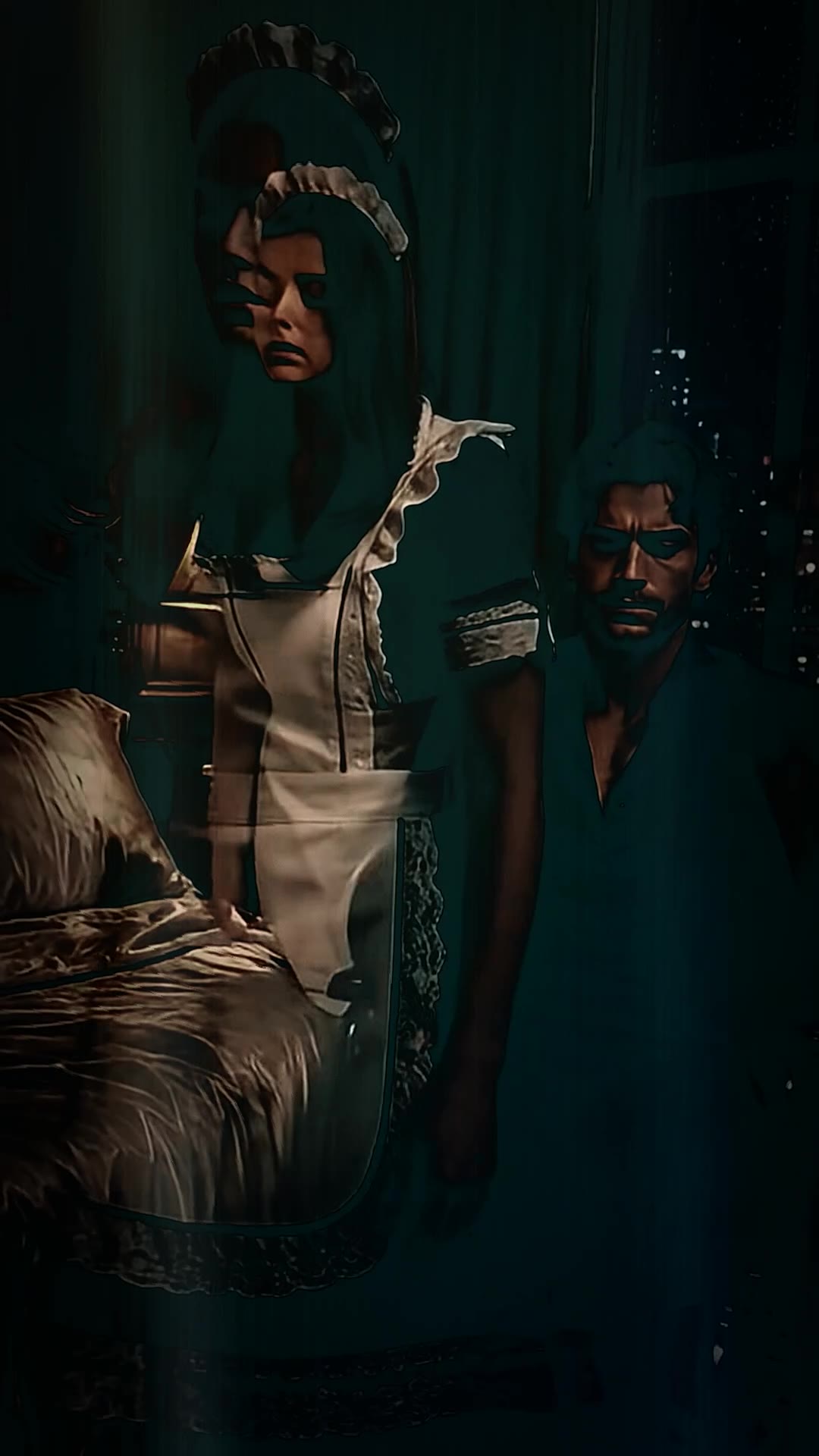
The Monster Who Hated the World
My name is Daniel Moretti, and two years ago, a sniper's bullet stole the use of my legs. Before that night, my name opened locked doors all over Chicago. I controlled construction companies, nightclubs, trucking contracts, private security firms, and several businesses respectable people preferred not to ask questions about.
Men who smiled beside me at charity dinners whispered about me after midnight. Judges remembered my name. Politicians remembered my favors. Enemies remembered that crossing me usually came with consequences.
Then one rainy November night, someone fired from a rooftop across from one of my downtown warehouses. One bullet. One second. One life divided into before and after.
I remembered falling. I remembered the pavement rushing toward my face. I remembered trying to move my legs. Nothing. The doctors used words like permanent, adaptation, quality of life, new normal. I hated every single one of them.
The empire survived. I did too. But survival wasn't the same as living. My estate outside Chicago became a fortress. Custom elevators. Reinforced doors. Cameras covering every approach. A medical suite I refused to use. A gym full of rehabilitation equipment gathering dust.
People assumed paralysis had made me cruel. They were wrong. I had always been cruel when necessary. Paralysis simply removed my patience for pretending otherwise.
The worst part wasn't the chair. It wasn't asking someone to move a table because the opening was two inches too narrow. It wasn't watching people decide whether they should help me before I asked. The worst part was the pain. Phantom pain. That's what the specialists called it.
My legs could not feel a needle properly, yet sometimes fire tore through them as though someone were twisting heated wire through the bones. There were nights I woke drenched in sweat, gripping thighs that refused to obey me. Those nights usually ended with broken glass.
One stormy evening, Luke Russo came into my study carrying a clipboard. Luke had been my second-in-command for eleven years. He was forty, broad-shouldered, quiet, and irritatingly immune to intimidation. He dropped the clipboard on my desk.
"The physical therapist quit."
I looked at the papers. "Hire another."
"Third one this month."
"Then hire the fourth."
Luke crossed his arms. "You threw a paperweight at his head."
"He talked to me like a child."
"He told you to complete ten repetitions."
"He told me to push through the burn."
"That's his job."
"There is no damn burn, Luke."
The room went quiet except for rain striking the windows. I pushed away from the desk and rolled toward the liquor cabinet. "You know what I think?" Luke said.
"I rarely care."
"I think this place isn't a fortress anymore."
I stopped. Luke continued. "It's a mausoleum. You're not protecting yourself, Danny. You're burying yourself alive."
I poured a glass of whiskey and didn't answer.
The next morning, my head of staff, Margaret, stood in my doorway with a young woman at her side. The woman was maybe twenty-five, with tired eyes and a worn jacket that didn't fit the estate's polished atmosphere.
"Mr. Moretti, this is Emma Carter. She's the new maid for your private wing. The agency sent her."
Emma Carter stepped forward. She didn't lower her eyes. She didn't fidget. She looked directly at me — at the man everyone called a monster — and said, "Do you want me to stop working? Because if I stop, I don't get paid."
I almost laughed. Almost. Instead, I said, "Start with the study. Don't touch anything on the desk."
She nodded and walked past me without a glance at the wheelchair. No pity. No hesitation. No fear.
That was the first time in two years someone had spoken to me as though I were simply another difficult man standing between her and a paycheck. Or sitting, technically.
The Maid Who Didn't Flinch
Emma Carter worked in silence. She cleaned my study with mechanical precision, dusting every shelf, polishing every glass surface. She didn't ask questions. She didn't offer unsolicited advice. She didn't try to engage me in conversation about my feelings or my recovery.
She adjusted the pillows on my bed without asking. She poured my coffee without waiting for instructions. She left when I told her to leave. It was efficient. It was impersonal. It was exactly what I wanted.
But there was something about her that bothered me. She was too calm. Too composed. Most people who entered my rooms carried a visible tension — a tightness in their shoulders, a quickness in their steps. Emma moved through my space like she had been there a hundred times before.
I didn't trust her.
I had Luke run a background check. He came back with a clean file. Too clean, he said. I didn't listen. I told myself she was just a maid, and maids were replaceable.
Then the pain hit.
It came three nights later, a familiar fire racing down my useless legs. I woke gasping, my hands clutching at my thighs, my teeth grinding against the agony. I reached for the glass of water on my bedside table and knocked it over. The crash echoed in the dark room.
I heard footsteps. Emma appeared in the doorway, her hair loose around her shoulders, a thin robe wrapped around her. "Mr. Moretti?"
"Get out," I snarled.
She didn't move. She walked closer, her eyes scanning my face, my hands, the broken glass on the floor. Then she knelt beside the bed and picked up the shards with bare hands.
"I told you to get out," I said.
"You'll cut yourself if you try to get up," she said. "And I'm not leaving broken glass on the floor."
She cleaned up the mess without a word. Then she filled a new glass of water from the pitcher and set it on the table within my reach.
"Do you need anything else?" she asked.
"Why aren't you afraid of me?" The question slipped out before I could stop it.
She looked at me, her face unreadable. "Should I be?"
"Most people are."
"Most people don't have to clean up after you." She paused. "I've seen worse."
She left before I could ask what she meant.
The next night, I woke again from a nightmare — not pain this time, but the memory of the shot, the pavement, the cold rain on my face. I sat up in bed, breathing hard, my hands shaking.
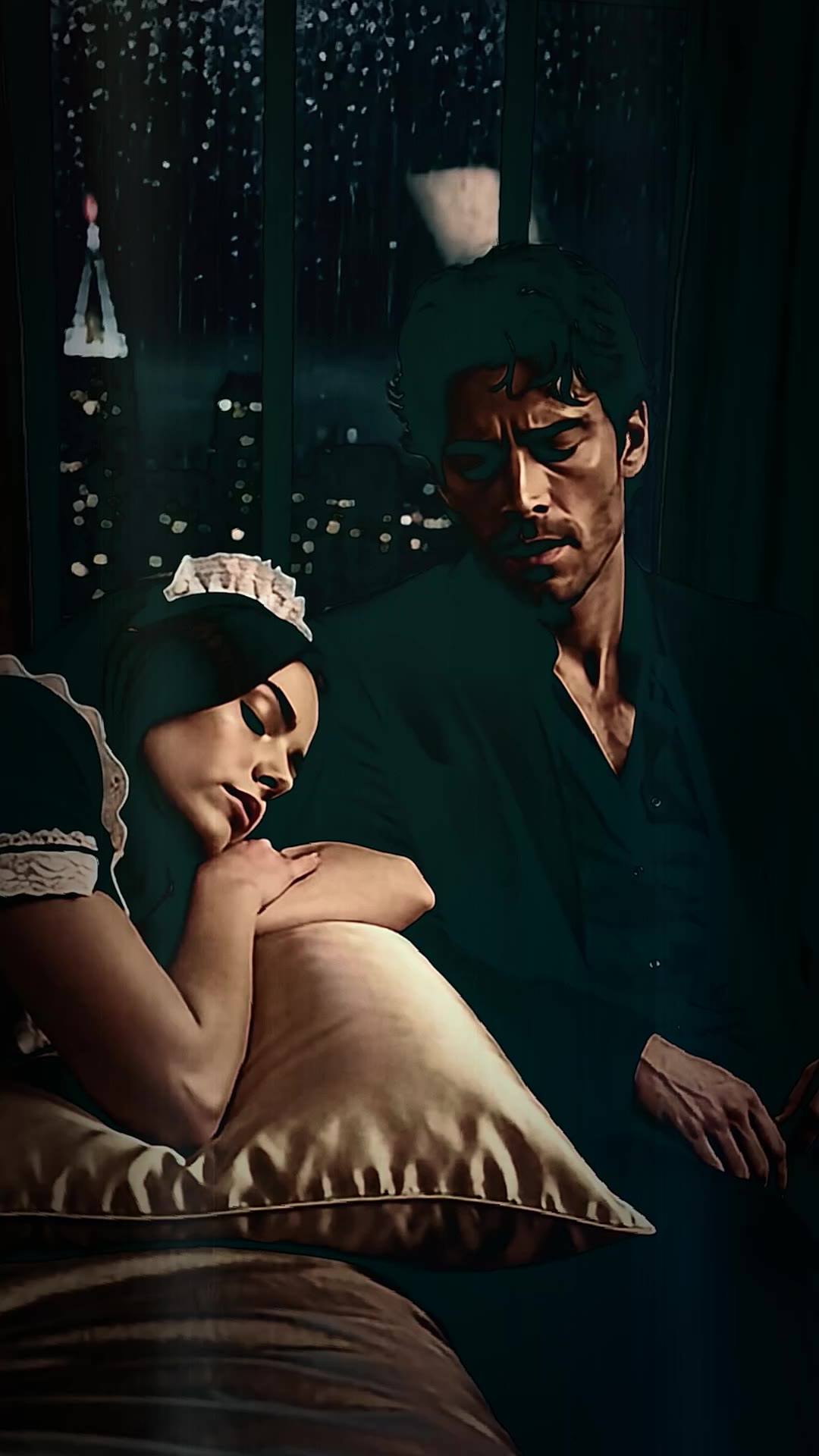
I looked at the armchair in the corner of the room. Emma was asleep in it, her legs tucked under her, her head leaning against the cushion. She had fallen asleep watching over me.
I should have fired her. Instead, I watched her breathe.
In the morning, she woke with a start, her eyes wide. "I'm sorry, Mr. Moretti. I didn't mean to fall asleep."
"You didn't," I said. "You were watching me."
She looked away. "I was just... making sure you were okay."
"Why?"
She didn't answer. She just picked up her rag and started cleaning the room.
Over the next two weeks, I learned that Emma Carter was a mystery. She never talked about her family. She never mentioned a boyfriend or friends. She worked long hours, ate little, and disappeared into the small staff quarters at night. I tried to find a crack in her armor, but there was none.
Until the night of the break-in.
I woke to the sound of a drawer sliding open in my study. I rolled my chair out of the bedroom, silent on the carpet, and found her standing at my desk, her hand frozen over the drawer that held my private documents.
"What are you doing?" I asked, my voice low and dangerous.
She didn't lie. She didn't run. She looked at me with those tired eyes and said, "I'm not here to steal from you, Mr. Moretti. I'm here to find out who shot you."
I laughed. I laughed so hard my chest hurt. Then she told me her name — her real name — and the laughter died in my throat.
"My name is Emma Moretti," she said. "I'm your half-sister. And I have proof that the bullet that hit you wasn't meant for you."
"It was meant for our father."
The room went silent. I could hear my own heartbeat. "Get out," I said.
"I'm not leaving until you hear me out," she said.
"Get out before I have you thrown out."
She didn't move. "The man who shot you is still out there. And he's now the head of our family's oldest rival. He's been waiting for you to die. He's been waiting for the empire to fall."
"I said get out!" I shouted, my voice cracking.
Emma walked to the door. She paused and looked back. "I'm not your enemy, Daniel. I'm the only family you have left."
She left. I sat in my chair, staring at the drawer she had opened. Inside was a file I hadn't looked at in two years — the file on the day I was shot. The file that had no answers.
I didn't sleep that night.
The next morning, I found a note slipped under my door. It was written in handwriting I didn't recognize, and it said: "You should have stayed dead, Moretti. But since you're still breathing, I'll finish the job."
I read it three times. Then I crumpled it in my fist.
Emma Carter — Emma Moretti — wasn't just a maid. She was a storm. And she had just walked into the eye of mine.
”And she had just walked into the eye of mine.