
The Nurse’s Black Card: When a Snobbish Bridal Clerk Humiliated the Wrong Mother
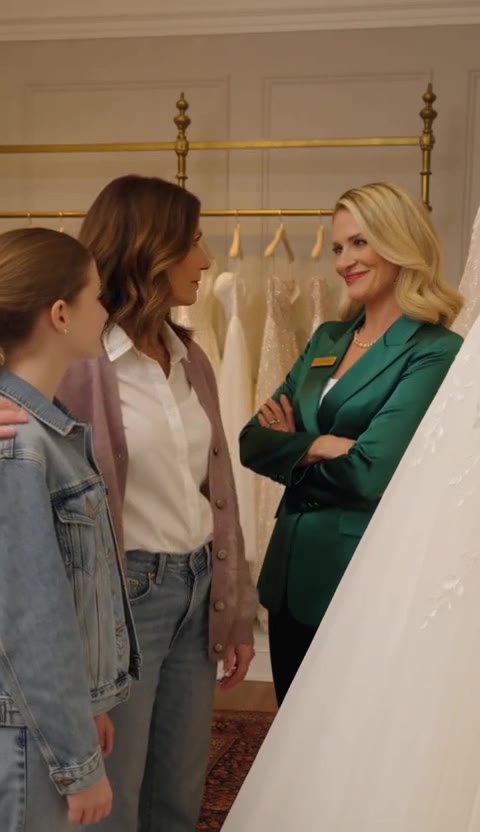
Previously: A snobbish bridal consultant sneers at a nurse in worn sneakers—until a black titanium card hits the counter. But the real twist? It's not about the money. It's about who Elena used to be.
The Name on the Card Wasn’t the Only Secret in My Cardigan
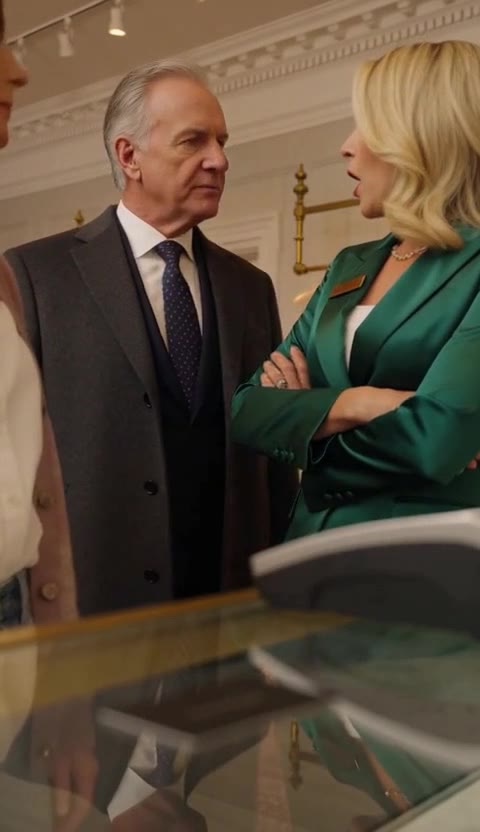
The boutique felt smaller after Victoria left. The chandelier still glittered, the Persian rugs still swallowed footsteps, but the air had changed. Mr. Sterling gestured toward the back office, his hand light on my elbow.
“We should talk,” he said. “Privately.”
Sofia squeezed my hand. “Mom?”
“Wait here with Chloe,” I said, forcing a smile. “I’ll just be a minute.”
She looked at me with those hopeful eyes — the same eyes that had looked at me across the hospital cafeteria when I’d told her I’d find a way to pay for her dream dress. I’d never told her how I’d really done it. I’d never told her about the trust fund, the one I’d walked away from when I’d married her father against my family’s wishes.
I’d never told her about the Sterling name.
The back office was wood-paneled, lined with framed photographs of brides in white. Mr. Sterling closed the door and turned to face me.
“You’re still using the card.” It wasn’t a question.
“It’s for Sofia,” I said. “She doesn’t know where it came from.”
“She doesn’t know her mother is a Sterling.”
I flinched at the word. “I stopped being a Sterling the day I married a nurse’s aide from Dorchester. You made that very clear.”
Mr. Sterling sighed, running a hand through his gray hair. “Elena, I was wrong. I was a stubborn old fool. But when your husband died —”
“I didn’t come back because I didn’t want your money. I didn’t want anything from you.”
“And yet you’re using the card.”
I looked down at the matte-black rectangle in my hand. “Because my daughter deserves the world, and I’m not too proud to give it to her. Even if it means touching the money I swore I’d never use.”
Mr. Sterling’s face softened. “She looks like you,” he said quietly. “The same fire. The same stubbornness.”
“She has her father’s heart,” I said, and my voice cracked a little.
There was a knock at the door. Chloe’s voice, apologetic: “Mr. Sterling? There’s a problem.”
He opened the door. Chloe stood there, her face pale, holding a tablet. “It’s Victoria. She’s on social media. She’s posting about the incident — about the card, about Mrs. Sterling. She’s got photos.”
My blood went cold.
Mr. Sterling grabbed the tablet. I saw the screen: Victoria’s profile, a blurry photo of me taken through the boutique window, a caption that read: “Nurse with a black card? She’s hiding something. Wait till you see who she really is.”
“She’s tagged the boutique,” Chloe whispered. “She’s tagged the local news.”
I felt the walls close in. Sofia appeared in the doorway, her phone in her hand, her face a mask of confusion.
“Mom,” she said slowly, “why is everyone talking about you? Why are they saying you’re a Sterling?”
I opened my mouth, but the words wouldn’t come.
“And why,” Sofia continued, holding up her phone, “is there a live video from the boutique’s security camera showing you and Mr. Sterling hugging?”
I looked at the screen. The camera had caught the moment when Mr. Sterling had pulled me into a brief, awkward embrace — a gesture of reconciliation I’d accepted without thinking.
“It’s not what it looks like,” I started.
“Then what is it, Mom?” Sofia’s voice was trembling. “Who are you?”
Mr. Sterling stepped forward. “Sofia, your mother is —”
“Don’t,” I said sharply. I turned to my daughter, took her hands. “I’m your mother. That’s all that matters. The rest is old history.”
“But it’s not old history,” Sofia said. “It’s live on the internet. And it’s about to get worse.”
She turned her phone around. The live feed showed a crowd gathering outside the boutique — reporters, cameras, a news van with a satellite dish.
“They’re here,” Chloe said, looking out the window. “They’re already here.”
Mr. Sterling cursed under his breath. “I’ll call security.”
“No,” I said, my voice suddenly calm. “I’ll handle this.”
“Mom, you can’t just —”
I looked at my daughter, at her hopeful eyes, at the dress she hadn’t yet tried on. “I’ve been hiding for twenty years, Sofia. It’s time to stop.”
I walked toward the front of the boutique, past the brass racks and the Persian rugs, past the gown on its velvet platform, out through the glass doors into the cold Boston light.
The cameras turned to me. The reporters surged forward.
And I took a deep breath, ready to tell the truth.
”And I took a deep breath, ready to tell the truth.