
The Sealed Envelope That Destroyed My Stepmother's Evil Plan in Court
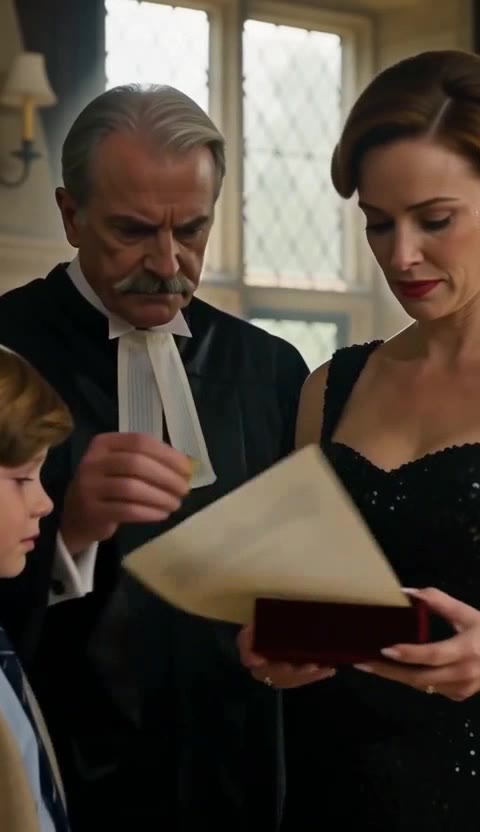
Previously: My stepmother faked a DNA test to strip me of my inheritance. But the heirloom music box my father left me held the one proof she never saw coming.
Beneath the third stone by the fountain, I found a truth that changed everything
Dawn came slow and gray, the sky heavy with clouds. Judge Bell's black sedan crunched up the gravel driveway, and I climbed in without a word. The music box sat on my lap, the brass key still around my neck.
The lake house was an hour away, tucked deep in the woods. We drove in silence, the only sound the hum of the engine and the occasional chirp of a bird. I could feel my father's presence in every mile, as if he were sitting beside me.
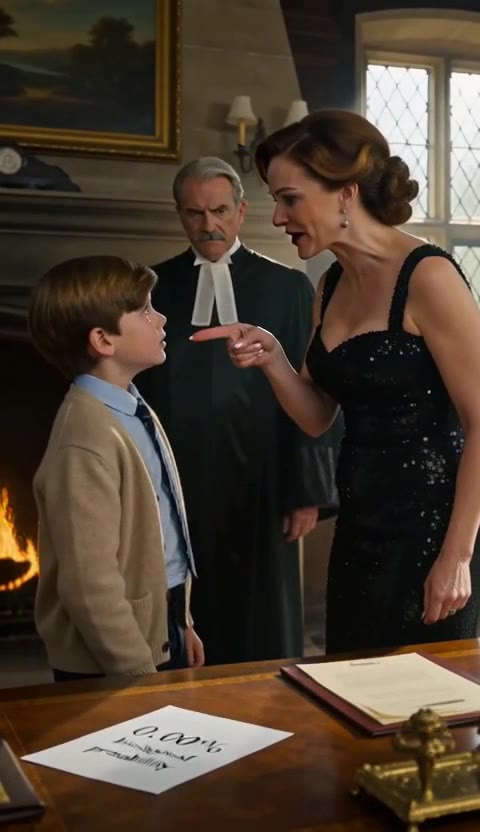
When we finally pulled up, the house looked abandoned — shutters hanging loose, paint peeling, the lake beyond it still and dark. But the rose garden was surprisingly well-tended. Someone had been here recently.
"Stay close," Judge Bell said, his hand resting on his hip where I knew he kept a small revolver.
We walked to the fountain in the middle of the garden. It was dry, covered in moss. I knelt down and counted the stones around its base. One, two, three.
The third stone was loose. I pried it up with my fingers, and beneath it lay a rusted metal box, no bigger than a shoebox. My hands shook as I opened it.
Inside were papers, photographs, and a USB drive. The top document was a signed confession — not from Irene, but from the clinic administrator who had issued the fake DNA test. In it, he detailed how Irene had paid him, threatened him, and promised him a share of the estate once she had control.
"This is the smoking gun," Judge Bell said, his voice hushed. "With this, we can reopen the case. And we can charge her with attempted murder."
"Murder?" I repeated.
He pointed to a photograph at the bottom of the box. It showed a woman in a hospital bed, pale and hooked to machines. The caption read: 'Gerald Whitmore, Irene's first husband, 48 hours before his death.'
"The investigator's report," the judge said, "found traces of a rare poison in Gerald's system, a compound used in industrial solvents. The same compound was found in your father's bloodstream."
I felt the world tilt. "My father was poisoned?"
"We believe so," he said gently. "But we need proof. The USB drive might have it."
We took the box back to the car. Judge Bell plugged the drive into his laptop, and we watched hours of hidden-camera footage — Irene meeting with the clinic administrator, Irene handing over envelopes of cash, Irene whispering to a man in a dark suit who we later learned was her accomplice in the escape.
But the last file was the most damning. It was a voice recording, dated one week before my father's death. Irene's voice, clear and cold:
"He's getting too close. If he files the DNA test, we're finished. You need to make sure he never sees the morning."
I listened to it twice, my hands balled into fists. My father hadn't died of a sudden illness. He'd been killed. And I had been the only one who didn't know.
Judge Bell put a hand on my shoulder. "This is enough to convict her of murder, Lucas. But we have to find her first."
"She'll come back," I said, surprising myself with the certainty in my voice. "She'll come back for the money."
"Then we'll be ready," he said.
We returned to the estate, and Judge Bell made calls. The DA's office, the state police, the FBI. Within hours, a manhunt was underway. And I waited, the music box never leaving my side.
Three days later, the call came. Irene had been spotted at a motel on the edge of town, trying to sell the ruby ring for cash. The police moved in, and this time, there was no escape.
I watched the news broadcast from the study. They showed Irene in handcuffs, her sequined dress replaced by an orange jumpsuit. Her eyes were wild, her smile gone. She looked like a trapped animal.
Judge Bell turned off the TV. "It's over, Lucas. She'll face trial for murder, fraud, and attempted theft. She'll spend the rest of her life in prison."
I nodded, but I didn't feel the triumph I expected. I just felt tired. And sad.
"He knew," I said quietly. "My father knew she was going to come after me. He planned all of this to protect me."
"He did," Judge Bell said. "And you honored his plan. You were braver than any child I've ever seen."
I looked down at the music box. The velvet lining was worn, the brass key tarnished. But it had done its job.
"I want to keep it," I said. "To remember him."
"You should," the judge said. "It's yours. It always was."
In the months that followed, I learned to live with the grief. I visited my father's grave every Sunday, bringing fresh flowers and telling him about my day. I kept the music box on my nightstand, and sometimes, late at night, I'd open it and hold the envelope that had changed everything.
Irene was convicted on all charges. She received a life sentence without parole. The estate was secured, and I was placed under Judge Bell's guardianship — a man who became more than a judge to me. He became family.
And on the day I turned eighteen, I opened the music box one more time. There was a new note inside, one I'd never noticed before. It was from my father, written in the same hurried scrawl:
"Lucas, if you're reading this, it means you've grown up strong. I'm proud of you. Always remember: the truth is the most powerful weapon you'll ever own. Use it wisely."
I folded the note and put it back. Then I looked out the window at the estate, the same oak study where it all began.
"I will, Dad," I whispered. "I promise."
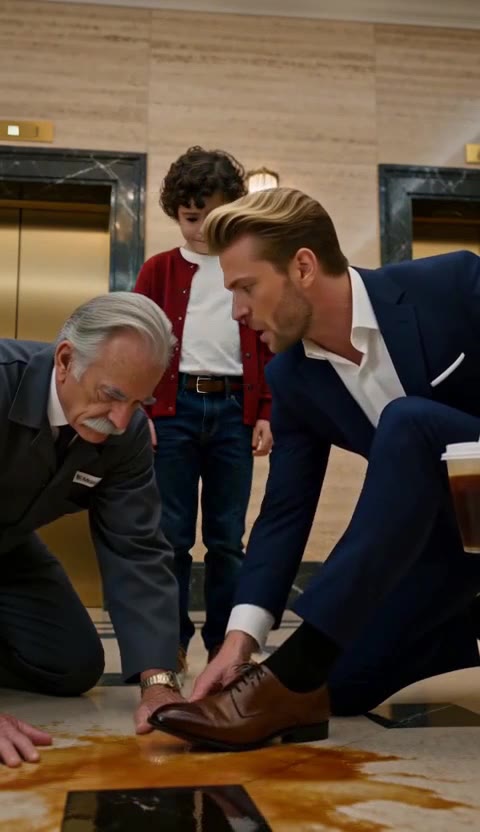
The Janitor's Gold Ring: A Billionaire's Hidden Identity and a Grandson's Courage
When a ruthless floor director humiliates an elderly janitor, his 6-year-old grandson's plea changes everything. But the janitor's true identity will shatter the entire corporate empire.
📖 Read Full Story — Continue Here →More stories you'll love
 Part 1 of 312 min read
The Janitor Who Owned the Company: A Grandson’s Plea That Exposed a Hidden Fortune
When a corporate bully forces an elderly janitor to his knees, his 8-year-old grandson’s desperate cry triggers a shocking reveal—and a downfall no one saw coming.
 Part 1 of 314 min read
The Janitor's Gold Keycard Made the General Manager's Knees Buckle
He forced an elderly janitor to kneel and scrub his shoes. But when the old man pulled out a gold Founder's Keycard, the entire hotel froze in terror.
 Part 1 of 310 min read
The Janitor's Gold Card: How a Billionaire Humiliated a Bully Executive
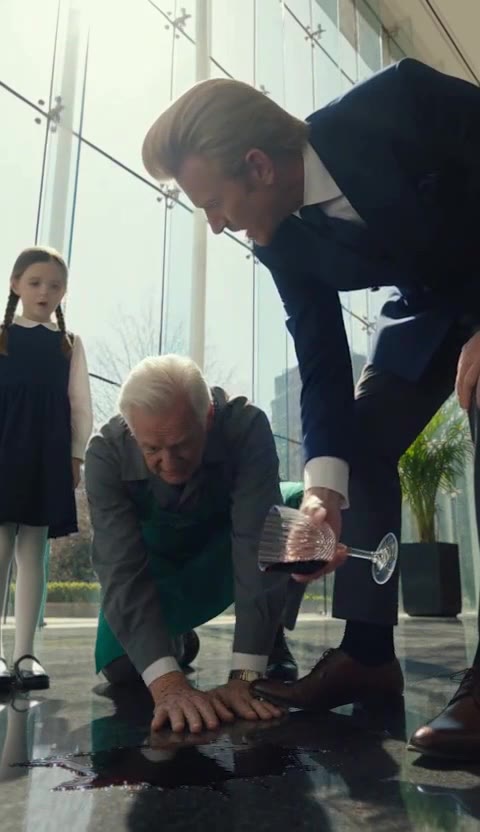
When a luxury mall executive forces an elderly janitor to kneel and wipe his shoes, the janitor's granddaughter steps in—and a gold founder card changes everything.
 Part 1 of 312 min read
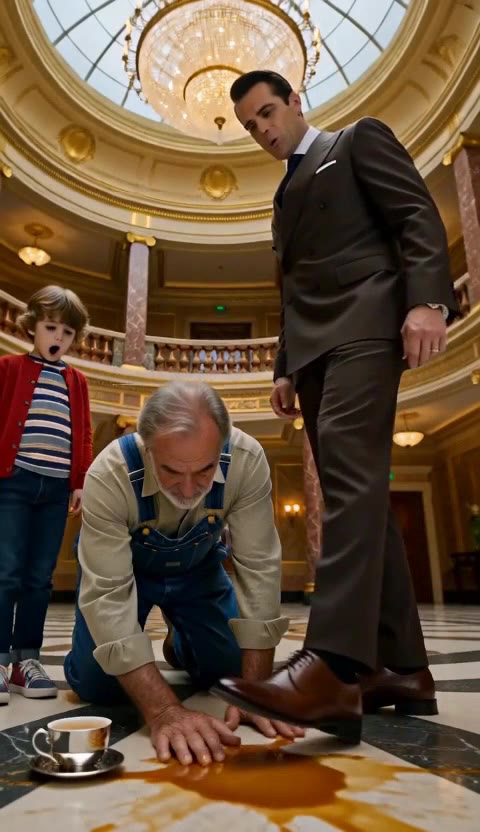
The Janitor’s Secret: A Chairman’s Hidden Legacy Unveiled
A janitor kneels before a cruel executive, but his granddaughter’s plea reveals a shocking truth—he built the empire. Watch as the tables turn when the board bows to a hidden founder.
 Part 1 of 37 min read
The Day the Janitor Revealed His Gold Key, the Manager's World Collapsed
A cruel bank manager humiliates an elderly janitor in front of his grandson. But when the janitor stands tall, a gold key changes everything—and the manager's downfall begins.
 Part 1 of 310 min read
The Janitor Who Owned the Hotel: A Grandfather's Revenge
An elderly janitor is humiliated by a cruel VP in front of his grandson. But when he reveals a gold keycard, the entire hotel bows—and the truth shatters everyone.