
A Stranger’s Silver Ring Changed Everything When the Waiter Took a Chance on Him
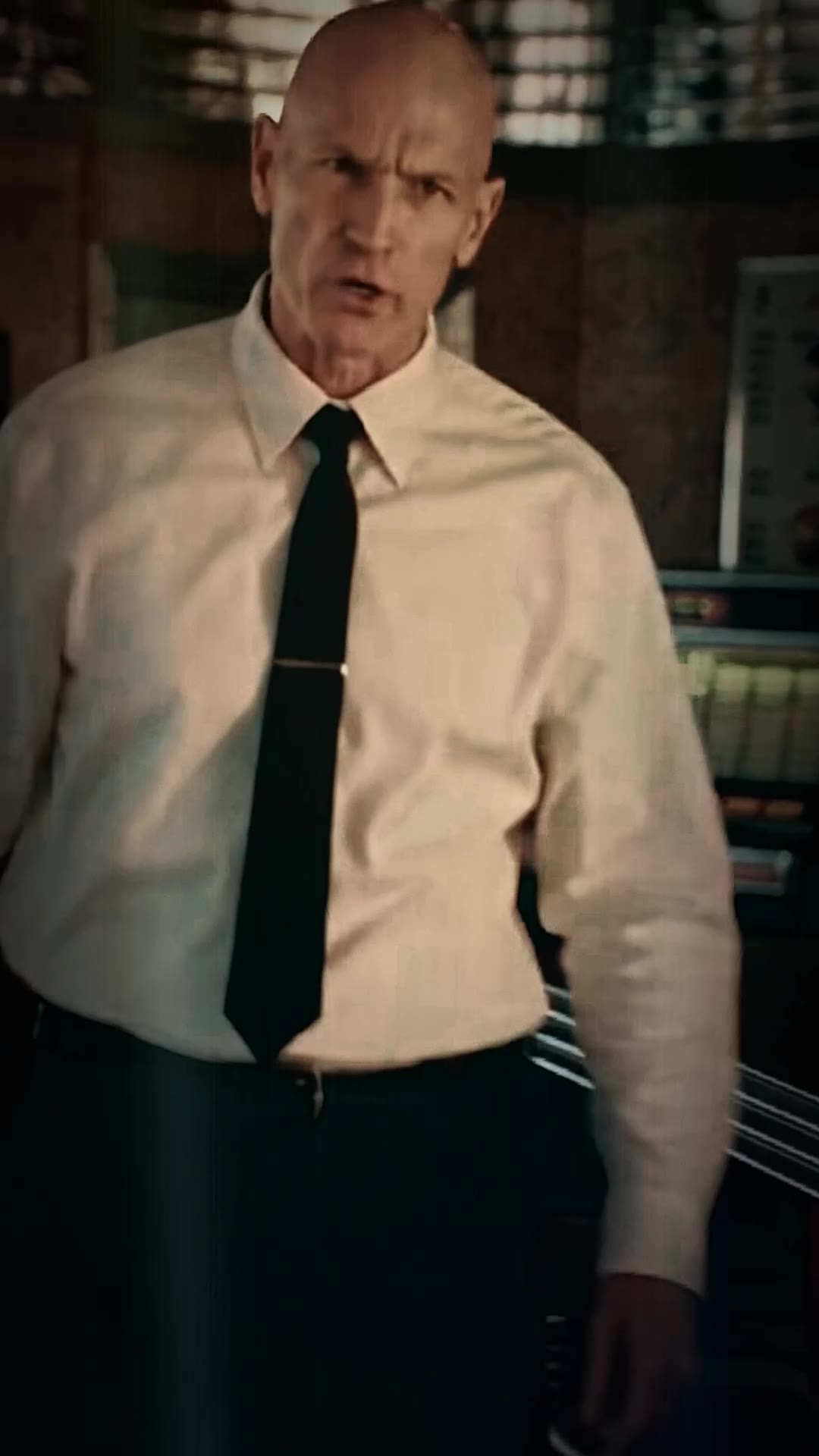
The morning rush at Rosie's Diner had finally died down when the door creaked open and a man shuffled inside. He wore a faded leather jacket, cracked at the elbows, and his boots were scuffed beyond repair. His eyes, though, held a quiet dignity that didn't match his worn appearance.
I was wiping down the counter when he caught my gaze. "Coffee, black," he said, his voice gravelly. "And the full breakfast. Eggs over easy, bacon, toast."
I nodded and scribbled the order. There was something about him—a heaviness in his shoulders, a story etched in the lines of his face. But I didn't pry. In this town, everyone had a story they weren't ready to tell.
He ate slowly, deliberately, as if savoring every bite. The other waiters exchanged glances, the kind that said, We'll be lucky if he pays with anything but trouble.
When I slid the check onto his table, he reached into his pocket and pulled out a worn leather pouch. His fingers trembled as he opened it and placed a silver ring on the table. It was old, tarnished, with an intricate crest that looked like a family seal.
"I don't have my wallet," he said, not meeting my eyes. "I've got nothing but this ring. It's all I have left."
I stared at the ring, then at him. The other waiters snickered, and one muttered, "Nice try, buddy. We're not a pawn shop." But something in the man's posture—the way his shoulders slumped, the way he clutched the ring like a lifeline—told me this wasn't a con.
"You know what," I said, pulling out my wallet, "I've got this." I paid his bill and handed the ring back to him. "You look like you need this more than I do."
He looked up at me, and for a moment, his eyes glistened. "You're a good kid," he said, his voice thick. "Not many would do that."
He stood, pocketed the ring, and walked out without another word. I watched him disappear down the street, the morning sun catching the silver of the ring one last time.
I didn't think much of it after that. It was just a small act of kindness, the kind you do without expecting anything in return. But the universe, I was about to learn, had been watching.
That evening, as I closed up the diner, my phone buzzed with an unknown number. I almost didn't answer, but something told me to pick up.
"Ethan Carter?" a woman's voice said, formal and clipped. "I'm calling on behalf of the estate of Mr. James Whitmore."
My heart skipped. James Whitmore—the man from the diner. "Is he okay?"
"I'm afraid not," she said. "Mr. Whitmore passed away this afternoon. But before he died, he left specific instructions. You're to meet with his lawyer tomorrow morning. It's a matter of inheritance."
The line went dead, and I stood there, phone in hand, the weight of her words pressing down on me. Inheritance? From a stranger who couldn't afford breakfast?
I barely slept that night. Every time I closed my eyes, I saw the man's face, the way he'd clutched that ring. What if I'd turned him away? What if I'd laughed like the others?
The next morning, I walked into a mahogany-paneled office that smelled of old books and leather. A lawyer with silver-rimmed glasses sat behind a massive desk, a folder in front of him.
"Mr. Carter," he said, gesturing for me to sit. "I have some news that may come as a shock."
He slid a document across the desk. "James Whitmore was not the man you met. He was a reclusive billionaire, the founder of Whitmore Industries. He chose to live off the grid for the last twenty years, testing people's character."
I blinked. "Testing people?"
"Every day, he went somewhere new—diners, coffee shops, bus stations—and presented himself as a down-and-out stranger. He offered a valuable item in lieu of payment. Most people laughed or called security. But you—you paid his bill and gave him back the ring without a second thought."
The lawyer paused, letting the weight of his words sink in. "Mr. Whitmore was so moved by your kindness that he left you his entire estate. Approximately forty million dollars."
I felt the air leave my lungs. "Forty million?"
"But there's a condition," the lawyer said, his voice turning grave. "You must find his estranged daughter, Victoria, and give her half. She hasn't spoken to him in twenty years. If you fail, you inherit nothing."
I sat there, staring at the document, the numbers swimming before my eyes. A part of me wanted to laugh, to run out of the office and back to my ordinary life. But another part, the part that had seen the desperation in James Whitmore's eyes, knew this was real.
I left the office with a copy of the will and a photo of a woman I'd never met. Victoria Whitmore. The key to my fortune—or my downfall.
As I stepped onto the sidewalk, a black sedan pulled up to the curb. The door opened, and a woman stepped out. She was tall, sharp-featured, with cold eyes that assessed me like a threat.
"You must be the waiter," she said, her voice dripping with disdain. "I'm Victoria Whitmore. And I'm here to make sure you don't get a cent of what's mine."
”And I'm here to make sure you don't get a cent of what's mine."