
The Mahogany Clock Buried My Stepmother's Secret — But Her Laughter Still Haunts Our Halls
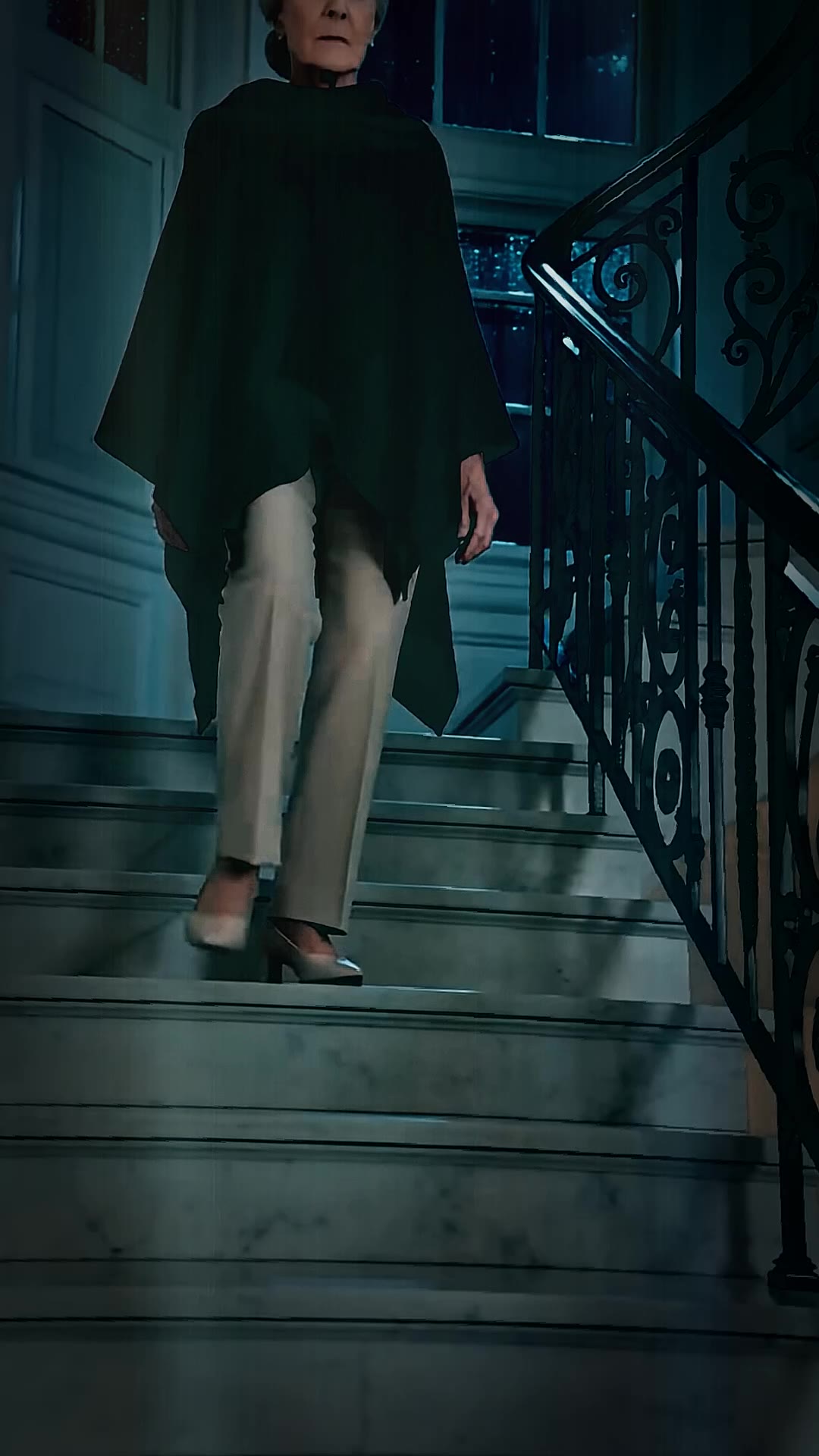
Previously: When Clara's stepmother shoved her down the stairs, the antique clock fell too. But beneath the wreckage, a voice laughed — and it wasn't Clara's. The truth would shatter her father's world.
The Truth Cracks Like the Old Wood
The heavy oak door swung inward, and a gust of cold night air swept through the foyer, carrying the scent of rain and something else — something sharp, like burning metal. Two police officers stood on the threshold, their flashlights cutting through the dim light.
"We received a call about a disturbance," the taller one said, his hand resting on his holster. "Is everything alright in here?"
My father looked at me, then at the wreckage of the clock, then at Aunt Rhea, who was swaying on her feet. "No," he said, his voice hollow. "Everything is not alright."
Margaret took a step back, her heel catching on a gear. "It's a family matter," she said, forcing a smile. "Nothing to concern yourselves with."
But the officers had already seen Aunt Rhea — her torn clothes, her gaunt face, the raw marks on her wrists where chains had bitten into her skin.
"Ma'am," the younger officer said, stepping forward, "are you hurt?"
Aunt Rhea laughed, that terrible, broken sound. "Hurt? I've been buried alive for seven years. I think I'm beyond hurt."
The officers exchanged a look. The taller one spoke into his radio, requesting backup.
Margaret's composure shattered. "She's lying! She's a lunatic! She broke into my house and attacked me!"
"Your house?" I said, my voice rising. "This is my father's house. And you're the one who pushed me down the stairs!"
Everything erupted at once. Margaret was screaming, Aunt Rhea was crying, my father was shouting for everyone to calm down. The officers tried to separate them, but it was chaos.
In the middle of it all, I noticed something glinting under the broken clock — a small, tarnished locket. I bent down and picked it up. It was my mother's. I'd seen it in old photographs, always around her neck.
I opened it. Inside was a tiny, folded piece of paper, yellowed with age. I unfolded it with trembling fingers.
It was a note, written in my mother's handwriting. The ink had faded, but the words were still legible.
"Clara, if you're reading this, I'm already gone. Margaret is not who she seems. She's been poisoning me for months, and I know she'll kill me soon. I've hidden the evidence in the clock's secret compartment. Tell your father. Trust no one."
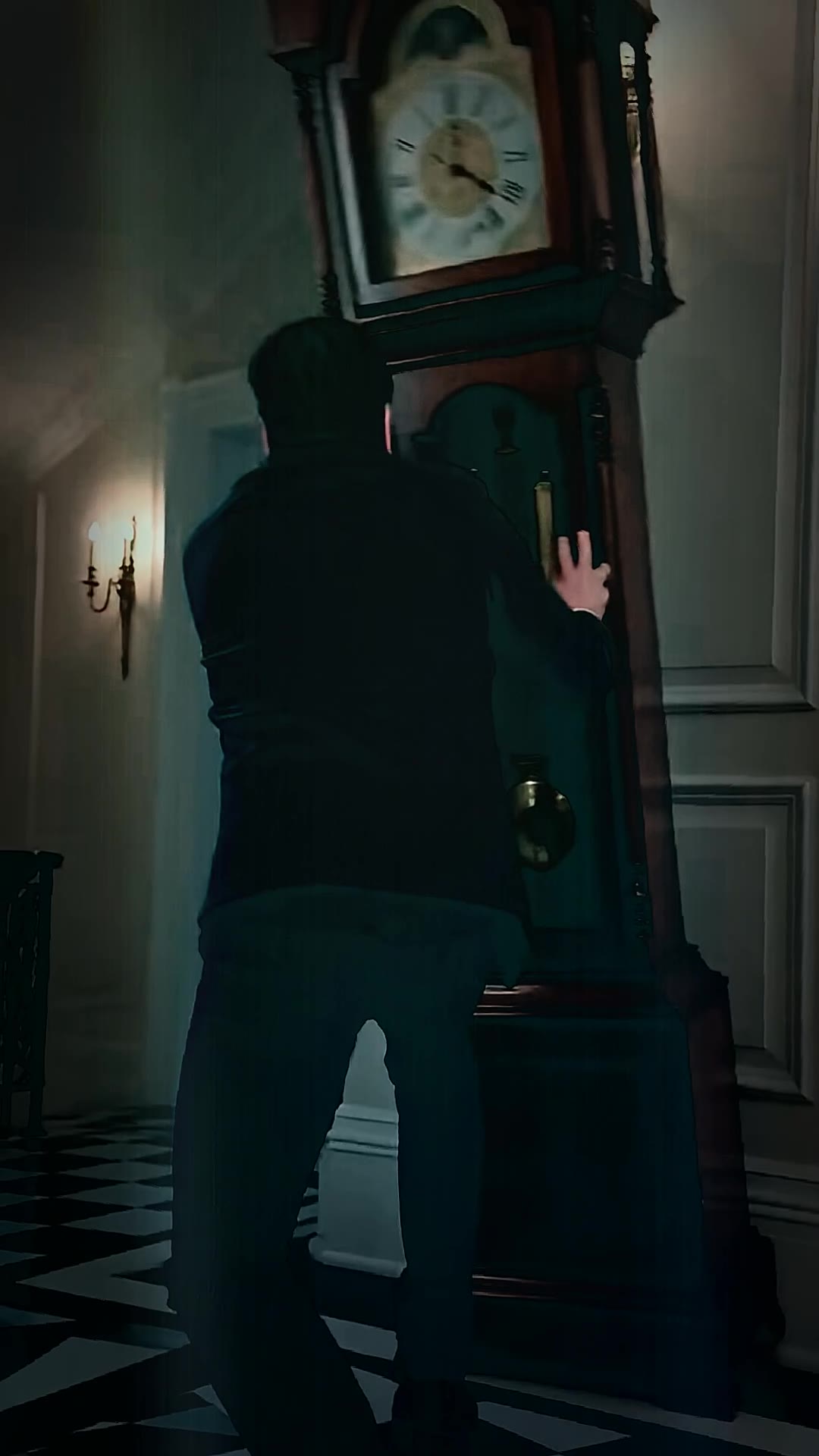
I looked at the shattered clock. Its face was cracked, its gears scattered across the floor. But there — tucked behind the pendulum — was a small, rectangular door. I pried it open with my fingernails.
Inside was a stack of letters, tied with a faded ribbon. And a small vial, half-empty, with a label that read "Arsenic."
"Dad," I said, my voice barely a whisper. "You need to see this."
He came to me, his eyes red-rimmed. He took the letters, his hands shaking as he read the first one. I watched his face go from confusion to horror to grief.
"She was poisoning you," he said, looking up at Margaret. "My God, Catherine — my wife — you killed her."
Margaret had stopped screaming. She stood in the corner, surrounded by police, her face a mask of cold fury. "You were never supposed to find out," she said, her voice flat. "I gave her everything. I made you happy. And she repaid me by threatening to take it all away."
"So you killed her," I said, my voice cracking.
"She was going to leave him," Margaret spat. "She was going to take you and disappear. I couldn't let that happen."
"So you pushed her off the balcony," Aunt Rhea said, her voice filled with venom. "And you locked me in the cellar when I saw you do it."
Margaret's lips curled into a sneer. "You were always too nosy, Rhea. Always poking around where you didn't belong."
The officers handcuffed Margaret, reading her her rights as she spat curses at all of us. But I barely heard them. I was still holding my mother's note, the paper soft and fragile in my hands.
"I'm sorry," my father said, his voice breaking. "I'm so sorry, Clara. I didn't know. I didn't see."
I wanted to scream at him, to tell him that he should have seen, that he should have noticed the way Margaret looked at my mother, the way she always had a cup of tea ready. But I couldn't. I was too exhausted, too numb.
"It's not your fault," I said finally. "She was good at hiding it."
Aunt Rhea was taken to the hospital, wrapped in a blanket, her eyes still wild but her body finally relaxing. The police took Margaret away in the back of a cruiser, her heels clicking one last time on the marble as she was led out the door.
The house fell silent. The clock was gone, reduced to splinters and gears. But the weight of it — the weight of all those years — remained.
I sat on the bottom step, my mother's note still clutched in my hand. My father knelt beside me, his hand hovering over my shoulder, unsure if he was allowed to touch me.
"What do we do now?" he asked.
I looked at the wreckage, at the pieces of a life I'd never fully understood. "We bury her," I said. "We bury her properly. And then we start over."
”"We bury her properly. And then we start over."