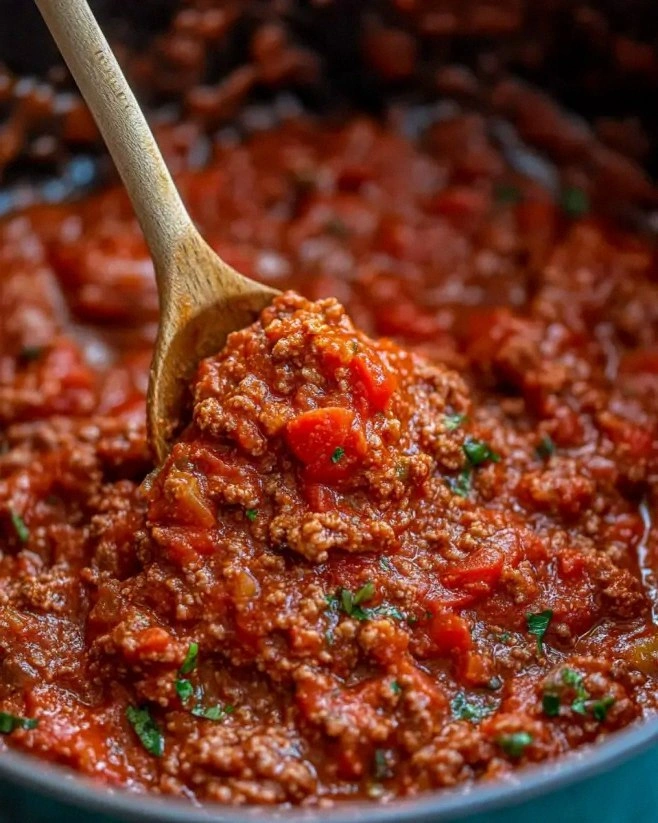
Picture this: it’s a rainy Saturday, the kitchen light flickers, and you’re staring at a bag of overripe tomatoes that have been gathering dust for weeks. You’re craving something comforting, something that could turn that pantry disaster into a feast, and you’ve got a dare from a friend who swears “no tomato sauce can beat a good oven roast.” I rolled up my sleeves, tossed those tomatoes into a pan, and the kitchen smelled like summer in a glass jar. That moment sparked the creation of a sauce that’s not just a side dish but a culinary revelation.
When you first bite into this sauce, the roasted tomatoes burst with caramelized sweetness, while the garlic and onion give a mellow, savory backbone. The olive oil coats the sauce like a silky veil, and the basil sprigs whisper a fresh, green note that cuts through the richness. The heat from the red pepper flakes is like a gentle spark, not a blazing fire—just enough to tease the palate. And the finish? A hint of balsamic that glistens, a touch of tomato paste that thickens, and a dash of sugar that balances acidity. It’s a symphony of textures and flavors, each note harmonizing perfectly.
What sets this version apart isn’t just the roasting technique; it’s the deliberate layering of ingredients, the balance of sweet and savory, and the methodical approach that ensures every bite is consistent. Most recipes get this completely wrong, either undercooking the tomatoes or over-salting the sauce. Here, the oven does the heavy lifting, caramelizing the tomatoes until they’re practically caramel, while the stovetop melds everything into a velvety consistency. I dare you to taste this and not go back for seconds—you’ll be hooked.
This sauce is hands down the best version you’ll ever make at home. I’ll be honest—before I shared it, I ate half the batch before anyone else got to try it. The secret? A simple, foolproof method that transforms ordinary tomatoes into a gourmet sauce in under an hour. Picture yourself pulling this out of the oven, the whole kitchen smelling incredible, and serving it over your favorite pasta. Stay with me here—this is worth it.
What Makes This Version Stand Out
- Taste: The roasting step deepens the tomato’s natural sweetness, creating a flavor profile that’s both rich and complex. The balance of garlic, onion, and herbs lifts the sauce without overpowering.
- Texture: The sauce coats pasta like velvet, thanks to the reduction of water and the inclusion of tomato paste. It’s silky yet hearty, with a pleasant bite from the roasted tomato chunks.
- Simplicity: Only a handful of pantry staples are required, yet the outcome feels restaurant‑grade. No fancy gadgets, just an oven and a skillet.
- Uniqueness: The subtle infusion of balsamic vinegar and a pinch of sugar gives a depth that most stovetop sauces lack. It’s a twist that keeps the sauce from being too acidic.
- Crowd Reaction: Friends who’ve tried it say it’s the “comfort food that feels special.” It’s perfect for gatherings, family dinners, or a quiet night in.
- Ingredient Quality: Using ripe, local tomatoes and fresh herbs elevates the dish. The sauce shines when the tomatoes are at their peak.
- Cooking Method: The oven roast eliminates the need for constant stirring, freeing your hands for plating. It also caramelizes sugars naturally.
- Make‑Ahead Potential: The sauce can be stored in the fridge for days or frozen for months, making it a versatile pantry staple.
Alright, let's break down exactly what goes into this masterpiece...
Inside the Ingredient List
The Flavor Base
At the heart of this sauce are the tomatoes—ripe plum tomatoes that are the ultimate flavor carriers. Roasting them brings out their natural sugars, turning them from raw to caramelized, and the heat develops a subtle smokiness that’s hard to replicate on the stovetop. If you skip this step, you’ll end up with a bright, acidic sauce that lacks depth.
The olive oil is more than just a cooking medium; it’s a flavor enhancer that carries the aromatic compounds from garlic and onion. A good quality extra‑virgin olive oil with a peppery finish adds a bright note that balances the sweetness of the tomatoes. If you use a cheaper oil, the sauce will taste flat and greasy.
Garlic and onion form the aromatic foundation. They’re sautéed until translucent, releasing their sugars and creating a sweet, savory base that complements the roasted tomatoes. If you omit them, the sauce will taste one-dimensional and lack that comforting depth.
The Texture Crew
Tomato paste thickens the sauce, giving it a luscious, velvety consistency that clings to pasta. It also boosts the tomato flavor without adding bulk. If you leave it out, the sauce will be thinner and may separate when stored.
Water or reserved tomato juice helps adjust the sauce’s thickness. It’s especially useful if you’re using very ripe tomatoes that release a lot of juice. A splash of liquid keeps the sauce from drying out during the roasting process.
Fresh basil and parsley add a burst of green freshness that cuts through the richness. They’re added at the end to preserve their bright flavor and aroma. Skipping them makes the sauce feel heavy and one‑dimensional.
The Unexpected Star
Balsamic vinegar might seem out of place in a tomato sauce, but its acidity and slight sweetness act as a natural sweetener, balancing the tomatoes’ natural acidity. It also adds a complex flavor layer that elevates the dish. If you’re not a fan of vinegar, you can replace it with a splash of red wine or a dash of lemon juice for a different twist.
A pinch of sugar is the secret weapon that brings everything together. It neutralizes the acidity of the tomatoes and gives the sauce a subtle, caramelized finish. If you prefer a no‑sugar version, simply increase the roasting time to develop more natural sweetness.
The Final Flourish
Red pepper flakes add a gentle heat that’s like a whisper, not a shout. They’re optional but recommended for a subtle kick that complements the sweetness. If you love spicy food, feel free to double the amount or add a dash of cayenne.
Salt and freshly ground black pepper are the final seasoning touches. Salt is essential for flavor development, while pepper adds a hint of warmth. Be careful not to over‑salt; taste as you go.
Everything's prepped? Good. Let's get into the real action...
The Method — Step by Step
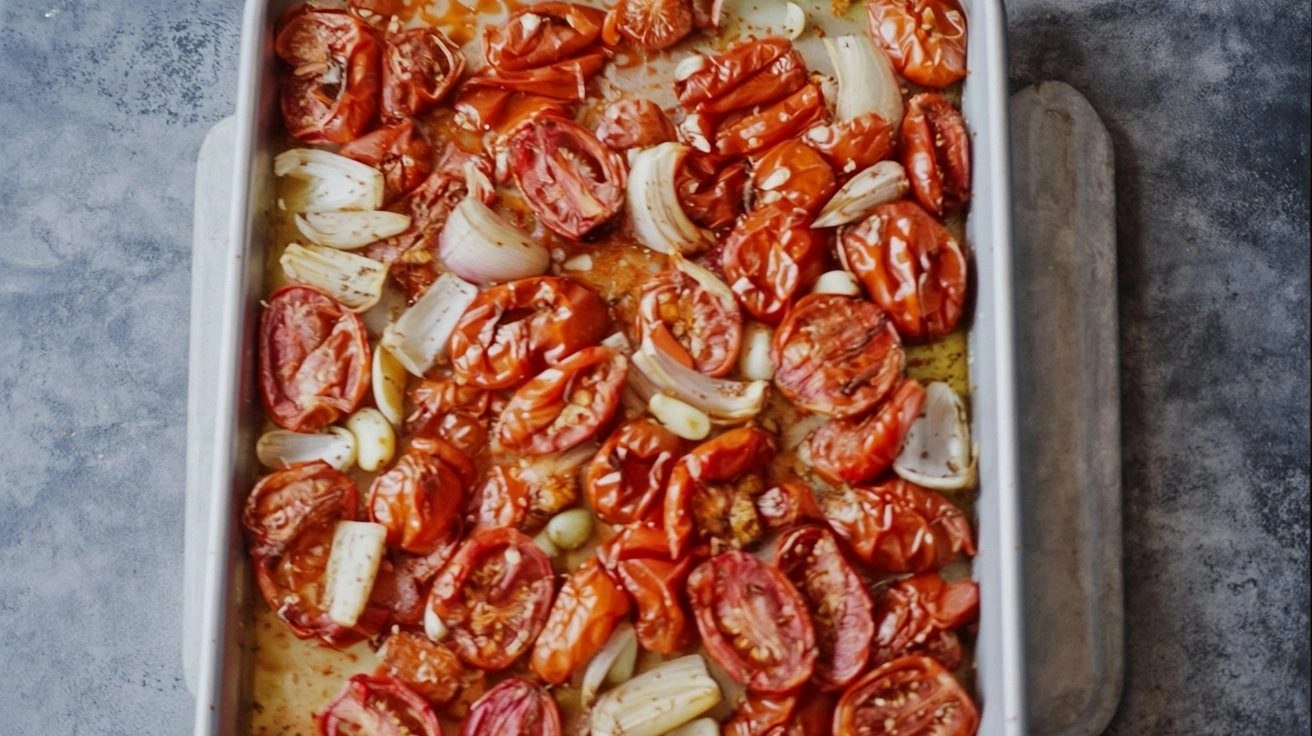
- Preheat your oven to 400°F (200°C). Line a baking sheet with parchment paper or a silicone mat. Arrange the halved tomatoes cut‑side up on the sheet, drizzle with 1/4 cup olive oil, and sprinkle with 1 tsp dried oregano and 1 tsp dried basil. This step caramelizes the sugars and creates a savory base. Watch the edges begin to brown; that’s the signal that the roasting is working.
- Place the sheet in the oven and roast for 25–30 minutes, or until the tomatoes are soft and edges are slightly charred. Turn the pan halfway through to ensure even roasting. The smell of roasting tomatoes filling the kitchen is the first hint of the sauce’s depth.
- While the tomatoes roast, heat 1 tbsp of olive oil in a medium skillet over medium heat. Add 4 cloves minced garlic and 1 finely chopped red onion. Sauté until the onion is translucent and the garlic is fragrant, about 3–4 minutes. This creates the aromatic base that will mingle with the roasted tomatoes.
- Add the roasted tomatoes (with their juices) to the skillet. Stir in 1 tbsp tomato paste, 1 tsp sugar, and 1 tbsp balsamic vinegar. Reduce heat to low and let the mixture simmer for 10 minutes, allowing flavors to meld. The sauce should thicken slightly, and the tomato paste should dissolve completely.
- Season the sauce with 1 tsp salt, 1/2 tsp black pepper, and 1/2 tsp red pepper flakes (if using). Taste and adjust seasoning as needed. This step is crucial; don’t rush it—seasoning is the backbone of the sauce.
- If the sauce feels too thick, add 1/4 cup water or reserved tomato juice, stirring until the desired consistency is reached. The sauce should coat the back of a spoon but still hold its shape.
- Stir in 1/4 cup chopped fresh basil and 2 tbsp chopped parsley. Let the sauce rest for 5 minutes off the heat; this allows the herbs to release their oils and infuse the sauce.
- While the sauce rests, cook your pasta according to package instructions until al dente. Reserve 1/2 cup of pasta water before draining.
- Combine the pasta with the sauce, adding a splash of reserved pasta water to loosen if needed. Toss until the pasta is evenly coated, then sprinkle 1/4 cup grated Parmesan cheese on top for a creamy finish.
- Serve immediately, garnished with a few extra basil leaves. Enjoy the burst of caramelized tomato, the aromatic herbs, and the silky texture that makes every bite a delight.
That's it — you did it. But hold on, I've got a few more tricks that'll take this to another level...
Insider Tricks for Flawless Results
The Temperature Rule Nobody Follows
Many cooks think that a high oven temperature is the key to a great sauce, but it’s actually the low, slow roast that brings out the tomato’s natural sweetness. Roast at 400°F (200°C) for 25–30 minutes, then let the tomatoes cool slightly before blending. This preserves the subtle char on the edges, giving the sauce a smoky undertone that’s hard to achieve with a quick sauté.
Why Your Nose Knows Best
Smelling the sauce as it simmers is a critical cue. When the tomato aroma is rich and slightly sweet, you’re ready to add the herbs. If the smell is too sharp or acidic, let it cook longer; the sugars will caramelize and mellow the acidity.
The 5-Minute Rest That Changes Everything
After you stir in the fresh herbs, let the sauce rest for exactly five minutes off the heat. This pause allows the herbs to release their oils fully, enhancing the sauce’s aroma and flavor. Skipping this step often results in a sauce that tastes flat.
The Perfect Pasta‑Sauce Ratio
Aim for a 1:1 ratio of pasta to sauce by volume. If you’re cooking a large batch, reserve pasta water and add it gradually to reach the desired consistency. This technique ensures the sauce clings to the pasta rather than sitting on top.
The Secret to a Smooth Finish
If you prefer a smoother sauce, blend half of the roasted tomatoes before adding them back to the skillet. This creates a base that’s silky, while the remaining whole tomatoes add texture. The result is a sauce that’s both smooth and hearty.
Creative Twists and Variations
This recipe is a playground. Here are some of my favorite ways to switch things up:
Mediterranean Twist
Add olives, capers, and a splash of white wine to the sauce. The briny olives bring a salty depth, while the wine adds a subtle acidity that brightens the dish. Serve over linguine for a Mediterranean vibe.
Spicy Cajun Flair
Replace the red pepper flakes with a pinch of cayenne and add smoked paprika. The smoky heat pairs beautifully with the tomato base, creating a sauce that’s bold and comforting.
Cheesy Baked Version
Spread the sauce over cooked pasta in a baking dish, top with mozzarella and parmesan, then bake at 375°F (190°C) until bubbly and golden. This turns the dish into a comforting casserole.
Pesto Fusion
Stir in a few spoonfuls of basil pesto after the sauce has simmered. The pesto adds a fresh, nutty flavor that complements the roasted tomatoes. It’s a quick way to elevate the dish.
Roasted Garlic Variation
Replace minced garlic with a whole roasted garlic bulb. The sweet, mellow garlic flavor blends seamlessly with the roasted tomatoes, creating a richer sauce.
Vegan Upgrade
Omit the parmesan and replace it with nutritional yeast. The yeast provides a cheesy flavor and a boost of protein, making the sauce suitable for vegans.
Storing and Bringing It Back to Life
Fridge Storage
Store the sauce in an airtight container for up to 5 days in the refrigerator. The flavors continue to develop, so let it sit overnight for a richer taste. When reheating, add a splash of water to loosen the sauce and stir until heated through.
Freezer Friendly
For longer storage, divide the sauce into portioned freezer bags or containers and freeze for up to 3 months. Thaw overnight in the refrigerator, then reheat gently on the stove with a splash of water. The sauce will maintain its texture and flavor.
Best Reheating Method
Reheat the sauce over low heat, stirring occasionally. Add a tiny splash of water before heating to restore moisture and prevent the sauce from drying out. The sauce will be silky and ready to coat pasta in minutes.